What Does G.O.A.T.S Stand For (2026 Guide): Meaning, Origin & How to Use It
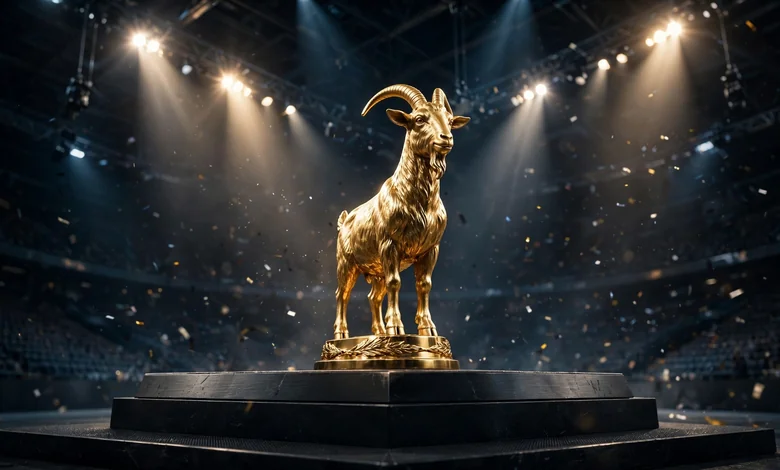
You’ve seen it in comment sections, on ESPN broadcasts, in group chats, and plastered across social media next to a goat emoji. G.O.A.T.S. But what does it actually stand for — and why is there an S on the end? Millions of people search ‘what does g.o.a.t.s stand for’ every month, and the answer is simpler than you’d think.
The short answer: G.O.A.T.S. stands for “Greatest of All Time” — plural. It’s the plural form of G.O.A.T., used when you’re talking about more than one all-time great. So when someone writes “the G.O.A.T.S of basketball,” they mean the greatest players of all time, not just one.
In this guide, we’ll break down the full meaning, trace the term back to its surprising origin (it starts with Muhammad Ali and a 1992 trademark), explain why the extra S trips people up, and show you how to use it correctly — in sports debates, music arguments, and everyday conversation.
- The Short Answer: What G.O.A.T.S. Stands For
- Where G.O.A.T. Actually Came From
- G.O.A.T. vs. G.O.A.T.S.: Why the Extra S?
- The Other “Goat”: Why Capitalization Matters
- How One Acronym Took Over Pop Culture
- The Most Common G.O.A.T.S. by Field
- How to Use G.O.A.T.S. Correctly
- Mistakes People Make With the Term
- Frequently Asked Questions
- Conclusion
The Short Answer: What G.O.A.T.S. Stands For
Let’s get the definition out of the way first, because search engines and dinner-table debates both reward direct answers. It’s also the straight answer to everyone searching ‘what does g.o.a.t.s stand for.’
G.O.A.T. stands for “Greatest of All Time.” It describes a person considered the best ever in their field — the single peak performer across every era.
G.O.A.T.S. — with the S — is simply the plural: “Greatest of All Time,” pluralized. You’re talking about several people who each have a claim to all-time-great status.
So:
- “Michael Jordan is the G.O.A.T. of basketball” = one person, the greatest ever.
- “Jordan, LeBron, and Kareem are the G.O.A.T.S. of basketball” = multiple all-time greats.
Some people also read G.O.A.T.S. as “Greatest of All Time Sportsmen,” which pops up in acronym dictionaries — but in real-world usage, the S is just doing normal plural work. Don’t overthink it.
The bottom line: G.O.A.T. = Greatest of All Time (singular). G.O.A.T.S. = Greatest of All Time (plural). That’s the whole secret, and now you know more than most people arguing about it online.
Where G.O.A.T. Actually Came From
Most people assume G.O.A.T. is internet slang from the 2010s. It’s not. The term has a real origin story, and it starts with the most famous boxer who ever lived.
Fun fact: Long before the acronym existed, Muhammad Ali simply called himself “The Greatest.” It was his signature boast — part confidence, part theater, all Ali. The “of all time” part came later, and it arrived with paperwork.
In 1992, Ali’s wife, Lonnie Ali, incorporated “G.O.A.T. Inc.” — short for “Greatest of All Time, Inc.” — to consolidate and manage her husband’s intellectual property. It was a business move: turn the nickname into a brand, a legal entity that could be licensed and protected. What had been a boast became a trademark.
The leap from legal entity to everyday slang took a few more years, and it ran through hip-hop. In 2000, LL Cool J released his album G.O.A.T. (Greatest of All Time), and the term crossed fully into mainstream culture. LL Cool J has cited Ali as a direct inspiration, telling Rolling Stone in 2016 that without Ali, “there would be no ‘Mama Said Knock You Out’, and the term G.O.A.T. would have never been coined.”
From there, sports media picked it up, fans ran with it, and the acronym became the standard way to frame the oldest argument in sports: who’s the best ever?
Some historians note the bravado has even older roots — New York Times writer Kurt Streeter has pointed to 1940s–50s wrestler Gorgeous George as an influence on Ali’s own trash-talk style. But the acronym itself, in the form we use it, traces to Ali’s camp and LL Cool J’s album. That’s the documented chain — and the real backstory behind the query ‘what does g.o.a.t.s stand for.’
G.O.A.T. vs. G.O.A.T.S.: Why the Extra S?
This is where people get confused — and where most searches for ‘what does g.o.a.t.s stand for’ end up — so let’s clear it up with examples.
English handles the plural of an acronym the same way it handles most nouns: add an S. MVPs, CEOs, FAQs — and G.O.A.T.S. You’ll see it written with periods (G.O.A.T.S.), without them (GOATS), or in lowercase (goats) depending on how casual the writer is being. All of them mean the same thing.
The confusion usually comes from the goat emoji. When G.O.A.T. discussions happen online, people post pictures of actual goats — the animal — as a visual pun. Add an S, and it looks like you’re talking about a herd of farm animals. You’re not. You’re talking about a group of legends.
| Form | Meaning | Example |
|---|---|---|
| G.O.A.T. | Greatest of All Time (one person) | “Serena Williams is the G.O.A.T. of tennis.” |
| G.O.A.T.S. | Greatest of All Time (multiple people) | “Serena, Graf, and Navratilova are the G.O.A.T.S. of tennis.” |
| GOAT (no periods) | Same as G.O.A.T. | “Tom Brady is the GOAT.” |
| goat (lowercase, old sports usage) | A player who blew it — the scapegoat | Historical usage, now rare |
The bottom line: The S is just a plural. G.O.A.T.S. = more than one greatest-of-all-time candidate. If someone uses it for a single person, they’re technically using the wrong form — but the internet forgives a lot.
The Other “Goat”: Why Capitalization Matters
Here’s a twist most people don’t know: in sports, the lowercase word “goat” used to mean the exact opposite of G.O.A.T.
For decades, calling someone “the goat” of a game meant they were the scapegoat — the player who failed spectacularly at the worst possible moment. New York Daily News cartoonist Bill Gallo famously drew horned “goat” portraits of players after tough World Series games. The all-caps, punctuated acronym is what flipped the meaning: G.O.A.T. = the greatest, while plain old “goat” = the guy who dropped the ball.
Sportswriter Frank Deford once speculated the insult version traces back to the medieval symbolism of horns and cuckoldry — a long, strange journey for a farm animal. Whatever the deep history, the practical takeaway is simple: capitalization and punctuation carry the meaning. “He’s the GOAT” is a compliment. “He was the goat of that series” is — or was — an insult. None of that changes the modern answer to ‘what does g.o.a.t.s stand for.’
In practice, the insult meaning has nearly died out. The acronym won. But knowing the history explains why older fans sometimes do a double-take when they first hear the term used as praise.
How One Acronym Took Over Pop Culture
The G.O.A.T. debate is now one of the defining arguments of modern sports culture — and it keeps escaping sports entirely. No wonder ‘what does g.o.a.t.s stand for’ is one of the most-searched slang questions online.
The dictionary moment. In 2018, “GOAT” was added to the dictionary, cementing its move from slang to standard English. Love it or hate it, it’s official now.
The broadcast era. Sports networks turned the debate into content. Entire shows, segments, and social media formats are built around one question: who’s the G.O.A.T.? Jordan vs. LeBron in basketball. Brady vs. Montana in football. Messi vs. Ronaldo in soccer. The acronym became the frame for arguments fans were already having — it just gave them a shared vocabulary.
The emoji. The goat emoji (🐐) is now the universal shorthand. Players post it about themselves. Fans spam it after big performances. LeBron James labeled Tom Brady a “GOAT” after Brady’s seventh Super Bowl win in February 2021, and England cricket captain Joe Root called Jimmy Anderson “the GOAT of English cricket” after a masterclass spell against India that same week. The term moves at the speed of the timeline.
Beyond sports. The acronym now shows up in music (Beyoncé is routinely called the G.O.A.T. of pop performance), business, gaming, and everyday life. Any field with a hierarchy of excellence eventually gets its G.O.A.T. debate. That’s how you know a term has fully arrived — when people start arguing about the G.O.A.T. of things like sandwich-making.
If you enjoy this kind of pop-culture explainer, Daily Scope 67 publishes stories like this daily — from slang breakdowns to science explainers — and it’s worth adding to your reading rotation.
The Most Common G.O.A.T.S. by Field
No G.O.A.T. list is ever settled — that’s the whole point of the debate, and why ‘what does g.o.a.t.s stand for’ leads here instead of to a single name. But certain names come up so often they’ve become the default candidates. Here’s the landscape as it stands:
| Field | Names You’ll Hear Most | Why They’re in the Conversation |
|---|---|---|
| Basketball | Michael Jordan, LeBron James, Kareem Abdul-Jabbar | Championships, MVPs, longevity, cultural impact |
| American Football | Tom Brady, Joe Montana, Jerry Rice | Brady’s seven Super Bowl rings lead every argument |
| Soccer | Lionel Messi, Cristiano Ronaldo, Pelé | Goals, Ballon d’Ors, World Cup glory |
| Tennis | Serena Williams, Roger Federer, Novak Djokovic | Grand Slam counts and era dominance |
| Boxing | Muhammad Ali, Sugar Ray Robinson | Ali coined the attitude; Robinson the resume |
| Music (Hip-Hop) | LL Cool J, Jay-Z, Tupac, Biggie | LL Cool J literally named the album |
| Music (Pop) | Beyoncé, Michael Jackson | Performance, influence, catalog |
| Cricket | Jimmy Anderson, Sachin Tendulkar, Don Bradman | Anderson’s longevity; Bradman’s untouchable average |
Fun fact: The criteria shift by sport. In team sports, the G.O.A.T. is usually someone who carried teams to titles while performing at an elite level for years. In individual sports, it’s about major tournament wins and dominance over elite competition. Longevity matters everywhere — but so does peak. A short, blinding prime (think Sandy Koufax) can beat a long, merely great career in some debates.
The bottom line: There is no single, universally agreed-upon G.O.A.T. in any major sport. The term is subjective by design — it’s a conversation starter, not a trophy.
How to Use G.O.A.T.S. Correctly
Now that ‘what does g.o.a.t.s stand for’ is settled, using the term well is easy. Here’s the playbook:
Do use it for genuine all-time candidates. The word means the greatest of all time — not “pretty good” or “my favorite.” Save it for the names that belong in the historical conversation.
Do match singular and plural. One legend = G.O.A.T. A group of legends = G.O.A.T.S. Getting this right is the easiest way to sound like you know what you’re talking about.
Do specify the field. “G.O.A.T.” alone is vague — the G.O.A.T. of what? “The G.O.A.T. of women’s tennis” is precise and much harder to argue with.
Don’t hand it out after one good game. A rookie with a hot month is not a G.O.A.T. The term implies a career, not a weekend. Overusing it is the fastest way to drain it of meaning.
Don’t use it as a synonym for “best right now.” “Best in the league this season” and “greatest of all time” are different claims. Keep them separate.
Mistakes People Make With the Term
A few common errors worth avoiding — especially if you arrived here by searching ‘what does g.o.a.t.s stand for’:
- Writing G.O.A.T.S. for one person. The S makes it plural. One person, no S.
- Thinking it only applies to sports. Music, film, business, gaming — the term travels anywhere excellence is ranked.
- Reading “Greatest of All Time Sportsmen” as the official expansion. You’ll find that in acronym dictionaries, but everyday usage is just the plural of G.O.A.T.
- Assuming it’s brand new. The acronym’s roots go back to 1992 (G.O.A.T. Inc.) and its mainstream breakthrough to 2000 (LL Cool J’s album). It’s older than most of the people arguing about it.
- Confusing it with the old insult. Lowercase “goat” as scapegoat is historical trivia now — but it’s why the caps matter.
Frequently Asked Questions
What does G.O.A.T. stand for?
G.O.A.T. stands for “Greatest of All Time.” It describes a person considered the best ever in their field.
What does G.O.A.T.S. stand for?
Short version for everyone asking ‘what does g.o.a.t.s stand for’: G.O.A.T.S. is the plural of G.O.A.T. — “Greatest of All Time,” referring to multiple all-time greats. Some acronym dictionaries expand it as “Greatest of All Time Sportsmen,” but in common usage the S is simply a plural.
Who came up with the term G.O.A.T.?
The concept traces to boxer Muhammad Ali, who called himself “The Greatest.” In 1992, his wife Lonnie Ali incorporated “G.O.A.T. Inc.” (Greatest of All Time, Inc.) to manage his intellectual property. Rapper LL Cool J popularized the acronym with his 2000 album G.O.A.T. (Greatest of All Time).
Is GOAT in the dictionary?
Yes. “GOAT” was added to the dictionary in 2018, recognizing its established use as a noun meaning the greatest of all time in a field.
What’s the difference between GOAT and goat?
The capitalized acronym GOAT (or G.O.A.T.) means “Greatest of All Time” — high praise. The lowercase word “goat” historically meant a scapegoat in sports: the player blamed for a loss. The insult meaning has largely faded, but the capitalization still carries the distinction.
Can I call myself a G.O.A.T.?
You can, but the term lands best when other people say it about you. Self-declared G.O.A.T. status is a bold move — Ali pulled it off, but Ali was Ali.
Is G.O.A.T.S. only about sports?
No. While it started in sports culture, G.O.A.T. and G.O.A.T.S. are now used in music, film, business, gaming, and everyday life — anywhere people rank excellence. That’s why ‘what does g.o.a.t.s stand for’ gets asked far beyond sports fans.
Conclusion
So, what does G.O.A.T.S. stand for? If you landed here searching ‘what does g.o.a.t.s stand for,’ here’s your answer: “Greatest of All Time” — plural. One letter does all the work: it turns a single legend into a pantheon.
But the term is bigger than its letters. It’s a piece of language that traveled from Muhammad Ali’s mouth to a 1992 trademark filing, through an LL Cool J album, into the dictionary, and onto every sports broadcast and group chat on earth. It survived a meaning flip — from scapegoat to supreme compliment — and came out the other side as the default frame for the oldest argument in sports.
Use it well: singular for one, plural for many, and only for the names that truly belong in the all-time conversation. And the next time someone drops a 🐐 in the chat, you’ll know exactly what they’re saying — and where it came from.
Read Also: FLVTO (2026 Guide): What It Is, How the YouTube to MP3 Converter Works