
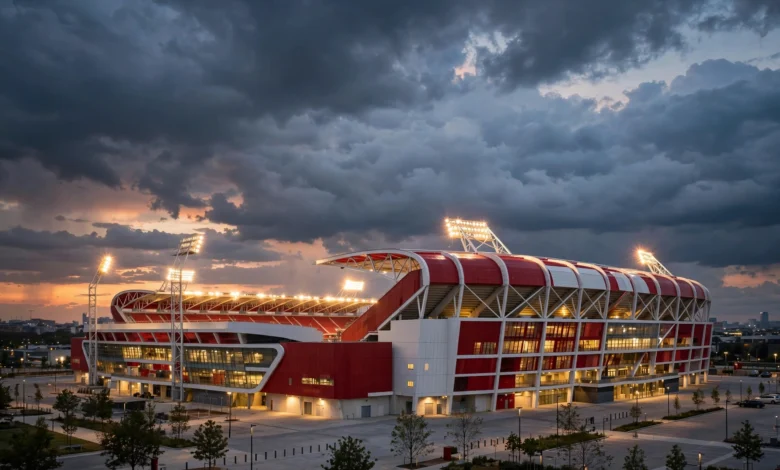
Ask a football fan to name the most famous club in London and you’ll get arguments — but ask them to name the most storied one and the answer comes back fast: Arsenal. The Gunners. The club of the Invincibles, of Highbury’s marble halls, of a cannon on the badge and 60,000 voices singing on a European night. Whether you’ve just started following the Premier League or you’ve been arguing about them in group chats for years, here’s everything worth knowing about Arsenal Football Club.
The bottom line: founded in 1886 by Woolwich munitions workers, Arsenal are one of England’s most successful clubs — 13 league titles, a record 14 FA Cups, and the only team to go an entire Premier League season unbeaten.
Arsenal F.C.: The Essential Facts
- Full name: Arsenal Football Club
- Nickname: The Gunners
- Founded: 1886 (as Dial Square)
- Ground: Emirates Stadium, Holloway, North London (since 2006)
- Capacity: ~60,700
- Manager: Mikel Arteta
- Captain: Martin Ødegaard
- League: English Premier League
- Colors: Red shirts with white sleeves, white shorts
- Biggest rivals: Tottenham Hotspur (the North London Derby)
How Arsenal Started: From a Munitions Factory to North London
Arsenal’s origin story is one of the best in football. In late 1886, a group of workers at the Royal Arsenal armaments factory in Woolwich, south-east London, decided to form a football team. They called it Dial Square, after a sundial on the factory wall. Within weeks they’d renamed themselves Royal Arsenal, and a few years later, Woolwich Arsenal.
Fun fact: the club’s famous red shirts came from a charitable donation. Nottingham Forest gave the Woolwich amateurs a set of red kits in those early days, and the color stuck for over a century. The white sleeves were added later in the 1930s by legendary manager Herbert Chapman, who thought they’d make his players easier to spot on the pitch.
In 1893, Arsenal became the first club from the south of England to join the Football League. Then came the move that defined the club’s identity: in 1913, they crossed London to Highbury in the north, built Arsenal Stadium, and never looked back. They’ve been a north London club ever since — which is exactly why the rivalry with Tottenham Hotspur, their nearest neighbors, burns so hot.
The Highbury Years: Chapman, the 1930s, and the Doubles
Highbury — officially Arsenal Stadium — was home for 93 years, and it’s where the club became a giant. Under Herbert Chapman in the 1930s, Arsenal won five league titles and basically invented modern football management along the way: numbered shirts, floodlights, the WM formation, all Chapman innovations.
The success kept coming in waves. After the war years, the club won the league again, then in 1970–71 became only the second club of the 20th century to win the League and FA Cup Double. The late 1980s and 1990s brought more titles under George Graham — including the almost mythical 1989 title win at Anfield, sealed with virtually the last kick of the season.
Then came Arsène Wenger in 1996, and everything changed. The Frenchman revolutionized English football with sports science, diet, and a style of passing football nobody in England had seen. Under Wenger, Arsenal won three Premier League titles and seven FA Cups — and produced the achievement the club is most famous for.
The Invincibles: 2003–04
In the 2003–04 season, Arsenal did something no English team had done in the modern era and none has done since: they went an entire 38-game Premier League season unbeaten. 26 wins, 12 draws, zero defeats. Thierry Henry, Patrick Vieira, Dennis Bergkamp, Robert Pirès — that squad is still talked about in hushed tones, and the Premier League commissioned a special gold trophy to mark it.
The bottom line: it’s the single most iconic achievement in Premier League history, and it’s why Arsenal fans will tell you — correctly — that nobody else has done it.
Emirates Stadium: The Move That Changed Everything
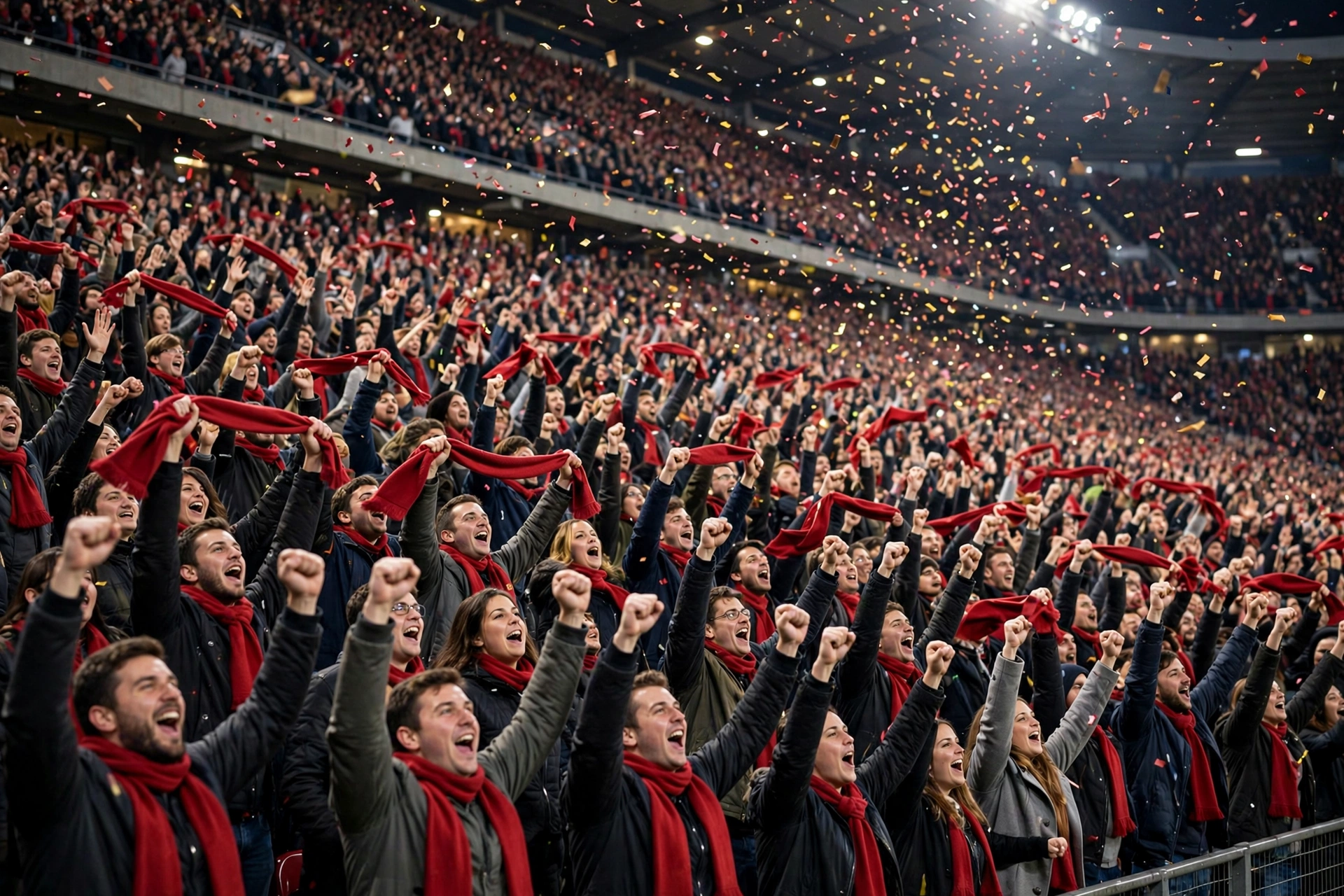
In 2006, Arsenal left Highbury for the Emirates Stadium, just down the road in Holloway. The new ground cost over £390 million and holds around 60,700 supporters, making it one of the biggest club stadiums in England. The move was about revenue and competing with Europe’s elite — and financially it worked — but it came at a cost: years of tight budgets while the stadium debt was paid off, during which the club’s trophy cabinet gathered dust.
The Emirates era eventually delivered. FA Cup wins in 2014, 2015, 2017, and 2020 ended the drought, and under current manager Mikel Arteta — a former Arsenal captain himself — the club has rebuilt into genuine title contenders again, playing some of the most exciting football in Europe. The stadium, once criticized as too quiet, is now famous for its atmosphere on big nights.
Arsenal’s Trophies: The Full Roll of Honor
Arsenal are firmly among England’s most decorated clubs. The headline numbers:
| Competition | Titles | Notes |
|---|---|---|
| League titles (First Division / Premier League) | 13 | Includes 3 Premier League crowns |
| FA Cup | 14 | An all-time record |
| League Cup | 2 | 1987, 1993 |
| European Cup Winners’ Cup | 1 | 1994 |
| Inter-Cities Fairs Cup | 1 | 1970 |
The 14 FA Cups are the standout — no club in England has won it more. And the club holds the record for the longest unbroken run in the English top flight, stretching back over a century.
Why Are They Called “The Gunners”?
The nickname comes straight from the club’s origins: founded by workers at a munitions factory, named after an arsenal of weapons. The cannon has been on the badge in various forms almost since the beginning, and the current crest — a forward-facing cannon — is one of the most recognizable in world football. The club motto, Victoria Concordia Crescit, translates as “Victory Through Harmony.”
Tottenham and the North London Derby
No Arsenal guide is complete without the rivalry. Tottenham Hotspur are the neighbors, the arch-enemy, the fixture circled on every calendar. The North London Derby is one of the fiercest rivalries in world football — and Arsenal fans never tire of pointing out the league table. The animosity goes back over a century, to Arsenal’s controversial election to the First Division in 1919 at Spurs’ expense. Some grudges don’t fade.
Arsenal Legends: The Names Every Fan Should Know
- Thierry Henry — the club’s all-time top scorer (228 goals) and, for many, the greatest player in Premier League history.
- Tony Adams — “Mr. Arsenal.” Captain for 14 years, 668 appearances, the granite heart of four title-winning teams.
- Patrick Vieira — the powerhouse captain of the Invincibles.
- Dennis Bergkamp — the Dutch master whose technique redefined what English football thought possible.
- David O’Leary — a record 722 appearances for the club.
- Arsène Wenger — 22 years as manager, the revolutionary who built the modern Arsenal.
- Herbert Chapman — the 1930s pioneer who made Arsenal England’s dominant force and changed football forever.
Arsenal Women
Worth knowing: Arsenal Women are the most successful club in English women’s football history, and in 2007 they completed a quadruple including the UEFA Women’s Champions League — still the only English club to win it. The women’s team plays its biggest games at the Emirates too, regularly drawing huge crowds and setting attendance records.
The Arteta Rebuild: Arsenal’s Modern Era
When Mikel Arteta took over in December 2019, Arsenal were drifting — mid-table, leaky at the back, and a long way from their own standards. What followed was one of the most impressive rebuilds in modern football. Arteta, who had captained the club as a player and learned coaching under Pep Guardiola at Manchester City, tore the squad down and rebuilt it around youth: Bukayo Saka, Martin Ødegaard (made captain at just 23), William Saliba, Gabriel Martinelli, Declan Rice.
The bottom line: the rebuild worked. Arsenal won the FA Cup in Arteta’s first half-season, then developed into genuine Premier League title contenders, playing high-energy, high-pressing football that brought the Emirates crowd back to life. The club went from eighth-place finishes to pushing Manchester City all the way in consecutive title races — the clearest sign the Emirates era had finally found its identity.
Arsenal’s Style of Play
Every great Arsenal side has had a distinct footballing identity. The Chapman teams of the 1930s pioneered tactical innovation. George Graham’s late-80s side was famously miserly — “1-0 to the Arsenal” became a terrace chant. Wenger’s teams played the most beautiful football England had ever seen: one-touch passing, lightning counter-attacks, Henry gliding in from the left.
Arteta’s Arsenal blends it all: Guardiola-influenced positional play and pressing, but with a very Arsenal emphasis on young, technical footballers. The common thread across the eras is that Arsenal have almost always tried to play the game the right way — on the grass, with style. It’s a big part of why neutrals tend to have a soft spot for them, even through the rivalries.
Visiting the Emirates: The Matchday Experience
If you ever get the chance to watch Arsenal live, take it. The Emirates on a big European night is one of football’s great atmospheres — 60,000 people, the pre-match light show, and a noise level that surprises everyone who remembers the stadium’s quieter years. Practical tips for a first visit: arrive early (the area around Holloway Road gets packed), use Arsenal’s official website for tickets to avoid fakes, and take the Tube to Holloway Road or Arsenal station rather than driving — parking near the ground on matchdays is near-impossible.
Don’t miss the statues and tributes around the stadium either. The figures of Herbert Chapman, Tony Adams, and Thierry Henry outside the ground tell the club’s story in bronze, and the “Eighteen Eighty Six” and “Victoria Concordia Crescit” banners inside the stadium are worth arriving early to see properly. The Arsenal museum, tucked into the stadium complex, is excellent — it houses the gold Invincibles trophy replica and decades of memorabilia. For more sports coverage, visit Daily Scope 67.
Frequently Asked Questions
When was Arsenal founded?
1886, by workers at the Royal Arsenal munitions factory in Woolwich, south-east London. They were originally called Dial Square.
Why did Arsenal move from Highbury?
Highbury’s capacity (around 38,000) couldn’t generate the revenue needed to compete with Europe’s biggest clubs. The Emirates Stadium, opened in 2006, holds over 60,000 and transformed the club’s finances.
How many trophies have Arsenal won?
The headline figures: 13 English league titles and a record 14 FA Cups, plus 2 League Cups and European honors including the 1994 Cup Winners’ Cup.
Have Arsenal ever won the Champions League?
No — it’s the one major trophy missing from the cabinet. They reached the final in 2006, losing to Barcelona in Paris. The women’s team, however, won the Women’s Champions League in 2007.
Who is Arsenal’s all-time top scorer?
Thierry Henry, with 228 goals in 396 appearances between 1999 and 2012.
What is the North London Derby?
Arsenal’s rivalry match against Tottenham Hotspur, their nearest neighbors. It’s one of the most intense derbies in world football, dating back over a century.
Who owns Arsenal?
Kroenke Sports & Entertainment, the American sports group, which completed its takeover of the club in 2018.
What does “Gooner” mean?
It’s the nickname for an Arsenal supporter — a play on “Gunners.” You’ll also hear “Gooners” used for the fanbase as a whole, as in the famous chant “We are the Arsenal.” The term dates back decades and is worn with pride, showing up on scarves, banners, and fan channels across the world.
Where do Arsenal Women play?
Arsenal Women play most of their home games at Meadow Park in Borehamwood, but their biggest fixtures — including Champions League nights — are staged at the Emirates Stadium, where they’ve drawn some of the largest crowds in women’s club football history.
Conclusion
From a munitions factory team in Woolwich to Invincibles to Emirates-era contenders, Arsenal’s story is English football’s story — innovation, heartbreak, glory, and rebirth, all under the same cannon badge. Thirteen league titles, a record fourteen FA Cups, and the only unbeaten Premier League season ever played: the numbers speak, but the culture speaks louder. Whether you’re a new fan picking a club or a lifelong Gooner, that’s Arsenal — victory through harmony, since 1886, and a club whose best chapters may still be ahead. Find more guides like this on The Modern Post.
Read Also: How to Parallel Park (2026 Guide): Step-by-Step Instructions for Tight Spots



One Comment