
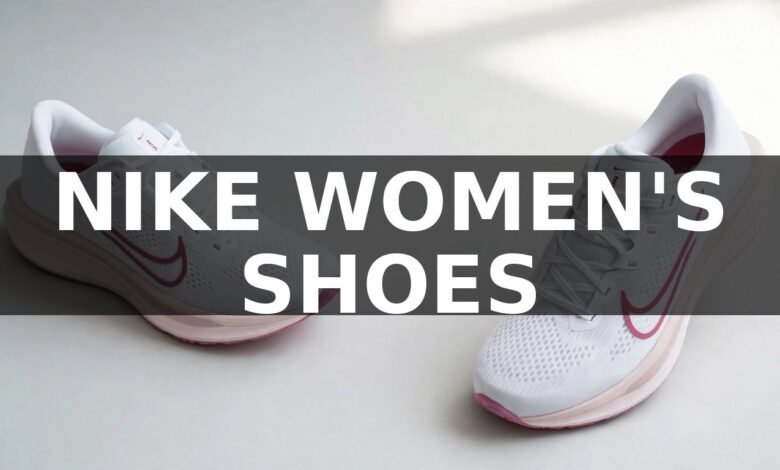
Nike women’s shoes are some of the most searched-for trainers in the world, and the reason is simple: the range covers almost everything. Whether you need a comfortable pair for daily walks, a cushioned shoe for running, a stable trainer for the gym, or a clean-looking sneaker for everyday outfits, there is a Nike women’s shoe built for that job. The challenge is not finding a pair. It is choosing the right one from a catalogue that can feel endless.
This guide walks you through the main styles, explains how Nike women’s sizing and fit actually work, and gives you a clear way to choose. You will also find price ranges, care tips, and answers to the questions women ask most often before buying.
What Makes Nike Women’s Shoes Different
Nike designs its women’s shoes on a women’s last, which is the foot-shaped form a shoe is built around. That matters more than most shoppers realise. A women’s last is usually narrower at the heel and slightly different in shape through the midfoot than a men’s last, which means a women’s shoe is more likely to fit a woman’s foot properly without heel slip or a loose feeling around the ankle.
The upper materials also tend to be chosen with women’s feet in mind. Many Nike women’s shoes use breathable mesh uppers that stretch a little and let air move, while the midsoles use foam cushioning that is tuned for a lighter average body weight. That does not mean the shoes are softer or weaker. It means the cushioning is designed to respond the way it should when the person wearing the shoe is lighter than the average male runner the men’s version was tuned for.
Nike also builds several cushioning technologies into its women’s range. Air cushioning units sit in the heel or forefoot of many models and give a responsive, springy feel underfoot. Foam midsoles, which appear across the running and training ranges, absorb impact and return energy with each step. The names of these technologies change over the years, but the idea stays the same: cushioning for comfort, and a stable platform so the foot lands naturally.
Style is the other half of the story. Nike women’s shoes are not only performance products. Many of the most popular pairs are bought for everyday wear, and Nike designs them accordingly, with clean colourways, low-profile silhouettes, and versions that work with jeans, leggings, dresses, and gym kit alike.
Main Types of Nike Women’s Shoes
Nike groups its women’s shoes by what they are made to do. Understanding these groups is the fastest way to narrow the choice, because a shoe built for sprinting and a shoe built for standing all day are solving different problems.
Running Shoes
Running shoes are the largest part of the range. They are built around cushioning, breathability, and a smooth transition from heel strike to toe-off. A typical Nike women’s running shoe has a mesh upper, a foam midsole, and a rubber outsole with grip for roads and pavements.
Within running, there are two broad directions. Daily trainers are the workhorses: comfortable, cushioned, and durable enough for regular runs of any distance. Then there are lighter, faster shoes with more responsive foam, aimed at runners who want speed on race day or tempo sessions. If you are just starting to run, a daily trainer is almost always the better first buy.
Well-known running lines in the women’s range include the Pegasus family, which has been a staple daily trainer for years, and the Vomero family, which sits at the softer, more cushioned end of the range. Lighter options such as the Revolution range offer a simpler, more affordable entry point for new runners.
Walking Shoes
Walking shoes look similar to running shoes, but the job is different. Walking puts less impact through the foot than running, yet it asks more of the shoe in other ways: the heel stays in contact with the ground longer, and the foot rolls through the step more slowly. Good walking shoes therefore favour flexibility, a supportive heel, and cushioning that stays comfortable over hours rather than minutes.
Many women simply use a cushioned running shoe for walking, and that works well. But if walking is your main activity, look for a shoe that feels flexible when you bend it in your hands, has a roomy toe box, and does not feel heavy. A shoe that is comfortable for a short walk around a shop may feel very different after an hour, so give it time when you try it on.
Training and Gym Shoes
Training shoes are built for lateral movement. When you do squats, lunges, side steps, or a fitness class, your feet move in more directions than they do on a run. A running shoe’s soft, high foam can feel unstable in those moments. A training shoe answers that with a flatter, firmer base and a more supportive upper.
The Metcon family is Nike’s best-known training line for women, built for lifting and high-intensity workouts. It has a firm heel for stability under a barbell and a grippy outsole for floor work. If your workouts are mostly cardio machines and light weights, a versatile cross-trainer may suit you better, since it blends running-shoe comfort with training-shoe stability.
Lifestyle and Everyday Sneakers
Lifestyle sneakers are the shoes you see everywhere: on the street, at work, at school, and on social media. The Air Force 1 is the classic example — a clean, low-profile leather sneaker that has been in the range for decades and works with almost any casual outfit. Air Max models bring visible air cushioning into everyday styles, giving them a distinctive look and a comfortable, bouncy feel.
These shoes are not built for serious running, even if they look sporty. The cushioning and support are tuned for walking and standing, not for the repeated impact of a run. That is fine, because that is the job they are made for. If you want one pair that covers both the gym and the street, a lifestyle sneaker is rarely the answer — but if you want a comfortable, good-looking everyday shoe, this is the category to start in.
Basketball and Court Shoes
Nike also makes women’s basketball and court shoes, built for the stop-start movement, jumping, and lateral cuts of court sports. These tend to have strong ankle support, firm midsoles, and grippy outsoles designed for indoor floors. Unless you play a court sport, you can skip this category — but if you do play, a proper court shoe protects your ankles far better than a running shoe ever will.
Nike Women’s Shoe Fit and Sizing
Fit is where most buying mistakes happen, so it deserves a careful look. Nike women’s shoes are sold in US women’s sizes, and they generally run true to size for most people. That said, “true to size” is a starting point, not a promise, because feet vary in width, arch height, and shape.
The most reliable way to find your size is to measure your feet. Stand on a piece of paper, trace around your foot, and measure the length from heel to longest toe. Do it in the afternoon, when feet are slightly larger than they are in the morning, and measure both feet — most people have one foot slightly bigger than the other, and you should fit the bigger one. Compare the result with Nike’s size chart, and when you are between sizes, most women find going up half a size works better, especially in running shoes where toes need room to move forward with each step.
Width matters too. Nike offers many women’s styles in a standard width, and some in wide options. If your feet feel squeezed across the widest part, or the sides of the shoe bulge out when you stand, a wide fit is worth trying rather than simply going up a size, which only adds length.
When you try a pair on, wear the socks you would normally wear with them. There should be about a thumb’s width of space between your longest toe and the end of the shoe. Your heel should stay in place when you walk — a little movement is normal, but your heel should not lift out of the shoe with every step. The shoe should feel comfortable immediately. Shoes do soften slightly with wear, but a pair that pinches or rubs in the shop is unlikely to become comfortable later, so do not buy on the hope that it will break in.
How to Choose the Right Pair
Choosing well is less about the brand name and more about matching the shoe to your life. A simple process helps.
Start with your main activity. Be honest about what the shoe will do most often. If you run three times a week, buy a running shoe. If you walk to work and stand all day, buy a walking or lifestyle shoe with good cushioning. If you lift weights and take classes, buy a training shoe. A shoe that tries to do everything usually does nothing particularly well.
Next, think about your feet. Do you have high arches, flat feet, or something in between? Do your feet roll inward when you walk, which is called overpronation, or stay fairly neutral? Runners with flat feet or overpronation often feel better in a stability shoe, which has extra support on the inside of the midsole. Runners with neutral feet usually do well in a neutral cushioned shoe. If you are unsure, a running shop can watch you walk or run and give you a quick assessment, and many women find that one visit saves them from several wrong purchases.
Then consider cushioning. More cushioning feels softer and protects your joints on long runs and long days on your feet, but it can also feel less connected to the ground. Less cushioning feels faster and more responsive, but it asks more of your feet and legs. For most women buying their first pair, a medium-cushioned daily trainer is the safest middle ground.
Finally, set your budget before you fall in love with a colourway. Nike women’s shoes span a wide price range, and a limited-edition colour of a premium model can cost far more than the standard version of the same shoe. Decide what the shoe is worth to you, then look for the best option inside that range.
Best Nike Women’s Shoes by Use
The table below gives a quick way to compare the main categories. It is a starting point, not a ranking — the “best” shoe is always the one that fits your feet and your routine.
| Use | What to look for | Good starting point |
|---|---|---|
| Daily running | Cushioned foam, breathable mesh, durable outsole | A neutral daily trainer such as the Pegasus range |
| Long-distance running | Maximum cushioning, smooth ride, lightweight feel | A high-cushion model such as the Vomero range |
| Walking | Flexibility, roomy toe box, all-day comfort | A cushioned running shoe or dedicated walking shoe |
| Gym and training | Flat stable base, firm heel, lateral support | A training shoe such as the Metcon range |
| Everyday wear | Clean design, easy to match, comfortable for standing | A lifestyle icon such as the Air Force 1 or an Air Max model |
| Budget running | Simple cushioning, reliable build, lower price | An entry-level runner such as the Revolution range |
| Court sports | Ankle support, grip for indoor floors, firm midsole | A dedicated women’s basketball or court shoe |
If you are buying your first pair and you are not sure where to start, a neutral cushioned daily trainer is the most versatile choice in the range. It works for running, walking, and general wear, and it gives you a baseline for what you like before you try a more specialised shoe.
How Much Do Nike Women’s Shoes Cost?
Prices vary widely, so it helps to think in bands rather than exact figures. Entry-level Nike women’s shoes typically sit at the lower end of the range, and they are a sensible choice for a first pair or for casual wear. Mid-range models, which include most daily running trainers and popular training shoes, typically cost more and bring better cushioning, more durable materials, and a more refined fit. Premium models, including high-cushion runners and limited-edition lifestyle releases, sit at the top of the range.
A few things affect the price beyond the model itself. New colourways of a popular shoe usually cost more than older ones, and prices often drop when a new version of a model is released and the previous version goes on sale. That is often the best time to buy: the previous year’s daily trainer is usually very close to the new one in comfort and performance, and it can cost noticeably less.
Sales events and outlet stores are also worth watching. Nike and its retail partners regularly discount older colourways, and a patient shopper can often find a good pair well below its original price. Just be careful with prices that look far too low on unfamiliar websites — counterfeit Nike shoes are common, and a pair that costs a fraction of the usual price is very often not genuine.
Where to Buy Nike Women’s Shoes
The safest place to buy is Nike’s own website or a well-known sports retailer. Buying direct usually gives you the full size range, the newest colourways, and a straightforward returns policy. Established sports retailers offer the same advantages, plus the chance to try shoes on in person.
Trying before you buy is worth the effort if you can. A shoe that looks right online can feel wrong on your foot, and the only way to know is to walk in it. If you buy online, check the returns policy before you order. Most major retailers allow returns of unworn shoes, so you can try them at home and send them back if the fit is wrong. Walk around your home in them for a while, on a clean floor, before you decide — and keep the box and tags until you are sure.
Avoid buying from sellers you cannot verify, especially on marketplace sites where anyone can list a product. Check reviews of the seller, look at the photos carefully, and be suspicious of listings that use only stock images. Genuine Nike shoes have consistent stitching, clean glue lines, and a quality feel that fakes rarely match.
How to Care for Your Nike Women’s Shoes
Good care makes a real difference to how long your shoes last. Running shoes typically last for several hundred kilometres of running, but that figure depends on your weight, your running style, and the surfaces you run on. For everyday shoes, the signs of wear matter more than any distance figure: when the cushioning feels flat, the outsole is smooth in places, or the upper starts to tear, it is time for a new pair.
Cleaning is simple. Remove loose dirt with a soft brush or a dry cloth, then wipe the uppers with a damp cloth and a small amount of mild soap. Avoid putting your shoes in a washing machine, which can damage the glue, warp the shape, and ruin the cushioning. Never dry them with direct heat, such as a radiator or a hair dryer — stuff them with newspaper or paper towels and let them dry at room temperature, away from sunlight.
Rotate your shoes if you can. Having two pairs and alternating them gives the foam time to recover its shape between wears, and it noticeably extends the life of both pairs. It also means you are not stuck if one pair gets wet. Store your shoes in a cool, dry place, and avoid leaving them in a hot car, where heat can soften glues and warp midsoles.
Common Mistakes to Avoid When Buying Nike Women’s Shoes
The most common mistake is buying the wrong size. Many women wear shoes that are too small, often because they have always bought the same size without re-measuring. Feet change over time, and they can grow slightly with age, after pregnancy, or with changes in weight. Measure your feet before every purchase, not just once.
The second mistake is choosing a shoe for how it looks rather than what it does. A beautiful lifestyle sneaker will not support a long run, and a stiff training shoe will not feel good on a ten-mile walk. Looks matter — you should like your shoes — but the job comes first.
The third mistake is ignoring width. If a shoe feels tight across the ball of your foot, going up a size will not fix it. It will only give you a longer shoe that still squeezes you in the wrong place. A wide fit exists for exactly this reason.
The fourth mistake is wearing running shoes until they fall apart. Cushioning wears out long before the upper looks damaged, so a shoe can look fine and still be offering far less support than it did when new. If your knees or feet start to ache on runs that used to feel easy, worn-out shoes are a common cause.
Finally, do not buy two pairs of the same shoe in different colours until you know the first pair fits. It is tempting when you find a style you love, but if the fit is wrong, you now own the problem twice.
FAQs
Are Nike women’s shoes true to size?
In general, yes. Most Nike women’s shoes run true to size, so your usual size is a good starting point. Feet vary, though, and running shoes in particular often feel better half a size up, because your toes need room to move forward as you run. Measure your feet and check the size chart for the specific model, and try the shoes on with the socks you plan to wear.
What is the difference between Nike women’s and men’s shoes?
The main difference is the last, or foot shape, the shoe is built on. Women’s shoes are generally narrower at the heel and built for a slightly different foot shape, and the cushioning is often tuned for a lighter average body weight. Sizing is different too: a women’s US 8 is roughly equivalent to a men’s US 6.5, though this varies by model. Some women with wider feet do wear men’s shoes, and some men wear women’s shoes — the fit matters more than the label.
Which Nike women’s shoes are best for walking all day?
For all-day walking, look for a cushioned shoe with a flexible sole and a roomy toe box. Many women find a cushioned daily running shoe works well for walking, because it offers good shock absorption and breathability. Comfort over several hours matters more than any single feature, so try the shoe on and walk in it for a while before deciding.
Can I run in Nike lifestyle sneakers like the Air Force 1?
You can run a short distance in them, but they are not built for running. Lifestyle sneakers are designed for walking and everyday wear, with flat soles and cushioning tuned for standing rather than impact. Running regularly in them can be uncomfortable and may strain your feet and knees. If you want to run, choose a proper running shoe and keep the lifestyle pair for everything else.
How do I clean Nike women’s shoes?
Brush off loose dirt first, then wipe the uppers with a damp cloth and mild soap. Use a soft brush on mesh and a cloth on leather. Do not put them in a washing machine, and do not dry them with direct heat. Stuff them with newspaper and let them dry at room temperature. For white shoes, a gentle cleaner made for sneakers can help, but test it on a small area first.
How often should I replace my Nike running shoes?
It depends on how much you run and how you run. As a general guide, running shoes last for several hundred kilometres before the cushioning loses its bounce, but the real test is how they feel. If the midsole feels flat, the grip is worn smooth, or you notice new aches after runs that used to feel comfortable, it is probably time for a new pair. Rotating two pairs can help them last longer.
Conclusion
Nike women’s shoes earn their popularity because the range is genuinely broad: cushioned daily trainers for running, stable shoes for the gym, flexible options for walking, and clean lifestyle sneakers for everyday wear. The right pair is not the most expensive one, or the one everyone else is wearing. It is the one that matches what you actually do, fits your feet properly, and feels comfortable from the first wear.
Start with your main activity, measure your feet, and try the shoes on with the right socks. Give yourself room in the toe box, make sure your heel stays put, and remember that comfort on day one is a good sign, not something you should have to wait for. Buy from a retailer you trust, keep the receipt until you are sure, and look after the shoes you choose — they will last longer and feel better for it. With the right fit and the right style, a good pair of Nike women’s shoes becomes the pair you reach for every day.
Read Also: New Balance Men’s Fresh Foam X 860v14 (2026 Guide)




One Comment