
How to Parallel Park (2026 Guide): Step-by-Step Instructions for Tight Spots
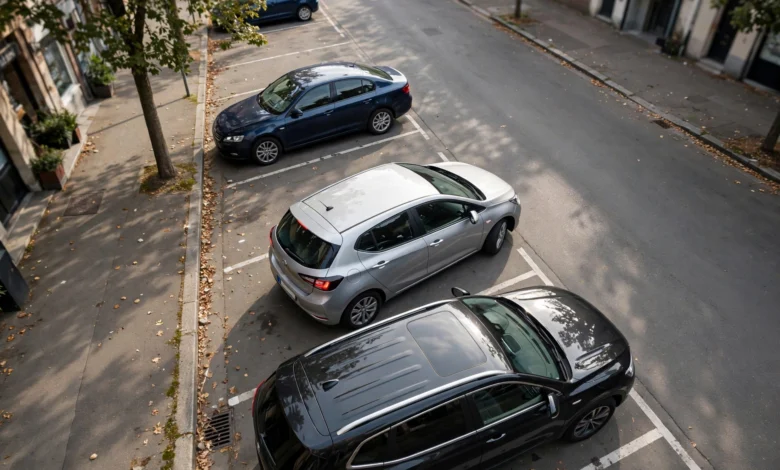
Learning how to parallel park brings a special kind of dread: you’re circling a busy street, you finally spot an open curb space, and the car behind you is already waiting for you to take it. Your palms get a little sweaty. The space looks smaller than it did from a distance. And suddenly every driver in the neighborhood is watching.
If parallel parking makes you nervous, you’re in very large company. Surveys of drivers routinely find it’s the maneuver people fear most — more than motorway merging, more than roundabouts. But here’s the thing nobody tells nervous drivers: parallel parking isn’t a talent. It’s a recipe. Follow the steps in the right order, hit the same reference points every time, and the car practically parks itself.
The bottom line: line up beside the car in front of the space, reverse in at roughly 45 degrees using your mirrors, then straighten out. The whole thing takes about 30 seconds once you’ve practiced it a few times.
What You Need Before You Start
Before you even think about steering, check that the space is actually big enough. The rule of thumb driving instructors teach everywhere: you need a gap at least one and a half times the length of your car. For an average hatchback that’s roughly 6 to 7 meters of curb. If the space is shorter than that, don’t be a hero — drive on and find another one. Squeezing into a too-small spot is how bumpers get scuffed and how you end up blocking traffic while performing a fifteen-point turn of shame.
Also, take a second to set yourself up properly:
- Adjust your mirrors. You should be able to see the curb and the rear of the car behind you. Many drivers tilt the passenger-side mirror down slightly for parking — it makes the curb visible and saves your alloy wheels.
- Signal early. Indicate toward the curb well before you stop so the driver behind you knows what you’re doing and gives you room.
- Check for hazards. Cyclists, pedestrians stepping off the pavement, a drain cover exactly where your wheel wants to go — have a quick look before you commit.
How to Parallel Park: The Step-by-Step Method
This is the standard method taught by driving schools. It works for left-hand parking (the usual case in countries that drive on the right; mirrored for the UK and other left-hand-traffic countries — just swap left and right in the instructions).
Step 1: Pull Up Alongside the Car in Front
Drive past the empty space and stop parallel to the car parked in front of it. Line up your rear bumper roughly with that car’s rear bumper, leaving about two to three feet (half a meter to a meter) of sideways gap between the two cars. Don’t hug it too close — you need swinging room — but don’t leave a canyon either.
Step 2: Check, Signal, Reverse
Signal toward the curb. Check all mirrors and glance over your shoulder for traffic, cyclists, and pedestrians. Shift into reverse. From this point on, everything happens slowly — walking pace or slower. Speed is the enemy of precision here.
Step 3: Turn Full Lock Toward the Curb and Back In
Turn the steering wheel fully toward the curb (full right lock for a right-side space) and start reversing slowly. Your car’s nose will swing out toward the road — that’s normal, but keep an eye on traffic coming up behind you. Watch your passenger-side mirror: you’re looking for the moment your car reaches roughly a 45-degree angle to the curb.
Fun fact: that 45-degree angle isn’t arbitrary. It’s the sweet spot where your rear wheel drops closest to the curb without hitting it, based on the average car’s turning circle. You don’t need a protractor — you’ll learn to feel it after a few tries.
Step 4: Straighten Up and Keep Reversing
Once you hit that angle, straighten the steering wheel completely and keep reversing straight back. This pulls the front of your car in off the road and away from traffic. A handy reference: when your passenger-side mirror lines up with the rear bumper of the car in front of the space, you’re in good shape. Your rear wheel should now be within 6 to 12 inches of the curb.
Step 5: Turn Away From the Curb to Tuck In
Now turn the wheel fully away from the curb (full left lock) and continue reversing slowly. The front of your car will swing in toward the curb. Keep watching both mirrors — you want to stop when the car is parallel with the curb.
Step 6: Center Yourself and Finish
Straighten the wheels. If you’re closer to one car than the other, pull forward or back a little to center yourself in the space. Aim to finish about 12 inches (30 cm) from the curb — close enough to be legal and considerate, far enough that you won’t scrape a wheel. Shift into park (or first gear), engage the handbrake, and you’re done.
The Mirror Trick That Makes It Click
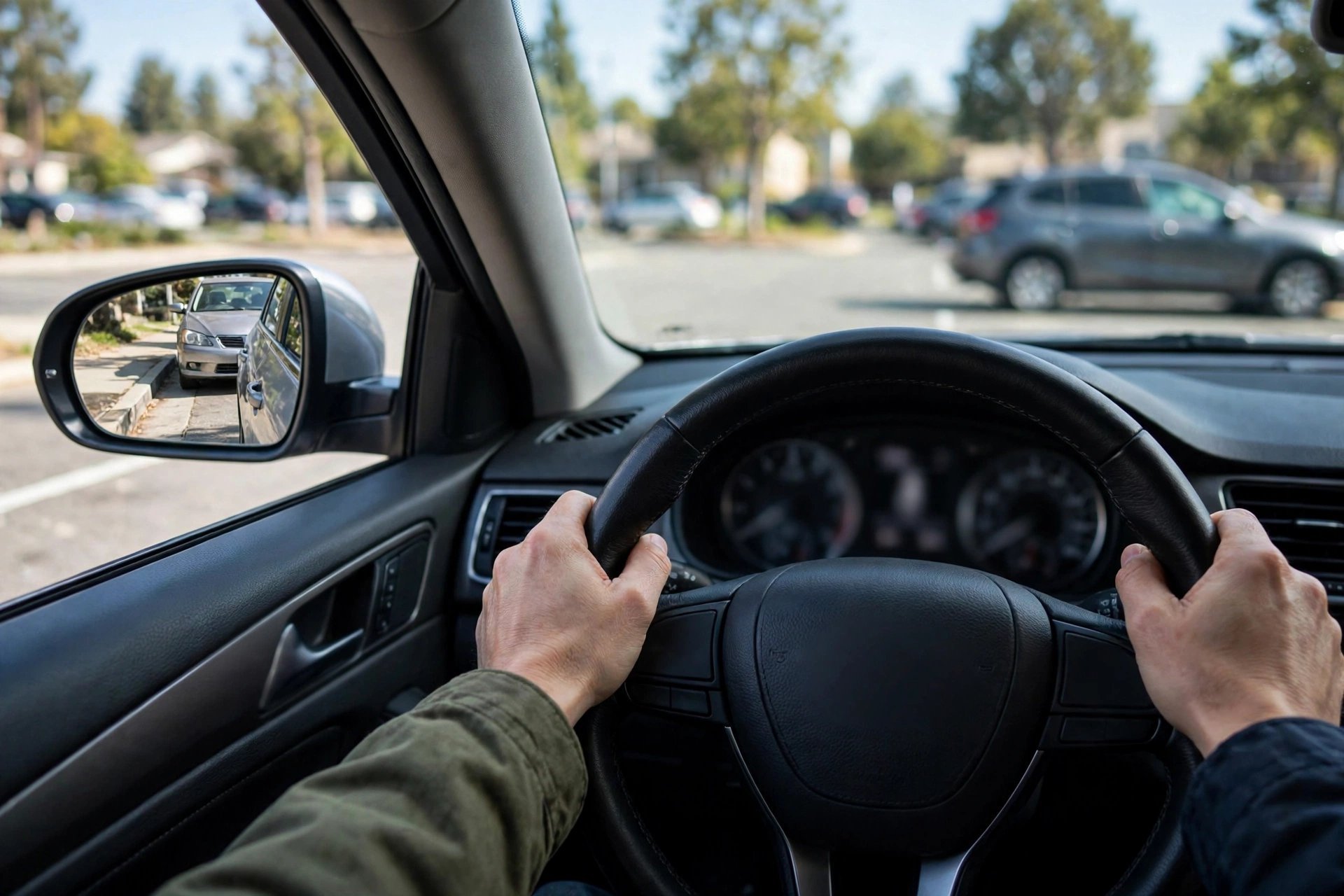
If the steps feel abstract, here’s the single reference point that makes parallel parking click for most learners: use your side mirrors as rulers.
When you start reversing at full lock, watch the car parked behind you in your driver’s-side mirror. The moment you can see its front headlight (or front number plate) fully in that mirror, that’s your cue — you’re at the magic angle, so straighten the wheel. Later, when your passenger-side mirror draws level with the rear bumper of the car ahead, that’s your cue to turn away from the curb. Two mirror cues, and you barely have to guess at all.
Drivers who learn these two reference points usually go from dreading the maneuver to doing it on autopilot within a week of practice — solid proof that anyone can learn how to parallel park with the right cues.
Common Parallel Parking Mistakes (and How to Fix Them)
Starting too far from the parked car
If you begin more than about three feet out, your turning arc goes wide and you’ll end up too far from the curb — or worse, sticking out into traffic. Fix: pull in closer before you start reversing. If you’ve already started badly, there’s no shame in pulling out and resetting.
Turning the wheel too late
Waiting too long to apply full lock means the rear of your car never gets close enough to the curb, and you finish at a weird diagonal. Fix: start turning as soon as the car begins moving backward, not after.
Forgetting the front swing
Beginners obsess over the rear of the car and forget the nose swings wide in the opposite direction. That’s how front bumpers meet other cars’ rear bumpers. Fix: during step 3, glance at the car ahead in your mirror and make sure your nose clears it.
Going too fast
Almost every bad park starts with too much speed. At crawling pace you have time to correct; at anything faster, small errors become big ones. Fix: cover the brake, feather it, and let the car creep.
Giving up halfway and blocking the road
If the maneuver goes wrong, don’t freeze mid-road. Either complete it calmly or pull out, drive around the block, and try again. Nobody ever got a ticket for taking a second attempt.
How to Practice Parallel Parking Without the Pressure
The best way to get good is to remove the audience. Find a quiet residential street early on a weekend morning, or an empty car park, and set up your own space with two bins or cones about 1.5 car lengths apart. Run the steps five or six times in a row. By the fourth attempt, your hands will start doing the right things without you thinking about them.
Some specific drills that help:
- The mirror drill: practice just steps 1–4, focusing only on spotting the two mirror reference points. Repetition burns them into memory.
- The tight-space drill: once you’re comfortable, shrink the practice gap gradually. Real streets are rarely generous.
- The wrong-side drill: if you ever need to park on the opposite side of the road, everything mirrors. Worth one practice run so it doesn’t surprise you.
And if your car has parking sensors or a reversing camera, use them — but don’t depend on them. Sensors are a backup, not a method. On your driving test, the examiner wants to see you using mirrors and observations, not staring at a screen. For another step-by-step walkthrough, the RAC’s parallel parking guide covers the same method with helpful diagrams.
Parallel Parking on Hills and in Tricky Situations
Flat, wide streets are the tutorial level. Real life adds complications — here’s how to handle the common ones.
Parking on a hill
When you parallel park facing uphill with a curb, turn your front wheels away from the curb after parking, so if the brakes ever failed the car would roll back into the curb, not into traffic. Facing downhill, turn the wheels toward the curb. With no curb at all, turn wheels toward the edge of the road. This is a favorite driving-test question, so learn it cold — examiners ask about it even when the test route is flat.
Very tight one-way streets
On narrow streets, oncoming traffic can’t pass while you maneuver, which adds time pressure. The trick is committing: signal early, position decisively, and execute the steps without hesitation. Hesitation is what causes the five-minute ordeal. If someone waits behind you, a quick hazard-light flash to say thanks costs nothing.
Parking between two large vehicles
Vans and SUVs block your sightlines, which makes the mirror reference points harder to read. Compensate by going even slower and leaning on your shoulder checks more than usual. If you genuinely can’t see, it’s fine to stop, get out, and look — thirty seconds of mild embarrassment beats a dented bumper.
Parallel Parking on Your Driving Test
Examiners aren’t looking for perfection; they’re looking for control and awareness. The things that actually fail people: not checking blind spots before reversing, mounting the curb hard, finishing unacceptably far from the curb, or taking so many attempts that they hold up traffic. Do your mirror checks out loud if it helps (“mirrors, signal, blind spot”), keep it slow, and if you need to pull forward to straighten up, that’s fine — corrections are allowed, chaos isn’t. Before test day, it’s worth reading the Highway Code rules on reversing, so you know exactly what standard your examiner is judging you against.
What About Automatic Parking Systems?
Many modern cars offer park assist that steers for you while you work the pedals. It’s genuinely useful tech, but treat it as training wheels. The system needs a big enough space to work with, it can get confused by unusual curbs, and you are still legally responsible for the car. Learn how to parallel park manually first; let the computer be your backup, not your brain.
Frequently Asked Questions
How much space do I need to parallel park?
About one and a half times your car’s length. For a typical family car that’s roughly 6–7 meters (20–23 feet) of curb space. Less than that and the geometry simply doesn’t work without multiple shuffles.
How far should I be from the curb when finished?
Around 12 inches (30 cm) is the textbook answer — close enough to be out of traffic’s way, far enough to protect your wheels and tires from curb damage.
Is it illegal to park too far from the curb?
In many places, yes — or at least ticketable. Parking an excessive distance from the curb can count as obstruction. Rules vary by city and country, so check local regulations, but “within 12 inches” keeps you safe almost everywhere.
Why do I keep hitting the curb?
Almost always because of too much speed or straightening the wheel too late in step 4. Slow down, and use the mirror reference points instead of guessing.
Can I parallel park a big SUV or truck?
Yes, but you need a bigger gap and wider awareness of your corners. The method is identical; the margins are just tighter. If your vehicle has a long rear overhang, start your turn slightly earlier.
Do I really need to learn this with parking cameras everywhere?
Cameras help, but they don’t replace the method — they have blind spots, get dirty, and fail. And on a driving test, observation and mirror use is what’s being assessed. Learn it properly once and you’ll have it for life.
Conclusion
Parallel parking feels impossible right up until the moment it feels easy, and the switch flips faster than you’d expect. It’s not about talent or spatial genius — it’s about a repeatable sequence: line up, reverse at 45 degrees, straighten, tuck in, center up. Learn the two mirror reference points, practice them half a dozen times somewhere quiet, and the curb-side spot that used to terrify you becomes just another place to leave the car. Once you know how to parallel park, those tight curb-side spaces stop being stressful. The bottom line: slow down, trust the steps, and give yourself permission to take a second attempt whenever you need one.





One Comment