White Claw: Everything About Calories, Flavors, Alcohol Content & Nutritionv
White Claw: Everything You Need to Know About America’s Favorite Hard Seltzer
A decade ago, the words “hard seltzer” meant almost nothing to most American drinkers. Today, one brand name is shorthand for the entire category: White Claw. You’ve seen the slim white cans at beach parties, cookouts, tailgates, and in what seems like every cooler on the internet. Maybe you’ve cracked one open yourself. Maybe you’ve wondered what’s actually inside that frosty can — and whether the hype is deserved.
This guide covers it all: what White Claw really is, who makes it, what it’s made from, the full nutrition breakdown, every flavor worth knowing about, how it stacks up against Truly, and the practical stuff people actually ask about — like whether it will get you drunk and whether it’s genuinely gluten-free. Let’s get into it.

What Is White Claw?
White Claw is a hard seltzer — sparkling water blended with alcohol and a hint of natural fruit flavor. Each standard 12-ounce can carries 5% alcohol by volume, 100 calories, and 2 grams of carbs. It’s gluten-free, lightly carbonated, and designed to taste more like fruit-flavored sparkling water than like beer, wine, or a cocktail.
That’s the whole pitch, really, and it explains why the drink took off. It isn’t beer, it isn’t wine, and it isn’t a cocktail from a can. It sits in its own lane: light, fizzy, sessionable, and easy to drink at a cookout without the heaviness of beer or the sugar crash of a mixed drink.
The brand launched in the United States in 2016 and, within about three years, became the undisputed market leader of the hard seltzer category. In the summer of 2019, White Claw reportedly accounted for more than half of all hard seltzer sold in the US, with sales volume up roughly 275% over the prior year. Demand grew so fast the company briefly ran short of product — the famous “White Claw shortage” that only added fuel to the legend.
Who Owns White Claw?
White Claw is owned by Mark Anthony Brands (part of the Mark Anthony Group), the private beverage company run by Canadian entrepreneur Anthony von Mandl. The same company created Mike’s Hard Lemonade, so hard seltzer was a natural next move: same ready-to-drink expertise, aimed at a generation that was turning away from heavy beers and sugary cocktails.
Fun fact: although White Claw launched in the US, the original recipe was developed at Mark Anthony’s innovation center in Ireland. The brand then spread from the US to Canada (2020), the UK (2020), and other markets, with slight formulation changes from country to country — more on that below.
And yes, White Claw is a private company, so you can’t buy its stock. Investors who wanted a piece of the seltzer boom had to buy into competitors’ parent companies — like Boston Beer, which owns Truly — instead.
Read Also: DopeBox: What It Is, How It Works, and Whether It’s Safe & Legal (2026 Guide)
How White Claw Became a Cultural Phenomenon
The numbers explain the business success. The vibe explains the cultural one. In 2019, comedian Trevor Wallace’s viral video shouting “ain’t no laws when you’re drinking Claws” turned the brand into a meme, and White Claw became the unofficial drink of summer — showing up in memes, party photos, and Halloween costumes. It was the right product at the right moment: social, photogenic, and low-maintenance.
What’s Actually in White Claw? Ingredients and Alcohol Base
Here’s a question that trips a lot of people up: is there vodka in White Claw? In the United States, no. The alcohol in American White Claw comes from fermented sugars derived from malted gluten-free grains — a gluten-free alcohol base that is legally classified as a flavored malt beverage (FMB), not a spirit. The company then blends that neutral base with purified carbonated water and natural flavors, plus small amounts of cane sugar, citric acid, natural juice concentrate, and sodium citrate depending on the flavor.
The exact brewing and filtration methods are trade secrets, though the brand has marketed proprietary processes like BrewPure over the years to describe how it keeps the base clean and neutral so the fruit flavor comes through without heaviness.
One wrinkle: the Canadian version of White Claw is made with vodka rather than the fermented base, thanks to different local regulations and tax rules. And in the UK, the version sold historically used a triple-distilled spirit at 4.5% ABV. So if you’re reading about White Claw online and the specs don’t match what’s in your hand, check which country’s version you’re looking at.
White Claw Nutrition Facts
Nutrition is where White Claw won a huge share of its audience. At 100 calories and 2 grams of carbs per 12-ounce can, it undercuts most beers, wines, and cocktails by a wide margin — roughly 30% fewer calories than a standard lager, and a fraction of the carbs.
| White Claw Line | ABV | Calories (12 oz) | Carbs | Sugar |
|---|---|---|---|---|
| Original Hard Seltzer | 5% | 100 | 2g | 2g |
| Surge (stronger line) | 8% | 220 | 4g | 1g |
| REFRSHR Iced Tea Seltzer | 5% | 100 | 1g | 1g |
| 0% Alcohol Seltzer | 0% | 15 | 1g | 0g |
A couple of caveats for accuracy. First, the Surge line trades lightness for punch: 8% ABV in a bigger, stronger can, and the calories roughly double. Second, nutrition numbers can vary slightly by flavor — a gram here or there — so the figures above are the standard published values, not lab-certified constants for every batch.
And while “100 calories” sounds like a health halo, keep perspective: alcohol is alcohol. The calories come mostly from the alcohol itself, which your body treats as empty energy. White Claw is a lighter option than beer or cocktails, but it’s still an alcoholic drink, not a wellness beverage.
Is White Claw Gluten-Free?
Yes. White Claw is labeled gluten-free, and the US version’s alcohol base is fermented from sugars rather than brewed from barley or wheat, which is how traditional beer gets its gluten. That makes it a go-to choice for people with gluten sensitivity who still want an easy-drinking canned beverage.
A word of caution for anyone with celiac disease: gluten-free hard seltzers are generally considered a safe category, but packaging lines shared with other products exist in the beverage industry, and individual tolerance varies. If you’re highly sensitive, it’s worth checking the brand’s latest allergen information on its official site.
Every White Claw Flavor Worth Knowing
White Claw has released a long lineup of flavors over the years, though availability rotates — some are year-round staples, others show up in variety packs or limited runs. Here are the core names you’ll run into most often in the US:
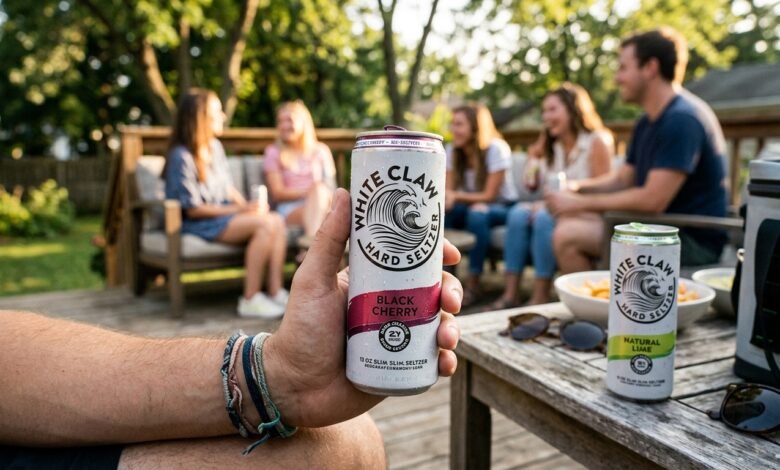
- Black Cherry — the flagship. Ask a White Claw fan to name one flavor and this is it. Dark, sweet-tart cherry over the neutral base.
- Mango — the tropical crowd-pleaser. Sweeter and rounder than most of the lineup, consistently ranked near the top by fans.
- Natural Lime — zesty, citrusy, crisp. One of the originals and arguably the best mixer of the bunch.
- Watermelon — light, delicate, almost melon-rind fresh rather than candy-sweet.
- Raspberry — bright berry with a little more tartness than the cherry.
- Ruby Grapefruit — citrus with a slight bitter edge, great for people who find other seltzers too sweet.
- Lemon — straightforward, tart, and refreshing; took a couple of years of development to get the flavor right.
- Tangerine — clean citrus with a natural sweetness, like biting into the actual fruit.
- Blackberry — dark berry, gently sweet and balanced with tartness.
- Pineapple — tropical and juicy, a variety-pack favorite.
- Peach — soft, ripe, and mellow.
- Green Apple — crisp and tart, popular in newer variety packs.
- Grape — a later addition that leans slightly candied.
- Strawberry — sweet and simple, common in variety packs.
If you’re buying for a group, the variety packs are the smartest move. White Claw rotates several numbered variety packs (you’ll see #1, #2, #3 and others), each bundling different flavors, so everyone finds something they like without committing to a full 12-pack of one flavor.

White Claw’s Product Lines: Surge, REFRSHR, 0% Alcohol, and More
The original 5% seltzer is the star, but White Claw has grown into a small portfolio. Here’s what the brand extensions look like:
White Claw Surge
Surge is the stronger sibling: 8% ABV in a larger can, with bold flavors like Blood Orange, Cranberry, Blackberry, and Lime. At around 220 calories, it’s closer in strength to a strong beer or a light cocktail. Think of it as the “I want one, not three” option — and worth respecting as such, because that extra alcohol sneaks up fast in something this easy to drink.
White Claw REFRSHR Iced Tea
REFRSHR is a hard iced tea seltzer: brewed black tea extract blended with the usual seltzer base, 100 calories, 5% ABV, and only 1 gram of sugar. Flavors include Peach, Lemon, Strawberry, and Mango. It scratches the same itch as a hard iced tea but keeps the calorie and sugar counts low, which is the whole point of the line.
White Claw 0% Alcohol
Launched in December 2023, the 0% Alcohol seltzer keeps the fruity sparkling profile with no alcohol and only about 15 calories per can. It fits the growing “sober curious” trend — same can, same social ritual, none of the next-day consequences. For designated drivers and anyone cutting back, it’s one of the more convincing non-alcoholic options out there.
White Claw Vodka and CLAWTAILS
In a fun bit of brand expansion, White Claw moved into distilled spirits: a premium vodka line plus flavored vodkas (mango, pineapple, and others), and ready-to-drink CLAWTAILS — canned cocktails that riff on the brand’s fruity identity. The irony isn’t lost on anyone: people spent years asking if White Claw had vodka in it, and now the answer is “it can, if you buy the vodka.”

White Claw vs. Truly: Which Is Better?
The great American hard seltzer debate has two contenders: White Claw and Truly (owned by Boston Beer, the Samuel Adams folks). Analysts used to treat it like a Coke-versus-Pepsi battle, and the comparison is still the one people ask about most. Here’s the honest breakdown:
| Metric (12 oz, flagship line) | White Claw | Truly |
|---|---|---|
| ABV | 5% | 5% |
| Calories | 100 | 100 |
| Carbs | 2g | 1g |
| Sugar | 2g | 1g |
| Gluten-free | Yes | Yes |
| Alcohol base | Fermented sugar / gluten-free malt base | Cane sugar fermented |
| Flavor reputation | Rounder, slightly sweeter sip; Black Cherry and Mango are icons | Tarter, lighter, drier finish; more flavors in rotation |
The nutritional differences are basically a rounding error: one gram of carbs here, one gram of sugar there. Nobody’s body can tell the difference between White Claw’s 2 grams and Truly’s 1 gram in any meaningful way. The real difference is taste. In taste-test write-ups, Truly tends to read tarter and lighter with a quicker, drier finish, while White Claw carries a rounder mouthfeel and comes across a touch sweeter on the first sip — Mango and Black Cherry especially.
My take? Buy a variety pack of each, drink them side by side, and let your own palate vote. These are $15–$18 twelve-packs, not marriages. And flavor lineups change often enough that whichever brand you prefer today, you should re-check in a year.
Can White Claw Get You Drunk?
Yes — and this is the misconception that catches people out. White Claw tastes like lightly flavored sparkling water, but at 5% ABV it’s roughly the same alcohol strength as a standard American lager. Drink four or five of them the way you’d drink sparkling water and you’ll feel it just as surely as four or five beers.
The Surge line makes this even more important: at 8% ABV, a Surge can carries significantly more alcohol than a standard beer. Because seltzers are so easy to drink quickly — cold, fizzy, sweet-ish — pace yourself the way you would with beer, not with LaCroix. And if you’re looking at the 0% Alcohol line specifically to avoid this, that one genuinely won’t get you drunk.
How to Drink White Claw: Serving Tips
Hard seltzer is a low-effort drink by design, but a few small habits make it noticeably better:
- Serve it cold — genuinely cold. Warm seltzer tastes flat and vaguely medicinal. Refrigerate for at least a few hours, and put it on ice if you’re heading outside.
- Pour it into a glass. You don’t have to, but pouring over ice in a glass opens up the carbonation and the fruit aroma. The slim cans are iconic; the flavor is better out of one.
- Add real fruit or herbs. A lime wedge in the Natural Lime, fresh mint in the Watermelon, or frozen berries in the Black Cherry turns a $1.50 can into something that tastes like a real cocktail.
- Use it as a mixer. White Claw works as a light, bubbly base for simple cocktails — pour Natural Lime over ice with a shot of tequila and you have a low-calorie riff on a ranch water.
- Mind the ice melt. Seltzers dilute fast. If you’re sipping slowly at a party, drink from the can; if you’re pouring, use big ice cubes that melt slower.
Price and Where to Buy White Claw
In the US, White Claw typically runs about $8–$12 for a 6-pack and roughly $16–$18 for a 12-pack of the original line, depending on your state and retailer. Surge and specialty lines sometimes price a dollar or two higher. Grocery stores, liquor stores, warehouse clubs, and delivery apps all carry it — availability is one of the brand’s quiet strengths. If a store sells alcohol at all, it probably sells White Claw.
Outside the US, specs and prices vary. UK cans have historically been 4.5% ABV and around 95 calories, sold through major supermarkets. Always check the label in your market rather than assuming US numbers.
Is White Claw Healthy? Pros and Cons
Let’s be straight: no alcoholic drink is “healthy.” But if you’re going to drink, it helps to know where White Claw sits on the spectrum.
The upsides: it’s low-calorie and low-carb compared with beer, wine, and cocktails; it’s gluten-free; there’s no high-fructose corn syrup or artificial sweeteners in the standard line; and the simple nutrition math makes it easy to track what you’re consuming. For people managing gluten or carb intake, those are real advantages.
The downsides: alcohol calories are still empty calories; the easy-drinking flavor can lead to drinking more volume without noticing; the Surge line is calorie-dense enough to erase the advantage; and “gluten-free” doesn’t mean hangover-free. Seltzer hangovers are just as real as beer hangovers — dehydration and alcohol do the damage either way.
White Claw FAQ
Read Also: Enterprise Resource Planning (ERP): What It Is, How It Works & How to Choose (2026 Guide)