Chief Technical Examiner Explained: Essential 2026 Guide to CTEO and Government Oversight
Chief Technical Examiner: Powerful Guide to CTEO in 2026
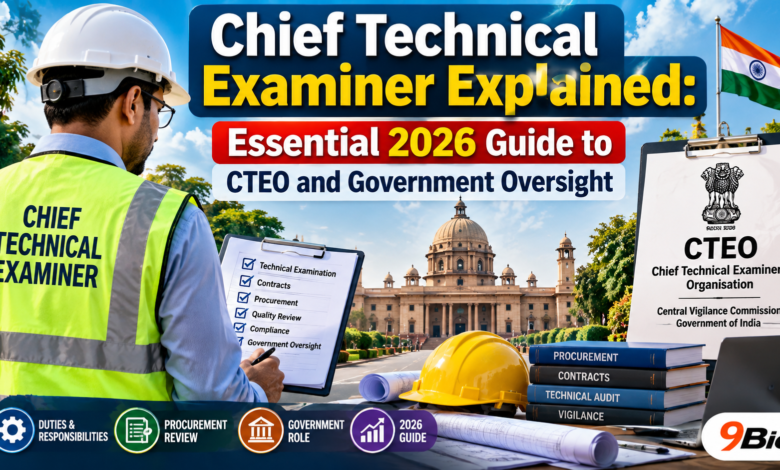
The Chief Technical Examiner is a senior technical oversight position linked to the examination of government works, contracts, and procurement. In India, the title is closely associated with the Chief Technical Examiners’ Organization (CTEO), the technical wing of the Central Vigilance Commission (CVC).
People search the term to understand its duties, authority, career context, and connection with public procurement. This is an institutional position, not the unique name of one public figure.
Quick Bio Table
| Detail | Verified information |
|---|---|
| Position | Chief Technical Examiner |
| Main context | Government technical examination and vigilance |
| Organisation | Chief Technical Examiners’ Organisation (CTEO) |
| Parent institution | Central Vigilance Commission (CVC) |
| Core work | Examination of works, contracts, and procurement |
| Main areas | Civil works, procurement, electrical/mechanical work, stores and services |
| Organisation history | Created in 1957; placed under CVC in 1964 |
| Personal biography | Not applicable to the title |
Who Is the Chief Technical Examiner?
The Chief Technical Examiner is a senior technical official who examines selected government works and procurement activities. Within India’s central vigilance framework, the role operates through the CTEO and provides technical expertise to the Central Vigilance Commission.
The work goes beyond checking whether a project was completed. Examinations may consider estimates, drawings, specifications, tender conditions, measurements, quality, contract compliance, payments, and supporting records.
Government material states that CTEO was created in May 1957 and later placed under the CVC in 1964. This history explains the role’s combination of engineering expertise, procurement review, and vigilance oversight.
Early Life and Background
Because this is an institutional position, there is no single birthplace, childhood, family history, or personal education record to report. The relevant background is the development of technical examination within government.
CTEO began in 1957 in the then Ministry of Works, Housing & Supply. Its creation followed recommendations concerning technical examination of government works. After the Santhanam Committee recommendations were accepted, the organization came under the Central Vigilance Commission in 1964.
Career
A career leading to the Chief Technical Examiner position normally sits at the intersection of engineering knowledge, contract administration, procurement, and government oversight. Exact eligibility and appointment conditions depend on the relevant government rules and vacancy notification.
The CTEO’s documented work covers areas such as civil and horticultural works, stores purchases, electrical and mechanical contracts, and services. Technical officers can review estimates, drawings, specifications, tender documents, contract conditions, measurement records, bills, quality documents, and site conditions.
The purpose is to compare approved requirements with the work and records available for examination. Reviews can identify technical or procedural weaknesses involving measurements, specifications, quality, procurement procedures, contract administration, or payments.
This makes the position different from ordinary project supervision. The examiner provides a technical oversight perspective within a vigilance framework. CTEO documentation describes intensive examination of procurement contracts and technical advice to the Commission.
The organization also expanded as procurement became more complex. According to the CVC compendium, a second examiner post was created in 1979 to address increased workload and growing public-procurement complexity.
Rise to Public Recognition
The Chief Technical Examiner is not normally a celebrity-style public figure. Recognition usually arises when a technical examination, procurement issue, vigilance matter, or major government project receives professional or public attention.
The role matters because technical decisions can affect project costs, quality, compliance, and public resources. Government documents therefore provide more reliable information about the office than biography-style websites.
Recent government material also shows continuing attention to CTE-type inspections, technical standards, integrity, transparency, and accountability in public infrastructure.
Why the Chief Technical Examiner Role Matters
CTEO connects technical expertise with institutional oversight. Its examinations can identify weaknesses that may not be obvious from financial or administrative records alone.
Personal Life
No single person holds the Chief Technical Examiner title. It refers to an official position rather than one individual.
Reliable sources therefore cannot support a universal age, birthplace, marital status, children, hobbies, wealth, or family history. Such information belongs to a specific officeholder and should be reported only when authoritative sources clearly identify that person.
Marriage & Family
Marriage and family information does not apply to the Chief Technical Examiner as an institutional title. Different officials can hold technical examination posts at different times or within different organizations.
A personal biography would require the full name of a particular officeholder and reliable documentation. Without that information, publishing details about a spouse, children, or relatives could create a misleading biography.
Major Life Events
The major documented milestones connected with the role are institutional. The technical examination organization was established in May 1957 and later placed under the administrative control of the Central Vigilance Commission in 1964.
A further milestone came in 1979, when another post was created as workload and public-procurement complexity increased.
Public Image and Legacy
The public image of the Chief Technical Examiner is closely connected with technical scrutiny, procurement review, vigilance, and accountability.
Its institutional legacy comes from applying engineering and technical expertise to public-sector examination. Reviews can address specifications, procurement processes, contract administration, measurements, quality control, and payment practices rather than focusing only on visible construction defects.
Why People Search for the Chief Technical Examiner
Search interest commonly comes from engineers, contractors, government employees, procurement professionals, students, and readers researching the CVC.
People may want to know what CTEO means, what a technical examiner checks, how intensive examination works, or how this position differs from a project engineer or ordinary inspector. Government notifications can also prompt searches about appointments and eligibility.
Privacy, Accuracy and Public Information
Information about the Chief Technical Examiner should be divided into institutional facts and individual biography. Official government records are the strongest sources for the organization’s history, structure, duties, and appointments.
Online articles may explain the role, but they should not be treated as proof of a person’s salary, age, family, education, or private life. Current vacancy records also show that such posts can be filled through deputation, meaning officeholders may change over time.
Conclusion
The Chief Technical Examiner is best understood as a technical oversight position rather than a biography of one person. In India’s central vigilance system, the role is closely linked to the CTEO and the Central Vigilance Commission.
Its documented history reaches back to 1957, while its work includes technical examination of government works, procurement, contracts, quality, measurements, and related records. Understanding the institutional context helps separate verified facts from unsupported personal claims.
More Celebrity: Explore in-depth biographies, career journeys, family backgrounds, and the latest updates on your favourite celebrities at 9Bio.co.uk.
(FAQs)
What is a Chief Technical Examiner?
A Chief Technical Examiner is a senior technical official who examines government works, contracts, and procurement. In India’s central vigilance framework, the position is associated with CTEO, the technical wing of the Central Vigilance Commission. Reviews can cover specifications, measurements, quality, contracts, procurement procedures, and payments.
What does a Chief Technical Examiner do?
The role involves reviewing technical and contractual evidence connected with selected government projects and procurement activities. Examinations may include estimates, specifications, tender documents, measurements, quality records, bills, and site conditions. The purpose is to identify technical or procedural deficiencies and provide technical input to vigilance oversight.
What is CTEO?
CTEO stands for Chief Technical Examiners’ Organization. It is the technical wing of India’s Central Vigilance Commission. Government material describes it as conducting intensive examinations of procurement contracts and providing technical advice to the Commission. Its work connects engineering expertise with vigilance and public-sector oversight.
When was CTEO created?
The Chief Technical Examiners’ Organization was created in May 1957 in the then Ministry of Works, Housing & Supply. It was later placed under the administrative control of the Central Vigilance Commission in 1964. A second examiner post was created in 1979 as procurement responsibilities and workload increased.
Is the Chief Technical Examiner a government job?
In India, the position is a government technical post associated with CTEO. Government vacancy records have listed appointments to the post on a deputation basis. Exact eligibility, experience, grade, and appointment conditions vary by notification and applicable government rules.
Is there one famous person called Chief Technical Examiner?
No. Chief Technical Examiner is a position or title, not the unique name of one famous person. Different officials may hold comparable posts in different organizations or periods. A personal biography requires identifying the specific officeholder and checking authoritative records before reporting personal or career details.