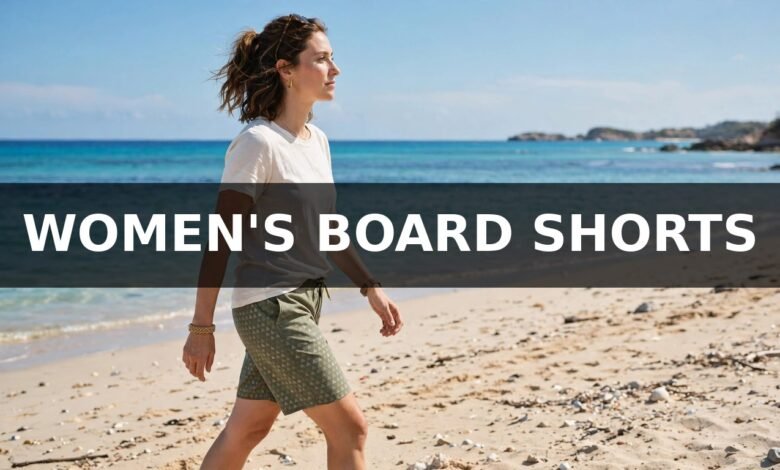
There is a particular kind of freedom that comes with a good pair of board shorts. You can paddle out, dive under a wave, walk the length of the beach, cycle home, and sit down for lunch without changing clothes or thinking twice about what you are wearing. Women’s board shorts were made for exactly that kind of day. They started life as surfwear, built to stay put in heavy surf and dry fast in the sun, but they have grown into something much bigger: a comfortable, practical and genuinely stylish choice for swimming, paddleboarding, kayaking, beach walks and ordinary summer days.
If you have never owned a pair, the choice can feel surprisingly wide. Lengths run from short cuts that sit high on the thigh to long styles that reach the knee. Some pairs hug the body like swimwear, others hang loose like casual shorts. Fabrics range from lightweight recycled polyester to stretchy blends that move with you. And then there are the details — drawstrings, pockets, liners, waistbands — that make the difference between a pair you reach for all summer and a pair that sits forgotten in a drawer.
This guide walks through all of it in plain terms. By the end, you will know how to pick the length, fit and fabric that suit your body and your plans, how to style board shorts away from the beach, and how to look after them so they last more than one season.
What Are Women’s Board Shorts?
Board shorts began as men’s surf trunks, designed in the middle of the last century for surfers who needed shorts that would not ride up, chafe or fall down in the water. The women’s versions keep the same practical roots but are cut for a woman’s body, with a shaped waist, a shorter rise in some styles, and a fit through the hip and thigh that is made to move.
The defining features are easy to spot. Board shorts are made from quick-drying synthetic fabric rather than cotton, so they do not stay heavy and wet after a swim. They have a drawstring waist, often with a lace-up tie at the front, which keeps them secure when a wave hits. The legs are cut straight and loose rather than tight, which gives you a full range of movement for paddling and popping up on a board. Many pairs have no liner or a light mesh liner, a small pocket for a key, and a length that gives more coverage than a bikini bottom.
What they are not is just a longer bikini bottom. A bikini bottom is swimwear first and foremost, designed to be worn in the water and not much else. Board shorts cross the line between swimwear and everyday clothing. You can wear them in the sea in the morning and to a beach cafe in the afternoon without feeling underdressed, and that versatility is a large part of their appeal.
Why So Many Women Choose Board Shorts
Comfort is the first reason, and it is the one women mention most often. Board shorts do not dig in, ride up or need constant adjusting. The drawstring waist lets you set the fit exactly where you want it, and the loose leg means there is no clinging fabric when you are wet. For anyone who has spent a beach day tugging at a swimsuit, that ease is hard to give up once you have tried it.
Coverage is the second reason. Some women want more coverage for confidence, some for sun protection, and some simply because they prefer the look. Board shorts give you that coverage without the bulk of a cover-up or a skirt, and without sacrificing the ability to swim properly. They also protect the tops of your thighs from sunburn and from the rub of a surfboard, which is a real benefit if you spend hours in the water.
Then there is the practical side. Board shorts dry far faster than cotton shorts or denim cut-offs, so you can swim and then carry on with your day. They are light to pack, easy to wash, and tough enough to handle sand, salt water and sun. For holidays, that combination is hard to beat: one pair of board shorts can cover swimming, walking, eating out and travelling between beaches, which means less luggage and fewer decisions.
Choosing the Right Length
Length is the first decision to make, and it changes both how the shorts look and how they feel in the water. Board shorts for women generally come in three lengths, and each one suits different activities and tastes.
Short board shorts sit high on the thigh, usually with a leg length of around two to four inches. They give you the most freedom of movement and the least fabric in the water, which is why many surfers and swimmers prefer them. They also show more leg, so they suit women who want a sportier, more streamlined look. The trade-off is less coverage and less sun protection on the thigh.
Mid-length board shorts are the most popular choice, and for good reason. They sit just above the knee or at mid-thigh, usually with a leg length of around five to seven inches. They offer a comfortable balance of coverage and movement, they look good on most body shapes, and they work for the widest range of activities, from surfing to paddleboarding to walking along the shore. If you are buying your first pair and you are not sure what you want, this is the safest place to start.
Long board shorts reach the knee or just below it. They give the most coverage and the most sun protection, and they suit women who want a modest fit or who spend long hours in the water. They are also a good choice for activities like kayaking, where your legs are in the sun for a long time. The trade-off is a little more fabric in the water and a slightly more relaxed, casual look.
| Length | Where it sits | Best for | Coverage |
|---|---|---|---|
| Short (2-4 inch leg) | High on the thigh | Surfing, swimming, sporty look | Least |
| Mid-length (5-7 inch leg) | Above the knee | Everyday wear, most water sports | Medium |
| Long (knee length) | At or just below the knee | Sun protection, modesty, kayaking | Most |
When you are deciding, think about what you will actually do in them. For serious surfing, shorter and lighter is usually better. For a family beach holiday with a mix of swimming, walking and sitting in the sun, mid-length is the easy choice. For long days on the water, the extra coverage of a long pair earns its keep.
Getting the Fit Right
Fit matters more with board shorts than with most swimwear, because a poor fit is not just uncomfortable — it can leave you exposed at the wrong moment. A wave has a way of finding any weakness in a waistband. The good news is that getting the fit right is straightforward once you know what to check.
Start with the waist. Board shorts should sit comfortably at your natural waist or on your hips, depending on the style, and the drawstring should let you pull them snug without the fabric bunching or digging in. When you try a pair on, tug gently at the waistband. It should stay put. Then squat down and stand up again. If the shorts slide or gap at the back, try a smaller size or a different cut. The drawstring is not decoration; it is what keeps the shorts where they belong when you dive under a wave.
Next, check the hips and thighs. The legs should sit away from your body rather than clinging to your thighs, but they should not be so loose that they flap around in the water. Walk around, sit down, and lift your knees as if you were climbing onto a board. The fabric should move with you without pulling or riding up. If the shorts ride up every time you move, the leg is probably too short or too tight for your shape, and a mid-length pair in a stretchier fabric may suit you better.
Pay attention to the rise as well. A mid-rise or high-rise board short sits at or above the hip bone and stays put during activity, which many women prefer for surfing and swimming. A low-rise pair sits on the hips and shows more skin, which suits lounging and casual wear but can shift around in the water. Neither is better in general — it is a question of what feels secure on your body.
One more practical point: sizes vary a lot between brands, and board shorts are often sized differently from jeans or dresses. If you are buying online, check the brand’s own size chart and measure your waist and hips with a tape measure rather than guessing from your usual dress size. Reading a few customer reviews helps too, because reviewers will often say whether a style runs small or large.
Fabrics: What to Look For
The fabric is what makes board shorts work in the water, so it is worth understanding what you are buying. Most women’s board shorts are made from polyester or a polyester blend, sometimes with a little elastane added for stretch. Polyester dries quickly, holds its shape when wet, and resists damage from sun and salt water far better than cotton. A small amount of elastane, usually somewhere between five and fifteen percent, gives the fabric a four-way stretch that makes paddling and moving feel natural rather than restricted.
Some brands now make board shorts from recycled polyester, often from recovered plastic bottles or discarded fishing nets. The performance is the same as regular polyester, and the fabric feels the same, so choosing recycled is an easy way to make a slightly kinder purchase without giving anything up. If sustainability matters to you, look for that detail on the label.
There are a few other fabric details worth checking. A water-repellent finish helps the shorts shed water quickly when you come out of the sea, so they feel lighter sooner. A soft inner waistband or a light mesh liner adds comfort, though many women prefer unlined shorts and wear a swimsuit underneath instead. And if you burn easily, look for fabric with a high ultraviolet protection factor. Many board shorts offer strong sun protection built into the fabric itself, which protects the skin they cover without any need for sunscreen underneath.
Avoid board shorts made mostly from cotton. Cotton soaks up water, stays heavy and wet, takes hours to dry, and loses its shape when it is soaked. It might feel fine in the shop, but it will feel very different after ten minutes in the sea.
The Details That Make a Difference
Small design details separate a great pair of board shorts from an average one. The drawstring is the most important. A sturdy, flat drawstring that ties securely is far better than a thin cord that slips loose. Some pairs add a small toggle or a velcro fly for extra security, and if you surf, those extras are worth having.
Pockets are useful but need thinking about. A small zip pocket at the side or back is handy for a key or a bit of cash, and a zip stops things falling out in the surf. Large open pockets, on the other hand, fill with water and add drag, so they are best left to casual pairs you will not swim in seriously. If you do want pockets, a single discreet zip pocket is usually enough.
The waistband itself matters too. A wide, flat waistband with a drawstring tends to be the most comfortable and the most secure. A narrow elastic waist is easier to pull on but can roll or shift during activity. Some styles add a bit of stretch to the waistband, which helps the shorts sit smoothly without digging in.
Finally, check the stitching. Board shorts take a beating in salt water and sun, so flatlock stitching, where the seams lie flat against the fabric, is a sign of quality. It reduces chafing and it lasts longer than raised seams. Turn the shorts inside out in the shop if you can; neat, flat seams are a good sign that the pair will survive more than one summer.
How to Style Women’s Board Shorts
One of the best things about board shorts is how easily they move from the water to the rest of your day. With the right top, they stop looking like surf gear and start looking like a considered summer outfit.
For a classic beach look, pair them with a bikini top, a rash guard or a simple vest top. A rash guard is a practical choice if you are surfing or spending hours in the sun, because it protects your shoulders and back as well. For a more put-together feel, try a loose linen shirt worn open over a bikini top, or a cropped T-shirt in a plain colour that picks up one of the tones in the shorts.
Footwear is simple: sandals, flip-flops or bare feet on the beach, and a clean pair of trainers or canvas shoes if you are heading into town. A straw hat, sunglasses and a light beach bag finish the outfit without any effort. The key is to keep the rest of the outfit relaxed. Board shorts are casual by nature, and they look best when the rest of what you wear is too.
Board shorts also work surprisingly well for activities beyond the beach. Pair a plain black or navy pair with a fitted top and trainers and you have a comfortable outfit for a coastal walk, a boat trip or a festival. The trick is to choose a plainer pair for these occasions: bold surf prints look great on the beach but can feel out of place in town, while a solid colour or a subtle pattern fits in almost anywhere.
Board Shorts for Different Activities
Not every pair suits every activity, and matching the shorts to what you plan to do will save you disappointment.
For surfing, choose a shorter or mid-length pair in a lightweight stretch fabric with a secure drawstring and no bulky pockets. The shorts need to stay put when you duck under waves and give you full freedom when you pop up on the board. A rash guard on top completes the setup.
For swimming, almost any board shorts will do, but a lighter fabric dries faster and feels less heavy in the water. Mid-length pairs are a good all-round choice for regular swimming, and they give you enough coverage to walk from the pool or the sea to a cafe without changing.
For paddleboarding and kayaking, coverage and sun protection matter more than they do for surfing, because you spend long stretches sitting or standing in direct sun. A longer pair with sun-protective fabric is ideal here, and a zip pocket is genuinely useful for keeping a key safe while you are on the water.
For beach days with children, walking and general relaxing, comfort is king. A mid-length pair in a soft stretch fabric, worn with a comfortable top and sandals, will see you through the whole day. This is also where a fun print or a bright colour earns its place, because you are choosing the shorts for how they make you feel as much as for how they perform.
Caring for Your Board Shorts
Board shorts are tough, but a little care goes a long way. Salt water and chlorine both wear fabric down over time, so rinse your shorts in fresh water after swimming whenever you can. It only takes a minute, and it makes a real difference to how long the fabric and the colours last.
Wash them in cold water with a mild detergent, and avoid fabric softener, which can coat the fibres and reduce the quick-drying finish. Turn them inside out before washing to protect the print, and let them dry in the shade rather than in direct sun, which fades colours over time. Avoid the tumble dryer if you can; the heat breaks down the stretch fibres, and board shorts dry quickly on a line anyway.
Store them dry and unfolded if possible. Stuffing wet board shorts into a bag for days is the fastest way to get mildew and a smell that is hard to remove. A quick rinse and a hang on the line after each beach day is really all the maintenance they need.
Common Mistakes to Avoid
The most common mistake is buying the wrong size. Because sizes vary so much between brands, guessing from your usual dress size often ends in a pair that is too tight across the hips or too loose at the waist. Measure yourself, check the size chart, and read reviews before you order.
The second mistake is choosing a pair for looks alone. A beautiful print will not help if the fabric is heavy cotton or the drawstring slips loose in the first wave. Check the fabric content and the waistband before you fall for the pattern.
The third mistake is ignoring the rise. A low-rise pair might look great standing still in a mirror, but it can shift uncomfortably when you swim or bend down. If you plan to be active in your board shorts, a mid-rise or high-rise cut is usually the more practical choice.
Finally, do not forget sun protection. Board shorts cover the skin they sit on, but the rest of your legs, arms and shoulders are still exposed. Put sunscreen on the skin the shorts do not cover, and reapply after swimming. The shorts do part of the job, not all of it.
Frequently Asked Questions
Are women’s board shorts good for swimming?
Yes, they are made for it. Board shorts are cut from quick-drying fabric that does not stay heavy when wet, and the drawstring waist keeps them secure in the water. They are a good choice for swimming, surfing, paddleboarding and any other water activity.
What do you wear under women’s board shorts?
Most women wear a swimsuit underneath, usually a bikini bottom or a one-piece. Some board shorts come with a built-in mesh liner, in which case you can wear them on their own. Either way works, so choose whichever feels more comfortable to you.
What length board shorts should I get?
Mid-length board shorts, sitting just above the knee, suit most women and most activities. Choose a shorter pair if you surf seriously or want a sportier look, and a longer pair if you want more coverage or sun protection.
Do board shorts dry quickly?
Yes, a good pair made from polyester or a polyester blend will dry much faster than cotton shorts. They usually feel dry within an hour or so in warm sun, though thicker fabrics and lined styles take a little longer.
Can you wear board shorts if you don’t surf?
Absolutely. Board shorts have become a general summer staple. They are comfortable for swimming, beach walks, kayaking, paddleboarding, festivals and any warm-weather day when you want something light, practical and easy to wear.
How should women’s board shorts fit?
They should sit securely at the waist with the drawstring tied, feel comfortable across the hips without pulling, and have legs that sit away from the thigh rather than clinging. You should be able to squat, walk and lift your knees without the shorts riding up or sliding down.
Are board shorts the same as swim shorts?
They are closely related, but board shorts are usually longer, looser and made with surfing in mind, with a drawstring waist and a straight leg. Swim shorts is a broader term that covers shorter, tighter styles too. For practical purposes, the two overlap a great deal.
Conclusion
Women’s board shorts earn their place in a summer wardrobe by doing a simple job very well. They are comfortable, quick to dry, easy to move in and easy to style, and they give you the coverage and confidence to enjoy the water without thinking about what you are wearing. The right pair comes down to three choices: a length that suits your plans, a fit that stays put when you move, and a fabric that dries fast and lasts.
Start with a mid-length pair in a stretchy, quick-drying fabric if you are buying your first pair, and adjust from there once you know what you like. Check the waistband, the drawstring and the seams before you buy, and look after the shorts with a quick rinse after swimming. Do that, and you will have a pair that carries you through beach days, surf sessions and summer afternoons for seasons to come.
Read Also: What’s the Closest Planet to Earth (Best Proven 2026 Guide)