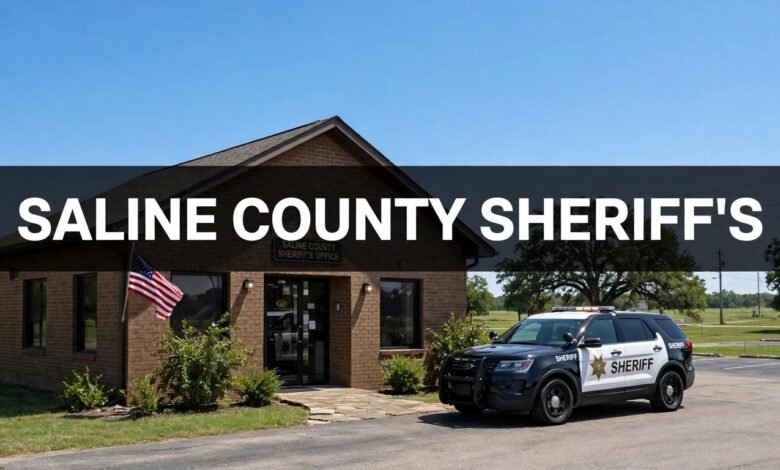
If you have searched for “Saline County Sheriff’s”, you have probably noticed something confusing straight away: there is more than one of them. Several American states have a Saline County, and each one has its own sheriff’s office, its own phone numbers and its own jail. Picking the wrong one means calling the wrong end of the country.
This guide sorts that out. It explains what a Saline County Sheriff’s Office is, what the sheriff and deputies actually do, how the offices differ from a city police department, and how to contact the right office for your county — including the verified contact details for the main Saline Counties, and what to do when you are not sure which one you need.
What Does “Saline County Sheriff’s” Mean?
The short answer: “Saline County Sheriff’s” is shorthand for the Saline County Sheriff’s Office — the county-level law enforcement agency led by the elected sheriff of a county called Saline.
The word “saline” comes from salt. Counties with this name were usually named after salty springs or salt deposits in the area, which is why the same name turns up in several states. That shared history is the reason the search term is ambiguous: the name describes the place, not one single office.
A sheriff’s office is different from a police department in an important way. A police department serves a city or town. A sheriff’s office serves the whole county, and the sheriff is an elected official — voters in the county choose the sheriff, usually for a four-year term. That elected role is part of why sheriff’s offices handle such a wide mix of work, from patrol and investigations to running the county jail and serving court papers.
Which Saline County Do You Mean?
Before you call anyone, work out which state your Saline County is in. These are the main ones:
| State | County seat | Sheriff’s office notes |
|---|---|---|
| Arkansas | Benton | Largest of the Saline Counties; office and detention centre in Benton |
| Missouri | Marshall | County jail and sheriff’s office in Marshall |
| Illinois | Harrisburg | Sheriff’s office in Harrisburg |
| Nebraska | Wilber | Sheriff’s office in Wilber, based in the county law enforcement centre |
| Kansas | Salina | Sheriff’s office in Salina |
There are smaller communities and townships with similar names elsewhere, but these five are the counties most people mean when they search the term. If you know the town or city involved — Benton, Marshall, Harrisburg, Wilber or Salina — you know the county. If you only have a street address, check which state it is in first, because that alone narrows it down.
A practical rule: if a letter, a court paper, a warrant notice or a news report mentions Saline County, it will almost always name the state as well. Look for the two-letter state code (AR, MO, IL, NE or KS) on the document. That code is the fastest way to pick the right office.
What the Sheriff’s Office Actually Does
People often think of the sheriff as just the person in charge of patrol cars, but the job covers far more than that. The exact structure varies by county, but most Saline County Sheriff’s Offices handle the same core duties.
Patrol: Deputies patrol the unincorporated areas of the county — the places outside city limits that do not have their own police department. In Saline County, Arkansas, for example, the patrol division works in shifts made up of a lieutenant, a sergeant, patrol deputies and a K9 unit, covering three rural patrol areas. Patrol deputies answer complaint calls, respond to crimes in progress, take reports, investigate accidents, serve warrants and civil papers, and provide a visible presence to deter crime.
Criminal investigation: Deputies and investigators look into crimes reported in the county, from vandalism and theft through to serious and violent crime. Sheriff’s offices also serve drug-related search warrants and work with other agencies in the county and surrounding areas when a case crosses a boundary.
The county jail: The sheriff’s office is responsible for the county jail. The jail holds people who have been arrested and are awaiting trial, as well as people serving short sentences. Some county jails also hold contracted beds for surrounding counties and for federal agencies such as the U.S. Marshals Service. Saline County, Nebraska, for instance, houses inmates convicted in the county alongside contracted beds for surrounding counties and the federal Marshals Service.
Courts and civil process: Sheriff’s deputies provide security in county courts and serve civil papers — court orders, subpoenas, eviction notices and similar documents. This is one of the oldest parts of the sheriff’s role and one that police departments do not usually handle.
Community safety: Most offices also run community-facing services: crime prevention advice, sex offender registration, victim support, public alerts and school safety work. Many now use alert systems to send residents emergency notifications by phone or app.
Sheriff vs Police: What Is the Difference?
This is one of the most common points of confusion, and it matters when you need help.
- A sheriff’s office covers the whole county and is led by an elected sheriff. Its deputies have jurisdiction throughout the county, including inside city limits in many states, and it runs the county jail.
- A police department covers one city or town and is led by a chief, who is usually appointed rather than elected. Its officers focus on that city.
- State police or highway patrol cover the whole state and focus mainly on highways and statewide investigations.
In practice, the three work together constantly. If you call the wrong one, they will usually redirect you. But knowing the difference saves time: a noise complaint inside a city is usually a police matter, while a problem on a rural road outside city limits is usually a sheriff’s matter. And anything involving the county jail or a county warrant goes to the sheriff.
How to Contact the Saline County Sheriff’s Office
In an emergency, always dial 911. That applies in every Saline County, in every state. Do not look up an office number first if someone is in danger, a crime is happening now, or there is a medical emergency.
For everything else, use the non-emergency number or visit the office. The contact details below are taken from official county sources. Phone numbers and office hours do change, so confirm them on the official county website before you travel or rely on them for something urgent.
Saline County, Arkansas (Benton)
The Saline County Sheriff’s Office in Arkansas is based in Benton, the county seat. Its administrative office is at 200 N. Main St., Benton, AR 72015, open Monday to Friday, 8:00 a.m. to 4:30 p.m. The main administrative phone number is (501) 303-5600.
Useful numbers listed by the office include a non-emergency line at (501) 303-5648, a detention centre line at (501) 303-5642, a crime tips line at (501) 303-5744 and a drug hotline at (501) 303-5741. The detention centre itself is at 735 South Neeley Street, Benton, AR 72015. The office’s patrol division answers calls for service across the county’s unincorporated areas, and deputies have concurrent criminal jurisdiction throughout the county alongside constables and municipal police officers.
Saline County, Missouri (Marshall)
In Missouri, the Saline County Sheriff’s Office and jail are in Marshall. The jail is at 1915 West Arrow Street, Marshall, MO 65340, and the jail and sheriff’s 24-hour non-emergency line is 660-886-5512. That is the number to call for inmate information, to confirm custody, or to ask about bond and visiting arrangements.
For an arrest by Marshall Police rather than the sheriff, the police department is at 461 West Arrow Street, Marshall, MO 65340, on 660-886-7411. The county’s circuit clerk, who handles court records, is at 19 East Arrow Street, Room 205, Marshall, MO 65340, on 660-886-2300.
Saline County, Illinois (Harrisburg)
The Saline County Sheriff’s Office in Illinois is at 1 North Main Street, Harrisburg, IL 62946. The non-emergency number is 618-252-8661. The office also publishes public alerts — for example, road closures after accidents — through alert services, and it accepts anonymous tips online.
Saline County, Nebraska (Wilber)
In Nebraska, the Saline County Sheriff’s Office is in Wilber, based in the Saline County Law Enforcement Center. The office is at 911 S Main Street, Wilber, NE 68465, and the contact number is 402-821-2111. The office handles emergencies, accidents and crime throughout the county, and its deputies receive ongoing training in and out of state. Residents can also sign up for county emergency alerts through the Everbridge app.
Saline County, Kansas (Salina)
Kansas also has a Saline County, with its county seat at Salina. If your matter relates to Salina or the surrounding area, that is the office you need. Check the Saline County, Kansas, official website for its current phone numbers and office hours before calling, as these are updated locally.
A note on what to have ready when you call: the office will be able to help you much faster if you have the basics ready — the full name of the person involved, the date and rough time of the incident, the address or location, and any case or reference number if you have one. For a non-emergency report, write down the key facts before you call so you do not forget anything.
How to Report a Crime or Share a Tip
Not every contact with the sheriff is an emergency, and offices have different routes for different situations.
- A crime happening now, or anyone in danger: call 911.
- A crime that already happened, with no immediate danger: call the non-emergency number for your county and ask to make a report. A deputy will take the details and tell you what happens next.
- A tip about a crime, with no need to give your name: many sheriff’s offices have a dedicated crime tips line or an anonymous online tip form. Saline County, Arkansas, for example, lists a crime tips line and a separate drug hotline.
- A road hazard or a traffic accident: call the non-emergency number, or 911 if someone is hurt or the road is blocked.
When you report something, be specific. A vague report — “there was a suspicious car” — is hard to act on. A useful report includes what happened, where, when, what the vehicle or person looked like, and which direction they went. If you can do so safely, a number plate is one of the most useful details you can give.
Do not use email for anything urgent. Several sheriff’s offices note that ordinary email is not monitored around the clock, so an urgent message sent by email may sit unread for hours.
Inmate Search, Jail Visits and Bond: What Families Ask Most
The most common reason people search for a sheriff’s office is a family member or friend in jail. The process is similar across counties, but the details are always local, so treat this as a general guide and confirm the specifics with the jail.
Finding someone in custody: most sheriff’s offices publish an inmate roster online, usually with a “current inmates” list and a recent release list. If the name is not on the roster, call the jail with the person’s full legal name, date of birth and approximate arrest time. For Saline County, Missouri, the jail number is 660-886-5512.
Visits and phone calls: jails set their own visiting hours, identification requirements and communication systems, and these change. Saline County, Missouri, for example, moved inmate communications to the HomeWAV system, with video visits and messaging handled through that app, and no lobby kiosk for inmate money. Always check the jail’s current notice before travelling, and confirm any payment or scheduling step by phone first.
Bond: whether someone can be released on bond, and how much it is, depends on the charge, the court and any holds on the person. The jail can usually confirm the bond type and any conditions, but it cannot give legal advice. If the situation is complicated, a lawyer is the right person to call.
Sending money or mail: jails have strict rules about what can be sent, how money is added to an inmate’s account, and what mail is accepted. Do not send money or goods without confirming the current process, or it may be returned or refused.
Warrants, Records and Background Checks
Sheriff’s offices are also the first stop for several kinds of public record.
- Warrant checks: you can usually ask the sheriff’s office whether a warrant exists for a named person, though the office will not always share full details by phone. Some counties offer an online warrant search through their official website.
- Arrest and incident reports: copies of reports are generally available on request, sometimes for a small copying fee. The exact process — online form, in-person visit or written request — depends on the county.
- Background checks: for employment or housing, the sheriff’s office or the state police can advise on the correct route. Fingerprint-based checks usually go through a state agency rather than the county office.
- Sex offender registry: sheriff’s offices help maintain the local sex offender registry, and the public list is usually searchable online through the state registry.
If you need a record for a legal or official purpose, say so when you ask. Certified copies cost more and take longer than a simple printout, and it is worth knowing which one you need before you apply.
Common Mistakes to Avoid
- Calling the wrong state’s office. This is the most common error with this search. Check the state code first.
- Using an old number from a search result. Phone numbers change when offices move or reorganise. Confirm the number on the official county website.
- Emailing about an emergency. Email is not monitored around the clock. Call 911 for anything urgent.
- Expecting the sheriff to handle a city matter. Inside a city, many day-to-day issues belong to the city police. The sheriff’s office will redirect you, but calling the police first is faster.
- Paying anyone who claims to be the sheriff and demands money. Sheriff’s offices do not collect fines, bonds or fees by phone with gift cards or wire transfers. A call like that is a scam. Hang up and call the office on its published number.
- Sharing personal details with an unofficial website. Many third-party sites republish jail and arrest information with adverts and outdated data. For custody, bond or release information, use the official roster or call the jail directly.
FAQs
What is the Saline County Sheriff’s Office?
It is the county law enforcement agency led by the elected sheriff of a county called Saline. Its duties include patrolling unincorporated areas, investigating crime, running the county jail, providing court security and serving civil papers. Several states have a Saline County, so there is a separate sheriff’s office in each one.
Which states have a Saline County?
Arkansas, Missouri, Illinois, Nebraska and Kansas all have a Saline County. The county seats are Benton (Arkansas), Marshall (Missouri), Harrisburg (Illinois), Wilber (Nebraska) and Salina (Kansas). Knowing the town or the state is the quickest way to find the right office.
How do I contact the Saline County Sheriff in an emergency?
Dial 911. For non-emergencies, use the county’s published non-emergency number — for example, (501) 303-5648 in Saline County, Arkansas, 660-886-5512 in Saline County, Missouri, 618-252-8661 in Saline County, Illinois, or 402-821-2111 in Saline County, Nebraska. Confirm the number on the official county website first.
How do I find out if someone is in jail in Saline County?
Use the sheriff’s official inmate roster online, usually under “current inmates”, or call the jail with the person’s full legal name, date of birth and approximate arrest time. In Saline County, Missouri, the jail number is 660-886-5512. If the name is missing from the roster, call the jail to confirm custody.
What is the difference between the sheriff and the police?
A sheriff serves the whole county, is elected by voters and runs the county jail. A police chief serves one city, is usually appointed, and focuses on that city. Both enforce the law, and they work together, but they cover different areas and have different duties.
Can I report a crime to the sheriff’s office anonymously?
In most counties, yes. Many sheriff’s offices have a crime tips line or an anonymous online tip form. Saline County, Arkansas, lists a crime tips line at (501) 303-5744 and a drug hotline at (501) 303-5741. Anonymous tips are still useful, but giving your name helps investigators follow up if they need more detail.
Conclusion
“Saline County Sheriff’s” sounds like one office, but it is five — one in each state that has a Saline County. The job is the same in each place: patrol the county, investigate crime, run the jail, serve the courts and keep residents safe. What changes is the phone number, the address and the local detail.
So the practical takeaway is a short one. In an emergency, call 911. For anything else, work out which state your Saline County is in, then use that county’s published non-emergency number or visit the office in person. Have the key facts ready, confirm any number on the official county website before you rely on it, and never pay anyone who calls claiming to be the sheriff and demanding money by phone. Do that, and you will reach the right office the first time.
Read Also: Patagonia Women’s Retro Pile Marsupial (2026 Guide)