
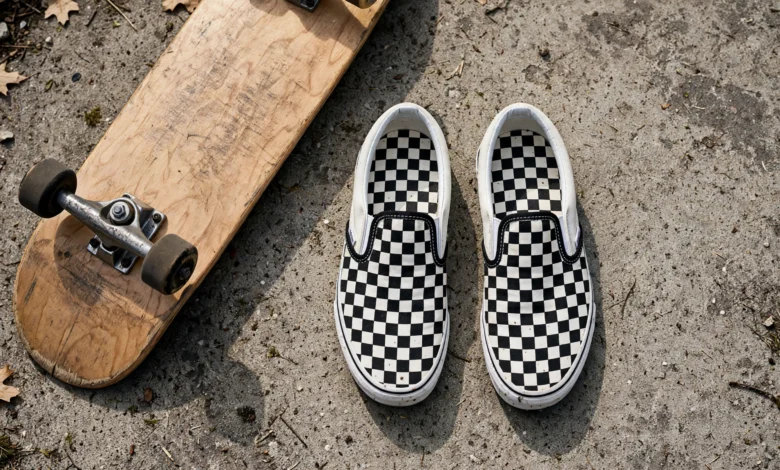
Few brands in fashion have a story as unlikely as Vans. It didn’t start in a design studio or a marketing boardroom — it started in a rubber factory in Anaheim, California, where shoes were made right on the premises and sold straight to the public. No middleman, no fuss. Just canvas, rubber, and a waffle-patterned sole that turned out to be exactly what a generation of skateboarders was looking for. Six decades later, that little shoe company is a global icon, worn by skaters, musicians, artists, and pretty much everyone who appreciates effortless, slightly rebellious style.
The bottom line: Vans is the California skate brand founded in 1966 by Paul Van Doren and partners. Its grippy waffle soles made it the shoe of choice for 1970s skateboarders, and its simple designs — the Authentic, Era, Old Skool, Sk8-Hi, and Slip-On — became timeless fashion staples worn far beyond the skatepark.
- The Vans Story: From Anaheim Rubber Factory to Global Icon
- How Skateboarding Adopted Vans
- The Icons: Every Classic Vans Style Explained
- Style Table: Which Vans for Which Look
- The Sidestripe & the Checkerboard: Design Details That Became Symbols
- Vans in Music, Art & Street Culture
- How to Style Vans: Outfit Ideas
- Buying & Care Tips
- Spotting Counterfeits
- Frequently Asked Questions
- Conclusion
The Vans Story: From Anaheim Rubber Factory to Global Icon
The year was 1966, and Paul Van Doren — along with his partners — opened a shop in Anaheim, California, called the Van Doren Rubber Company. The idea was refreshingly simple: manufacture shoes on-site and sell them directly to customers who walked in the door. No distributors, no markups, no waiting weeks for delivery. You could watch your shoes being made, essentially, and take them home the same day.
Fun fact: on opening day, the first twelve customers walked out wearing their new shoes — but the shop had no cash register boxes to put the shoes in, because boxes hadn’t been thought of yet. The founders reportedly gave customers the shoes and asked them to come back and pay later. They did.
The shoes themselves were simple canvas deck shoes with thick rubber soles stamped with a distinctive waffle pattern. That pattern — a crisscrossed, diamond-like tread — gave the shoes remarkable grip. The design was tough, affordable, and easy to customize. Customers could pick their fabric and colors, which was unusual for the time and helped build an early following of loyal fans who felt like they were getting something made just for them.
Over the following years, the brand kept doing what it did best: making straightforward, durable canvas shoes. The name eventually shortened to just “Vans,” and the little rubber company from Anaheim was quietly laying the groundwork for something much bigger — though nobody at the time could have guessed that those chunky rubber soles would one day carry the brand into music venues, art galleries, and fashion weeks around the world.
How Skateboarding Adopted Vans
Vans didn’t chase skateboarding — skateboarding found Vans. In the 1970s, Southern California’s skate scene was exploding. Empty swimming pools were becoming makeshift skateparks, and riders were pushing the sport into something raw, fast, and gloriously uncontrolled. They needed shoes that could actually handle it: shoes with soles that gripped the board, uppers tough enough to survive constant abrasion, and a construction that wouldn’t fall apart after a week of hard skating.
Vans fit the bill almost by accident. That waffle sole, originally designed as a sturdy general-purpose tread, turned out to be perfect for sticking to a skateboard deck. The sticky rubber gave riders the board feel and control they needed for tricks that were getting more ambitious by the month. Word spread through the skateparks fast — when your friends’ shoes are holding up and gripping better than yours, you notice.
Fun fact: the Era — one of the most beloved Vans silhouettes — was actually designed with direct input from professional skateboarders of the day. Riders like Tony Alva and Stacy Peralta told the company what they needed: extra padding around the collar, more cushioning, better grip. Vans listened, and the result became the go-to skate shoe of the era.
That relationship — the brand genuinely listening to the skaters who wore its shoes — became the foundation of Vans’ identity. It wasn’t a fashion label slumming it with skate culture for credibility; it was a working shoe company that earned its place in the scene by making something that actually worked. Skaters customized their Vans, beat them up, drew on them, and wore them until they fell apart. The beat-up pair became a badge of honor. And once something is authentically loved by a subculture, the wider world usually follows.
The Icons: Every Classic Vans Style Explained
Walk into any shoe store and you’ll see a wall of Vans that can look a bit overwhelming at first glance. But the core lineup is really just a handful of silhouettes, each with its own personality and history. Here’s the rundown.
The Authentic. This is the one that started it all — the original lace-up deck shoe from 1966. Low-profile, simple canvas upper, metal eyelets, and that classic waffle sole. It was actually the first shoe style the company ever made (originally known as Style #44). The Authentic is the minimalist of the family: clean lines, no padding, no fuss. It looks best in solid colors or simple prints, and it pairs with just about everything. If you want the purest expression of what Vans is, this is it.
The Era. Born from that 1970s collaboration with skateboarders, the Era takes the Authentic’s DNA and toughens it up for skating: a padded collar for comfort, extra cushioning, and reinforced construction. It kept the low-top lace-up profile but added the details riders asked for. Visually, it’s the shoe that bridged the gap between the original deck shoe and the skate-specific models that followed. The Era has that slightly bulkier, lived-in look that goes perfectly with worn-in denim.
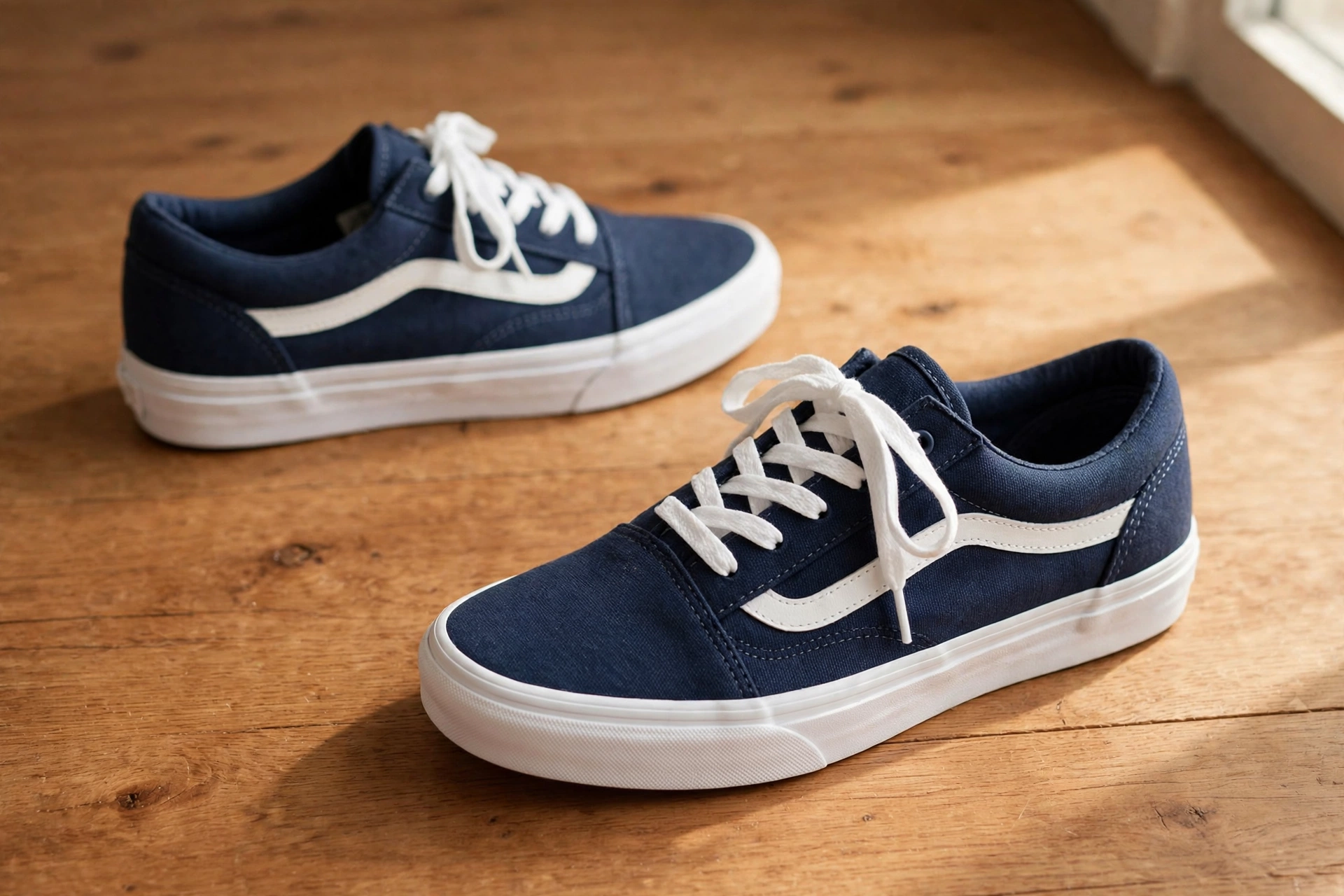
The Old Skool. Arguably the most famous Vans of all. The Old Skool was the first to feature the leather sidestripe — that wavy line running along the side of the shoe. It added suede toe caps for durability (a nod to skaters who shredded through canvas) and quickly became the definitive Vans silhouette. Black with a white sidestripe is the canonical colorway, but it comes in endless variations. The Old Skool is the one you picture when someone says “Vans,” and it’s the easiest entry point if you’re buying your first pair.
The Sk8-Hi. The high-top of the lineup, designed to give skaters extra ankle support. It takes the Old Skool’s look — the sidestripe, the suede reinforcements, the padded collar — and extends it upward into a classic hightop silhouette with lace-up styling. The Sk8-Hi has a bolder, more statement-making presence than its low-top siblings. It works brilliantly with cropped or cuffed pants that let the high top show, and it’s the favorite of anyone who wants their shoes to do a bit more of the talking.
The Slip-On. No laces, no eyelets, no complications — just step in and go. The Slip-On (originally Style #98) is the ultimate easy-wearing shoe. Elastic side accents keep it snug, the low profile keeps it sleek, and the whole thing has an effortless, thrown-together quality that no lace-up can quite match. It’s the shoe of summer, of beach towns, of people who have better things to do than tie laces. And it’s the canvas — literally — for the checkerboard pattern that became a cultural phenomenon all its own.
The Knu Skool. The new-school member of the family (the name says it all). The Knu Skool takes the Old Skool’s bones and puffs them up: chunkier padding, a thicker tongue, a bolder sidestripe, and an overall more exaggerated, 90s-inspired profile. It’s Vans responding to the chunky-sneaker era in its own language — still recognisably Vans, but louder and more padded. If classic Vans feel a bit slim for your taste, the Knu Skool is the answer.
Fun fact: the sidestripe on the Old Skool wasn’t some calculated branding masterstroke. Legend has it that Paul Van Doren doodled the wavy line himself — it was originally called the “jazz stripe” — and it just stuck. Sometimes the most iconic design elements in fashion history are accidents.
Style Table: Which Vans for Which Look
Still deciding which pair is yours? Here’s a quick cheat sheet matching each classic to its silhouette, what it goes with, and the overall vibe it gives off.
| Model | Silhouette | Best worn with | Vibe |
|---|---|---|---|
| Authentic | Slim low-top lace-up | Skinny or straight jeans, chinos, summer shorts | Clean, minimal, timeless |
| Era | Low-top lace-up, padded collar | Worn-in denim, cargo pants, tees | Laid-back skater classic |
| Old Skool | Low-top lace-up with sidestripe | Almost anything — jeans, joggers, dresses | The definitive everyday Vans |
| Sk8-Hi | High-top lace-up | Cropped or cuffed jeans, shorts, skirts | Bold, statement, retro |
| Slip-On | Laceless low-top | Shorts, cropped trousers, summer dresses | Effortless, beachy, easy |
| Knu Skool | Chunky low-top with padded tongue | Baggy jeans, wide-leg trousers, streetwear fits | Bold, 90s-inspired, chunky |
There’s no wrong answer here — honestly, most Vans fans end up owning several pairs and reaching for different ones depending on the day. That’s kind of the point of the brand: affordable enough to collect, versatile enough to justify it.

The Sidestripe & the Checkerboard: Design Details That Became Symbols
Every great brand has a visual shorthand — a mark you can recognise from across the street. For Vans, there are two, and both of them happened almost by accident.
The sidestripe is the wavy leather line that runs along the side of the Old Skool, Sk8-Hi, and their descendants. As mentioned, it began as Paul Van Doren’s doodle — the “jazz stripe” — and it became the brand’s signature the way a great logo does: simple, distinctive, impossible to confuse with anything else. You can spot a sidestripe from fifty feet away. It’s been recolored, exaggerated, and reimagined countless times, but the original wave is still the one that matters.
The checkerboard is the other one, and its story is even better. The black-and-white checkered pattern on the Slip-On became a phenomenon in the early 1980s when it showed up on the feet of a certain fast-talking surfer-stoner character in a beloved teen comedy film. Suddenly every kid in America wanted checkerboard slip-ons. The pattern had existed before, but pop culture turned it into a symbol — of Southern California, of not taking yourself too seriously, of a very specific kind of cool.
Fun fact: the checkerboard is reportedly one of the most imitated shoe patterns in the world. Which is funny, because at its heart it’s just… squares. Black ones and white ones. Proof that you don’t need complexity to be iconic — you need the right pattern on the right shoe at the right moment.
What makes both details special is that they aren’t really “branding” in the corporate sense. There’s no giant logo, no wordmark screaming across the side. The sidestripe and the checkerboard work the way a great piece of design should: you know what you’re looking at without being told. That’s rare, and it’s a huge part of why Vans has stayed relevant while trendier brands have come and gone.
Vans in Music, Art & Street Culture
Here’s the thing about Vans: it stopped being just a skate shoe a long time ago. Somewhere along the way, it became the uniform of anyone who lives slightly outside the mainstream — and then, inevitably, the mainstream adopted it right back.
Music got there first. Punk bands, hardcore kids, and later hip-hop artists all gravitated toward Vans for the same reason skaters did: they were affordable, tough, and they looked right. The brand leaned into it, too, building deep ties with music culture over the years — most famously through its long-running association with the Warped Tour, the traveling punk-rock festival that defined summers for a generation of alternative kids. Vans didn’t just sponsor the culture; it showed up, year after year, and became part of the scenery.
Art came next, or maybe it was always there. The blank canvas of a white pair of Authentics is practically begging to be drawn on, and generations of kids have obliged — doodles, band names, Sharpie masterpieces. The brand has embraced that DIY spirit with artist collaborations, custom designs, and creative spaces like the House of Vans, where skateboarding, music, and art collide under one roof. The message has always been the same: these shoes are a starting point, not a finished product. Make them yours.
And then there’s street culture at large — the skaters, surfers, BMX riders, and city kids for whom Vans was never a fashion choice but simply what you wore. That authenticity is the brand’s most valuable asset and the reason it keeps getting rediscovered by every new generation. When something is genuinely rooted, it doesn’t need to chase trends. It just waits, and the trends come back around.
If you’re into the cultural side of everyday style — how things people actually wear become part of how we live — you’ll find more lifestyle reads at homewaterinsights.com, our sister site covering culture and everyday living.
How to Style Vans: Outfit Ideas
One of the best things about Vans is how hard they are to get wrong. They’re the rare shoe that genuinely goes with almost everything. But “goes with everything” is only helpful up to a point — so here are some concrete outfit ideas to get you started.
Jeans and a tee — the classic. This is the default Vans outfit for a reason. Straight-leg or slim jeans, a plain t-shirt, and a pair of Old Skools or Authentics. Cuff the jeans once or twice to show a bit of ankle and let the shoe do its thing. It works dressed down for errands and works dressed up slightly — swap the tee for a button-down and you’re good for a casual dinner. Hard to beat.
Shorts season. When the weather turns warm, Slip-Ons are the move. Board shorts, chino shorts, denim cutoffs — the laceless profile keeps the whole look clean and unfussy. This is the outfit the checkerboard Slip-On was born for. Add a camp-collar shirt or a simple tank and you’re done. Socks optional; no-show socks if you must, visible socks if you’re feeling it.
Dresses and skirts. Don’t sleep on Vans with dresses — it’s one of the best high-low combos in casual fashion. A flowy midi dress with classic black Old Skools looks effortlessly cool. A denim skirt with Slip-Ons is practically a uniform in some cities. The trick is contrast: the femininity of the dress against the chunkiness of the skate shoe. It shouldn’t work, but it absolutely does.
Let the socks show. Here’s a styling detail that separates the beginners from the regulars: socks matter with Vans. Crew socks pulled up with shorts and Old Skools give you that retro athletic look. Striped or patterned socks peeking out above Slip-Ons add personality. And with Sk8-His, taller socks in a complementary color can tie the whole high-top look together. The shoe is low-key enough that your socks become part of the outfit — use that.
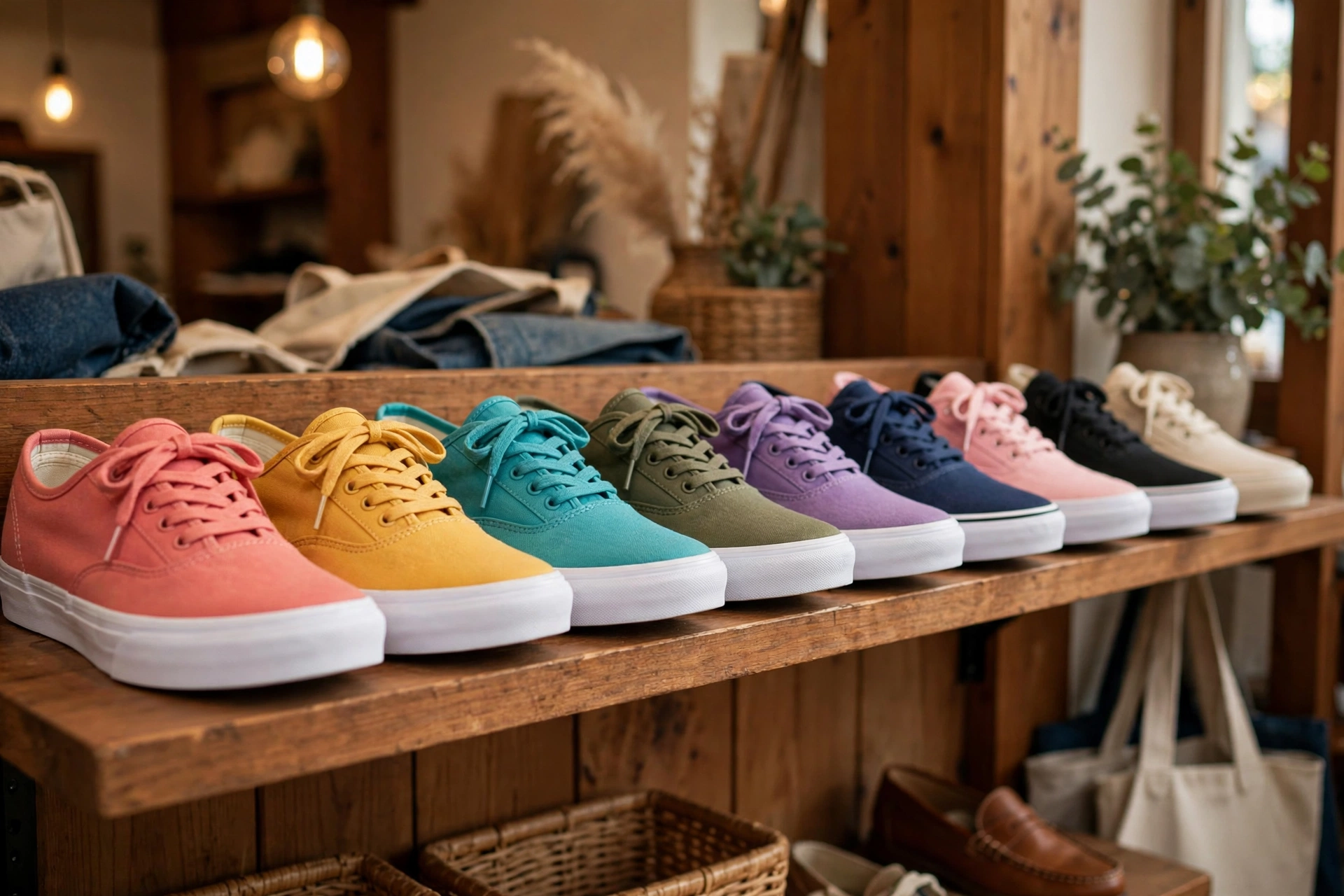
Go monochrome or go bold. Two philosophies, both valid. All-black Vans with black jeans and a black top is sleek, a little edgy, and impossible to mess up. Or lean into the brand’s playful side: a loud checkerboard or a bright colorway becomes the centerpiece, and you keep everything else neutral so the shoes pop. The Vans catalog has both ends covered, which is exactly why it works for so many different personal styles.
Fun fact: there’s no real “wrong” way to wear Vans, which is precisely why stylists love them. They sit in that sweet spot between deliberate and careless — they look like you tried, but not too hard. In fashion, that’s the hardest thing to fake.
Buying & Care Tips
Buying Vans is refreshingly straightforward — they’re widely available and the lineup is simple. But a few practical pointers will help you get the right pair and keep it looking good.
Sizing: try before you buy if you can. Fit opinions on Vans vary, and a lot depends on the specific model — the slim Authentics fit differently from the chunkier Knu Skools. As a very general rule, many wearers find Vans run slightly roomy and some size down by half a size, but that’s far from universal. Your best bet is to try them on in person, or check the specific model’s fit notes and reviews if you’re ordering online. Feet are weird and personal; trust yours over the internet’s.
Canvas care is simple. Canvas Vans will get dirty — that’s part of their charm, honestly — but when you want to clean them up, it’s easy. Knock off loose dirt with a soft brush, spot-clean with mild soap and warm water, and let them air dry away from direct heat. Avoid the washing machine if you can; the agitation and heat can warp the shape and loosen the glue over time. For suede models like the Old Skool, a suede brush and a bit of patience go a long way.
Rotate your pairs. This is the single best thing you can do for any shoe’s lifespan. Wearing the same pair every single day means the cushioning never gets a chance to recover and moisture never fully dries out. If you can swing it, alternate between two pairs — your shoes will last noticeably longer, and you get the added bonus of having options.
Break them in gently. Canvas Vans are comfortable out of the box compared to a lot of shoes, but the flat sole and minimal arch support mean they’re not exactly orthopedic marvels. Wear new pairs for shorter outings first. If you’re on your feet all day, consider adding insoles — plenty of skaters do, and there’s no shame in comfort.
And if you ever want a break from shoe talk, our friends at homewaterinsights.com cover plenty of other everyday-living topics worth a browse.
Spotting Counterfeits
Any brand as popular as Vans attracts imitators, and fakes are genuinely everywhere — market stalls, dodgy websites, suspiciously cheap listings. You don’t need to be a forensic expert to spot most of them, though. A few things to check:
Start with the waffle sole. The real waffle pattern is crisp, deep, and consistent — it’s the brand’s signature, and it’s harder to replicate well than you’d think. On fakes, the tread often looks shallow, blurry, or uneven, with visible molding flaws. Flip the shoe over and look closely; the sole tells you a lot.
Check the stitching. Authentic Vans have clean, even stitching with consistent spacing. Fakes tend to show their hand here: crooked lines, loose threads, uneven seams, glue stains around the edges. Run your eye along the sidestripe and the sole line — sloppy work stands out once you know to look for it.
Trust the price and the seller. This is the big one. If a pair is selling for a fraction of the normal price from a seller you’ve never heard of, with stock photos instead of real ones, walk away. Buy from reputable retailers and you’ll almost never have a problem. No bargain is worth a pair of fakes that fall apart in a month.
None of these checks is foolproof on its own — the best fakes are getting better — but together they catch the vast majority. When in doubt, compare against a pair you know is real. Your eyes are better at spotting “off” than any checklist.
Frequently Asked Questions
When was Vans founded?
Vans was founded in 1966 in Anaheim, California, as the Van Doren Rubber Company by Paul Van Doren and his partners. The shoes were manufactured on the premises and sold directly to customers — an unusual approach at the time that helped build the brand’s early following.
Why are Vans so popular with skateboarders?
It comes down to the waffle sole. The thick, grippy rubber tread gave skaters the board feel and control they needed, and the durable canvas uppers held up to the punishment of skating. The relationship started organically in the 1970s Southern California skate scene, and the brand deepened it by designing shoes — like the Era — with direct input from professional skaters.
What is the difference between the Old Skool and the Era?
Both are low-top lace-ups, but the Old Skool has the leather sidestripe and suede reinforcements (toe cap, eyestay panels), while the Era is a simpler all-canvas shoe with a padded collar. The Old Skool is a bit more structured and iconic-looking; the Era is lighter and more minimal. Think of the Era as the skater’s workhorse and the Old Skool as the style icon.
Do Vans run true to size?
It depends on the model, and opinions vary. Many wearers find classic styles like the Authentic and Old Skool run slightly roomy, with some sizing down half a size — but that’s a generalization, not a rule. The chunkier Knu Skool fits differently again. The safest approach is to try them on, or check fit feedback for the specific model you’re buying.
What does the checkerboard pattern mean?
Nothing official — it’s just a pattern. But culturally, the black-and-white checkerboard Slip-On became a symbol of Southern California skate and surf culture, especially after it appeared in early-80s pop culture. Today it reads as playful, rebellious, and effortlessly cool — which is exactly why it’s still everywhere.
Are Vans good for everyday walking?
For casual, everyday wear, absolutely — millions of people wear them as daily shoes. Just know what you’re getting: flat soles with minimal arch support. They’re great for a day out, less ideal if you’re on your feet for ten hours straight or need serious support. Adding insoles is a common and easy fix.
How do you clean white Vans?
Brush off loose dirt, then spot-clean with mild soap and warm water using a soft cloth or brush. Let them air dry naturally — keep them out of direct heat and strong sunlight while drying to avoid warping or yellowing. For stubborn marks, a dedicated canvas cleaner or a paste of baking soda and water can help. Avoid the washing machine when possible.
Conclusion
From a rubber factory in Anaheim to the feet of skaters, punks, artists, and everyone in between — the Vans story is really a story about authenticity winning out. The brand never had to manufacture cool. It made a good, honest shoe, the right people found it, and the rest followed naturally. The waffle sole, the sidestripe, the checkerboard: none of them were focus-grouped into existence. They were doodles and accidents and practical solutions that became icons because people loved them.
That’s also why Vans is such a safe bet in your wardrobe. Trends will keep cycling — chunky, slim, retro, futuristic — and Vans will keep sitting slightly outside all of it, unbothered. Whether you go for the timeless Authentic, the definitive Old Skool, or the easy Slip-On, you’re buying into sixty years of genuine culture, not a marketing campaign. And honestly? That’s the best reason to wear anything.
Read Also: Grenadier (2026 Guide): The Ineos Grenadier 4×4 Explained — Specs, Off-Road Ability & Ownership


One Comment