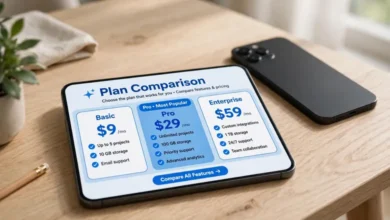
If you only need one line, shopping for a carrier can feel like walking into a warehouse club to buy a single apple. Almost every headline price T-Mobile advertises assumes two, three, or four lines, and the number that actually applies to you is buried in a broadband facts label or a footnote you will never read. That is why so many people search for t mobile plans for 1 line before they sign up: they want the real per-line number, not the family-bundle math.
Here is the short version before we get into the weeds. A single postpaid line on T-Mobile currently runs from $50 a month with AutoPay for the budget Essentials Saver plan up to $100 a month with AutoPay for the flagship Experience Beyond plan. Prepaid lines run even cheaper, from $40 a month. Taxes and a per-line recovery fee sit on top of every price you see, and the AutoPay discount shaves $5 off each line. In this guide I will walk through every single-line option on the menu right now, what you actually get for the money, the fees that inflate the advertised price, and a few honest ways to pay less.
The bottom line: most single-line shoppers land on Experience More at $85 a month with AutoPay, because it is the cheapest way to get truly unlimited priority data plus streaming perks. But if you mostly use your phone for calls, texts, and light data, Essentials Saver at $50 a month is a genuinely good deal that is easy to overlook.
How Much Do T Mobile Plans for 1 Line Cost?
Let us answer the question directly. As of October 2026, T-Mobile sells four postpaid plans that work with a single line, and the one-line price with AutoPay looks like this:
- Essentials Saver: $50 a month with AutoPay ($55 without)
- Essentials: $60 a month with AutoPay ($65 without)
- Experience More: $85 a month with AutoPay ($90 without)
- Experience Beyond: $100 a month with AutoPay ($105 without)
Those prices come from T-Mobile’s own plan page as read in October 2026, and they can change. The headline prices you see in ads, like $140 or $170, are three-line totals that include a free third line and the AutoPay discount. For one line, ignore those completely and use the numbers above.
Two more things inflate your actual bill beyond these figures. First, T-Mobile lists a telecom and regulatory recovery fee of $5.49 per voice line per month on its broadband facts labels, and that applies to every plan. Second, taxes and local surcharges are extra on most plans, and they vary a lot by ZIP code. There is also a one-time device connection charge of up to $35 per line when you activate. So budget roughly $8 to $15 above the advertised price for your first bill, sometimes more in high-tax states.
Fun fact: T-Mobile’s two premium plans, Experience More and Experience Beyond, come with a five-year price guarantee on the base rate. T-Mobile promises not to raise the talk, text, and data portion of your bill for five years (taxes and fees excluded). The budget Essentials plans do not list the same guarantee.
T-Mobile Single-Line Plans Compared
Before I dig into each plan, here is the whole menu in one table so you can see the trade-offs at a glance.
| Plan | 1 line, AutoPay | 1 line, no AutoPay | Priority data | Hotspot | Standout perks |
|---|---|---|---|---|---|
| Essentials Saver | $50 | $55 | 50 GB | Unlimited at 3G speeds | Cheapest entry; one or two lines only |
| Essentials | $60 | $65 | 50 GB | Unlimited at 3G speeds | Add lines later; simple and cheap |
| Experience More | $85 | $90 | Unlimited | 60 GB high-speed | Netflix with ads, Apple TV, 5-year price guarantee |
| Experience Beyond | $100 | $105 | Unlimited | Unlimited high-speed | Netflix + Hulu, T-Satellite texting, annual upgrades |
Every plan includes unlimited talk and text. The differences are data priority, hotspot allowances, streaming subscriptions, and travel perks. Let us take them one at a time.
Essentials Saver: The Cheapest Way Onto the Network
Essentials Saver exists for one kind of customer: someone who already owns a phone, needs just one or two lines, and wants the lowest possible postpaid bill. At $50 a month with AutoPay, it undercuts the regular Essentials plan by $10 and still puts you on T-Mobile’s actual network with postpaid service.
You get 50 GB of premium data each month, which means your speeds are not deprioritized behind other customers until you cross that threshold. For most people who use their phone for email, maps, social media, and some video, 50 GB is plenty. The catch is the hotspot: you get unlimited mobile hotspot, but at 3G speeds, which is fine for email and light browsing and painful for anything else. Video also streams in standard definition rather than HD.
The restriction that matters most is the line limit. Essentials Saver only supports one or two lines, and it is clearly designed for bring-your-own-device customers. If you plan to finance a new phone through T-Mobile, double-check that the current device deals are available on this plan before you commit, because the best phone promotions usually attach to the Experience plans.
Essentials: The No-Frills Default
Essentials is the same recipe as Essentials Saver, minus the restrictions, for $10 more a month. You pay $60 with AutoPay and get the same 50 GB of premium data, unlimited talk and text, and 3G-speed hotspot.
So why would anyone pay extra? Two reasons. First, Essentials has no line limit, so you can add a second or third line later without changing plans. Second, it removes the bring-your-own-device flavor of Saver, which makes it a cleaner choice if you might finance a phone or add a family member down the road. If you know your household will stay at exactly one line forever, Saver is the better buy. If there is any chance you will add someone, the $10 buys you flexibility.
The bottom line on the budget tier: Essentials and Essentials Saver are phone plans, not internet plans. If your phone is your lifeline for calls and texts and you do most of your heavy browsing on home Wi-Fi, they are perfectly adequate and genuinely affordable. If you tether a laptop to your phone regularly, you will feel the 3G-speed hotspot ceiling fast.
Experience More: The Sweet Spot for Most People
Experience More is the plan T-Mobile pushes hardest, and for a single-line shopper it is usually the right default. At $85 a month with AutoPay, it is the cheapest T-Mobile plan with truly unlimited premium data, meaning your speeds never get throttled behind other users no matter how much you use.
The feature list is where the price starts to make sense. You get 60 GB of high-speed mobile hotspot, which is enough to work from a laptop on the road without thinking about it. Video can stream in up to 4K on a capable device. And then there are the subscriptions: Netflix with ads included on T-Mobile, plus a heavily discounted Apple TV. If you already pay for Netflix out of pocket, folding it into your phone bill effectively knocks $7 or more off the real cost of this plan.
Travel perks matter too. Experience More includes 15 GB of high-speed data in Canada and Mexico plus 5 GB in 215+ other countries, which covers most vacations without buying a local SIM. And the five-year price guarantee means T-Mobile cannot raise your base rate for five years, which is meaningful protection in an industry where prices creep up every year or two.
Who should pick it? Anyone who uses their phone as their main internet connection, tethers regularly, travels, or already subscribes to Netflix. If two or more of those are true, the $25 step up from Essentials pays for itself.
Experience Beyond: The Whole Kitchen Sink
Experience Beyond is T-Mobile’s flagship, and at $100 a month with AutoPay for one line, it is priced like one. What does the extra $15 over Experience More buy you?
Mostly, it buys you the removal of limits. The high-speed hotspot becomes unlimited instead of 60 GB, which matters if you tether heavily or use your phone as a home internet backup. You get both Netflix and Hulu with ads included, not just Netflix. You get T-Satellite texting, which keeps you connected via satellite in places with no cell coverage. International data doubles to 30 GB in Canada and Mexico and 15 GB in 215+ other destinations. You also get yearly phone upgrade eligibility, which frequent upgraders will appreciate, and discounted watch or tablet lines at $5 a month if you want to add wearables.
Honestly, most single-line users do not need this plan. It is built for three kinds of people: heavy tetherers who blow through 60 GB of hotspot, frequent international travelers, and people who want the newest phone every year and like their upgrades baked into the plan. If that is not you, Experience More delivers about 90 percent of the experience for 85 percent of the price.
Fun fact: T-Mobile replaced its older Go5G plan names with the Experience branding in 2025. If you see references to Go5G or Go5G Plus in older articles, Experience More is the successor to Go5G and Experience Beyond is the successor to Go5G Plus. The pricing structure carried over almost unchanged.
Don’t Overlook T-Mobile Prepaid: One Line for $40 to $60
Postpaid plans get all the attention, but T-Mobile’s prepaid lineup deserves a look from single-line shoppers, because it skips the credit check and still carries a five-year price guarantee. With AutoPay, the prepaid prices for one line are:
- Starter Monthly: $40 a month with 15 GB of high-speed data
- Unlimited Monthly: $45 a month with unlimited 5G data (50 GB premium) and 3G-speed hotspot
- Unlimited Plus Monthly: $60 a month with unlimited 5G data, 5 GB of high-speed hotspot, and talk and text to Mexico and Canada
The $45 Unlimited Monthly plan is the interesting one here. It undercuts postpaid Essentials by $15 a month while offering the same 50 GB of premium data. The trade-offs: no device financing deals, fewer international perks, and customer support priority goes to postpaid customers. If you own your phone outright and do not care about financing the next one through your carrier, prepaid is the smartest-money single-line option T-Mobile sells.
The Fees That Pad Every Single-Line Bill
Carrier pricing has a long tradition of the advertised number and the billed number being different, and T-Mobile is no exception. Here is what to actually budget for.
The $5.49 per-line fee. T-Mobile’s broadband facts labels list a telecom and regulatory recovery fee of $5.49 per voice line per month, effective October 2026. That lands on every single-line bill regardless of plan. It is not a government tax; it is T-Mobile recovering its own regulatory costs, and every carrier has some version of it.
Taxes and local surcharges. These vary wildly by state and even by ZIP code. Some states add only a few dollars; others can add 10 percent or more to your bill. The higher-tier plans historically folded some of this in, but the current labels put taxes and fees on top for most plans, so check your total at checkout, not the plan card.
The device connection charge. Activating a line can carry a one-time charge of up to $35. It is easy to miss and annoying to find on a first bill. Ask about it before you sign up, and ask whether any current promotion waives it.
The AutoPay fine print. The $5-per-line AutoPay discount requires an eligible payment method, which generally means a bank account or debit card. Paying with a credit card often disqualifies you from the discount on postpaid plans. If you are a credit-card rewards person, run the math: the $5 monthly savings usually beats the points you would earn on the bill.
Five Honest Ways to Pay Less for One T-Mobile Line
You cannot negotiate the plan prices, but you can absolutely lower what you pay. These are the levers that actually work.
1. Turn on AutoPay on day one. It is the easiest $5 a month you will ever save, and people forget to enroll more often than you would think. Set it up during activation, not after your first bill.
2. Check the discount programs. T-Mobile lists lower rates for customers 55 and older, military members and veterans, and first responders. The discounts are real: authorized-retailer listings from October 2026 showed Experience More at $75 for one line and Experience Beyond at $90 for one line under these programs, with a 55+ version of Essentials at $50. If you qualify, do not pay full price.
3. Match the plan to your hotspot use. This is the single most common overspending mistake. People buy Experience Beyond for the unlimited hotspot and then tether twice a year. Look at your actual hotspot usage in your phone settings. Under 60 GB a month? Experience More. Under 10 GB? An Essentials plan plus the occasional day pass mentality saves you $25 to $50 a month.
4. Consider prepaid if you own your phone. The $45 Unlimited Monthly prepaid plan beats every postpaid option on price for equivalent data. The only people who should skip it are those who need device financing or premium international perks.
5. Time your switch around promos. T-Mobile runs device deals and line promos constantly, especially around phone launches and holidays. The best phone trade-in values attach to Experience More and Experience Beyond, so if you need a new phone anyway, the promo math can make the pricier plan cheaper overall.
Do T Mobile Plans for 1 Line Beat the Alternatives?
A fair question, because single-line pricing is where the big carriers look their weakest. T-Mobile owns Metro by T-Mobile, its own prepaid brand, which routinely undercuts T-Mobile postpaid single-line prices on the same network. Independent prepaid carriers like Mint Mobile and Visible also price single lines aggressively, often far below $50 a month, though usually with deprioritized data and thinner customer support.
So why would anyone pay $85 for a single T-Mobile postpaid line? Three reasons: data priority, perks, and simplicity. Postpaid customers get first dibs on network capacity during congestion, which matters in crowded stadiums, airports, and downtown cores. The bundled Netflix and Apple TV subscriptions offset the sticker price if you would pay for them anyway. And one bill from one company with stores everywhere is worth something if you have ever tried to get support from a prepaid-only brand.
My honest take: if you are a light user who owns their phone, buy prepaid, either T-Mobile’s own or a reputable MVNO, and pocket the savings. The plans in the middle, Essentials at $60, make the least sense to me: for $15 less, prepaid Unlimited Monthly gives you the same data, and for $25 more, Experience More gives you dramatically more.
Consumer tech coverage moves fast in this space, and plan prices shift through the year. Sites like Daily Orvix and A Daily Insight360 track carrier pricing changes and consumer tech news regularly, so they are worth a look alongside T-Mobile’s own plan page before you commit.
Frequently Asked Questions
What is the cheapest T-Mobile plan for one line?
The cheapest postpaid option is Essentials Saver at $50 a month with AutoPay, available for one or two lines with your own device. The cheapest option overall is prepaid Starter Monthly at $40 a month with AutoPay, which includes 15 GB of high-speed data. Remember that taxes and the $5.49 per-line recovery fee sit on top of these prices.
How much is T-Mobile per month for one phone?
It depends on the plan: $50 for Essentials Saver, $60 for Essentials, $85 for Experience More, or $100 for Experience Beyond, all with AutoPay as of October 2026. Without AutoPay, add $5 to each. Prepaid runs $40 to $60. Expect your actual bill to be $8 to $15 higher once fees and taxes are added.
Does T-Mobile require a contract for a single line?
No. T-Mobile’s plans are contract-free; you can cancel anytime. If you finance a phone through T-Mobile, you still owe the remaining device balance if you leave, but the service itself has no early termination fee. That is one of the genuine advantages of buying your phone outright.
Is a single line cheaper with AutoPay?
Yes, by $5 a month on every postpaid plan. The discount requires an eligible payment method, usually a bank account or debit card rather than a credit card. Enroll during activation so the savings start on your first bill.
Can I get a discount on one T-Mobile line?
Possibly. T-Mobile offers discounted plan variants for customers 55 and older, military members and veterans, and first responders. These cut the single-line price meaningfully: for example, recent listings showed Experience More at $75 for one line under these programs instead of $85. Check eligibility on T-Mobile’s site before you pay full price.
Do single-line plans include 5G?
Yes. Every current T-Mobile plan, postpaid and prepaid, includes 5G access on T-Mobile’s network at no extra charge. The differences between plans are data priority, hotspot allowances, and perks, not network access.
Conclusion
Shopping for t mobile plans for 1 line comes down to one honest question: how much of your internet life happens on your phone? If the answer is “not much,” the $50 Essentials Saver or the $45 prepaid Unlimited plan covers you for less than a dinner out. If your phone is your office, your hotspot, and your entertainment system, Experience More at $85 is the plan that earns its price with unlimited priority data, 60 GB of hotspot, and streaming subscriptions you were probably paying for anyway. Experience Beyond is excellent but overkill for most single-line users.
Whatever you choose, enroll in AutoPay immediately, budget for the $5.49 per-line fee and taxes on top of the advertised price, and check the 55+, military, and first-responder discounts before you pay full price. Plan prices change through the year, so confirm the current numbers on T-Mobile’s plan page before you sign up.
Read Also: Ice-T and Ortiz Wife: Darlene Ortiz vs Coco Austin Explained (2026 Guide)