
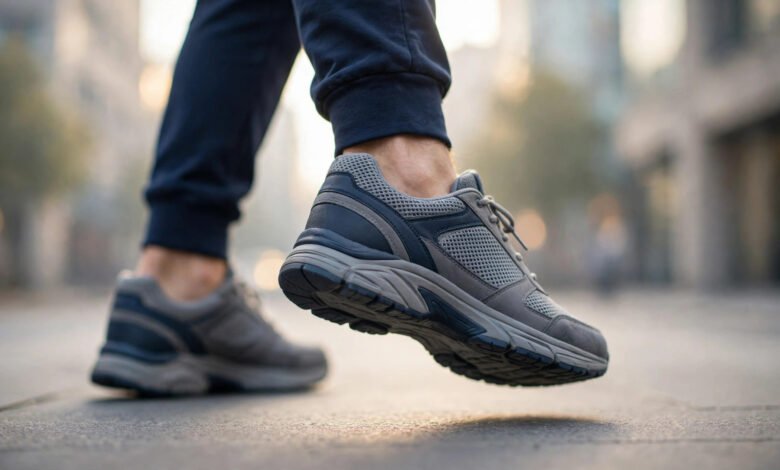
There is a moment every regular walker knows. You are two miles from home, the route is fine, the weather is fine, but your feet have quietly filed a complaint — a hot spot on the heel, an ache building under the arch, toes that feel like they have been negotiating for space since the first corner.
That moment is almost never about the walk. It is about the shoes. The men’s top rated walking shoes earn their ratings the boring way: they disappear on your feet. No rubbing, no bargaining, no counting down the last ten minutes. This guide pulls together the pairs walkers praise most, explains what actually makes a walking shoe comfortable over real distance, and helps you pick the right one for your feet instead of just buying whatever is trending.
What Makes a Walking Shoe Different From a Running Shoe?
It is a fair question, because the two look nearly identical on a shelf. The difference is in how you move. Walking strikes the ground heel-first with a smoother roll through the foot, while running lands with far more force and more time in the air. A good walking shoe is built around that rolling motion: a slightly beveled heel that softens the first contact, a sole that flexes where your foot naturally bends, and cushioning spread evenly rather than concentrated for impact. Running shoes can absolutely work for walking — plenty of men walk happily in them — but a purpose-built walking shoe tends to feel calmer and more stable at walking pace, especially on pavement.
The other difference is durability of comfort. A shoe that feels wonderful for a ten-minute dog walk can fall apart, comfort-wise, at mile four. When reviewers and podiatry-minded walkers rate shoes, the ones that stay at the top are the ones whose cushioning still feels supportive at the end of a long day, not just at the start.
The Men’s Top Rated Walking Shoes, Compared
Below are the styles that come up again and again when men talk about shoes they can genuinely walk all day in. They cover different budgets, foot shapes and uses, because the best walking shoe for a mail carrier is not automatically the best one for a weekend hiker or a man nursing a cranky heel.
Best Overall: A Plush, Neutral Daily Walker
For most men, the sweet spot is a neutral cushioned shoe with a wide, stable base and a breathable knit upper — the category where names like the Hoka Clifton and Brooks Ghost live. These are the shoes people buy for a holiday involving 20,000 steps a day and come home praising. The cushioning is generous without feeling like a mattress, the heel-to-toe transition is smooth, and they come in wide fittings, which matters more than most men realize. If you walk mostly on roads and pavements and want one pair that handles almost everything, start here.
Best for Long Shifts and Standing All Day
If your walking happens on concrete, in a warehouse, a hospital corridor or behind a counter, look at maximum-support styles like the New Balance 928 series. They are not glamorous, and nobody will stop you to ask about them, but they are built like equipment: firm support through the midfoot, a structured heel, and a sole that does not collapse by hour six. Men who stand and walk for eight to ten hours a day consistently rate stability and support above softness, because a very soft shoe can leave your feet working harder to stay balanced.
Best Budget Pick: Slip-On Comfort
You do not have to spend heavily to walk comfortably. Slip-on styles in the Skechers Go Walk family have built a loyal following for a reason: they are light, easy to get on and off, kind to feet that swell a little during the day, and cheap enough that replacing them yearly does not sting. The trade-off is structure — they are not the shoe for uneven trails or for men who need firm arch support — but for neighbourhood walks, errands and travel days, they are hard to argue with at the price.
Best for Overpronation and Flat Feet
If your ankles roll inward and your arches sit low, a stability shoe earns its keep. Models like the Brooks Addiction Walker or motion-control trainers use firmer foam and guide features on the inner side of the sole to keep your stride aligned. Walkers with flat feet often describe the difference as their knees and lower back complaining less — the shoe is doing alignment work your feet were previously doing alone. If you are not sure whether you overpronate, check the wear pattern on your current shoes: heavy wear on the inner edge is the classic clue.
Best for Trails and Mixed Surfaces
Pavement shoes on a muddy footpath are a miserable combination. For men whose walks leave the tarmac, a trail walking shoe adds deeper lugs for grip, a tougher upper that shrugs off scuffs, and often a waterproof membrane for wet grass and puddle season. They feel slightly stiffer than road shoes — that is the protection doing its job — and the grip difference on wet leaves or gravel is the kind of thing you only appreciate once you have nearly sat down involuntarily without it.
How to Choose the Right Pair for Your Feet
Ratings only get you so far. The men’s top rated walking shoes still have to fit your feet, and feet vary more than shoe marketing admits. Work through these checks and you will avoid most bad purchases.
Fit: The Thumb Rule and the Afternoon Rule
Leave roughly a thumb’s width — about a centimetre to a centimetre and a half — between your longest toe and the end of the shoe. Feet swell and slide forward slightly as you walk, and toes that touch the front at mile one will be bruised by mile five. Just as important, shop in the afternoon or after a walk, when your feet are at their largest. A shoe that fits perfectly at 9 a.m. in an air-conditioned shop can be a half-size too small by evening. And always try shoes with the socks you actually walk in; thick hiking socks change the fit completely.
Cushioning: Soft Is Not Always Better
There is a temptation to squeeze every shoe in the shop and buy the softest one. Resist it. Very soft foam feels luxurious standing still, but over distance it can bottom out and leave your joints doing the absorbing. Most high-mileage walkers land in the middle: enough cushion to take the sting out of pavement, enough firmness to stay supportive in the last mile. If you are heavier, err toward the firmer, more structured end of the range — you will compress soft foam far faster than a lighter walker will.
Arch Support and Foot Shape
High arches usually want cushioning and a curved shape that fills the midfoot. Flat feet usually want stability and support that stops the arch collapsing inward with every step. Neutral feet get the widest choice. A simple home test: wet your foot and step on a piece of cardboard. A full, wide print suggests flat feet; a print showing mostly heel and forefoot with a thin connecting strip suggests high arches. It is not a medical diagnosis, but it points you at the right shelf in the shop.
Mistakes Men Make When Buying Walking Shoes
The most common mistake is buying your exact dress-shoe size and assuming it transfers. Walking and running shoes almost always need a half size more than formal shoes. The second mistake is falling for a shoe that needs “breaking in” for weeks. A good walking shoe should feel comfortable on a lap around the shop and a ten-minute walk at home; minor stiffness eases, but pinching and rubbing do not — they get worse with distance.
Third: keeping shoes far too long. Walking shoes typically give their best support for roughly 500 to 800 kilometres of walking. After that the foam is tired even if the upper looks fine, and the first symptom is often vague knee or heel aches that men blame on age instead of mileage.
If you are weighing up something more stripped-back for training days, the running-shoe world is worth a look too — our sister site recently tested the Men’s On Cloudstratus 3 in detail, and its double-layer cushioning makes an interesting comparison point for walkers who like a bouncier ride.
Making Your Walking Shoes Last Longer
Two habits double the useful life of a good pair. First, rotate if you can. Giving foam a day to recover between long walks keeps it springy noticeably longer, which is why keen walkers often keep a daily pair and a weekend pair.
Second, untie them. Crushing the heel counter by forcing your foot in, day after day, quietly destroys the structure that keeps your heel stable. Air them out after wet walks, pull the insoles out overnight, and never cook them on a radiator — heat ages foam and glue faster than rain does. When the tread under the heel is worn smooth or the shoe starts leaning visibly to one side on a flat surface, that is the shoe telling you it is done.
One more habit that pays off: photograph your favourite routes. It sounds unrelated, but walkers who vary their routes walk more, and their shoes wear more evenly across the sole. If you are the type who edits and shares those shots, this guide to a free photo editor online is a handy companion for tidying them up.
Frequently Asked Questions
How long should men’s walking shoes last?
For most walkers, somewhere between 500 and 800 kilometres of walking, or roughly six to twelve months of daily use. After that the cushioning compresses and support fades, even when the shoes still look presentable. If new aches appear in your knees, hips or heels, check your shoes’ mileage before blaming your body.
Can I walk in running shoes instead?
Yes — many men do, happily. Running shoes offer excellent cushioning and breathability. The case for dedicated walking shoes is stability at slower speeds, a smoother heel-to-toe roll, and often a more durable, structured upper for all-day wear. If your running shoes feel great on walks, there is no rule that says you must switch.
Should walking shoes be a size bigger?
Usually a half size up from your formal shoes is the right starting point, because feet swell and lengthen slightly under load. The real test is space in front of your longest toe — about a thumb’s width — and a heel that stays put without slipping as you walk.
What are the best walking shoes for flat feet?
Look for stability or motion-control models with firm arch support and a structured heel counter. They limit the inward roll that tires flat feet out over distance. If you have persistent pain rather than simple fatigue, a podiatrist-fitted orthotic inside a stability shoe is the combination most flat-footed high-mileage walkers end up with.
Are expensive walking shoes worth it?
Up to a point. The jump from very cheap shoes to a solid mid-range pair is usually obvious in cushioning quality, fit options like wide sizes, and durability. Beyond that, you are paying for lighter materials, newer foam formulas and brand — nice, but not life-changing. The best value is a well-fitting mid-range shoe replaced on time, not a flagship shoe worn for three years.
The Bottom Line
The men’s top rated walking shoes all share the same unglamorous virtues: honest cushioning that survives the last mile, a fit with room where feet swell, and support matched to how your foot actually moves. Pick the category that matches your walking — daily pavement miles, long shifts, trails, or feet that need guidance — try them on late in the day, and replace them before the foam gives up. Do that, and the only thing you will notice about your shoes on a long walk is nothing at all, which is exactly the point.
Read Also: Watchpeopledie.t Safety and Legality Guide (2026 Guide)




One Comment