
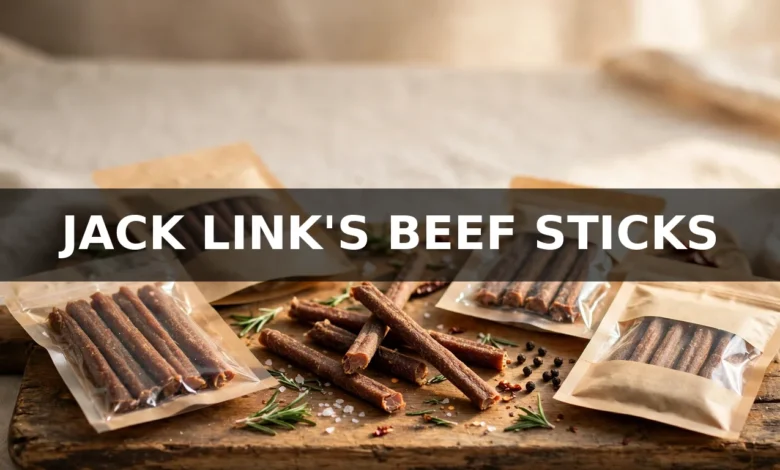
Walk down the snack aisle of almost any supermarket or petrol station and you will spot them: slim, individually wrapped sticks of dried beef in black and red packaging, hanging near the till. Jack Link’s beef sticks have become one of those snacks people buy without thinking twice. They are cheap, they fit in a pocket, and they promise protein without a wrapper full of sugar.
But are they actually a good snack, or just a convenient one? Which flavour is worth trying first, and which should you skip? And how do they stack up against proper beef jerky, or against a protein bar? This guide answers all of that. No hype, no sponsored claims — just what is in the pack, what it tastes like, and when it makes sense to eat one.
What Are Jack Link’s Beef Sticks?
Jack Link’s beef sticks are shelf-stable meat snacks made from seasoned beef (in some ranges, a beef and pork blend), dried and smoked, then sealed in individual wrappers. They sit somewhere between beef jerky and a sausage stick: softer and chewier than jerky, firmer and drier than a fresh sausage.
The bottom line: think of them as jerky’s easier-going cousin. They are ready to eat straight from the wrapper, they do not need refrigeration while sealed, and they travel well — which is exactly why they turn up in lunchboxes, gym bags, glove boxes and desk drawers.
The brand itself has been around since the 1980s, growing out of a family meat business in Wisconsin in the United States. Today Jack Link’s is one of the biggest names in meat snacks, and its beef sticks are sold in supermarkets, convenience stores and online in several countries, including the UK, where the range and pack sizes can differ slightly from the American ones.
Beef Sticks vs Beef Jerky: What Is the Difference?
People often use the two terms as if they mean the same thing. They do not, and the difference matters if you care about texture and price.
| Feature | Beef Sticks | Beef Jerky |
|---|---|---|
| Texture | Soft, chewy, sausage-like | Firm, dry, tougher to chew |
| Shape | Slim round stick | Flat strips or pieces |
| Protein per small pack | Around 5g per stick | Often 8–11g per 25g pack |
| Price per gram | Usually cheaper | Usually dearer |
| Best for | Quick snacking, kids’ lunchboxes | Slow chewing, bigger protein hit |
Neither is better in every situation. Jerky generally gives you more protein per bite and a more “real meat” feel. Beef sticks win on convenience and price, and on being easier to eat — no tearing, no jaw workout. If you want a snack you can eat while driving or walking, the stick format is the practical choice.
Jack Link’s Beef Sticks Flavours: The Full Line-Up
Flavours vary by country and by retailer, and the range changes from time to time. The core flavours below are the ones you are most likely to find, in the US and in many UK stockists.
1. Original
The plain one, and still the best place to start. Original tastes of salt, smoke and beef, with a mild peppery background. It is not spicy and not sweet, which makes it the safest flavour if you are buying a multi-pack for the first time.
Fun fact: if you have never tried a Jack Link’s beef stick before, buy Original first. Every other flavour is a variation on this base, so it tells you whether you actually like the product before you commit to a flavoured box.
2. Teriyaki
The sweet-savoury option, and one of the brand’s best sellers. Teriyaki adds soy sauce sweetness, a little brown sugar and a gentle garlic note. It is noticeably sweeter than Original — a standard stick carries around 2g of sugars — and that sweetness is what divides people. Fans love it; people who prefer savoury snacks find it a bit sticky-sweet.
3. Peppered
Black pepper leads here, with a warm, slow heat rather than a sharp burn. Peppered is the flavour for people who find Original a little plain but do not want chilli. It pairs well with a cold drink and works nicely crumbled into a salad or a wrap, if you are that way inclined.
4. Sweet & Hot
Exactly what the name promises: sweetness up front, then a chilli kick at the back. Of the mainstream flavours, this one has the most going on. The sugar content is higher than Original, so check the label if that matters to you, but as a flavour experience it is the most interesting of the standard range.
5. Jalapeño
A greener, fresher heat than Sweet & Hot. Jalapeño flavour sticks taste of pickled green chilli rather than dried spice, and the heat fades quickly. If you like jalapeños on nachos or pizza, this is your flavour.
6. Zero Sugar
Made for people who want the snack without the sugar. Zero Sugar sticks skip the sweeteners found in Teriyaki and Sweet & Hot, so the flavour is closer to Original — salty, smoky, meaty. The trade-off is a slightly drier chew in some batches. Worth trying if you are watching sugar, but do not expect it to taste identical to the sweetened versions.
7. Wild Heat and Sweet Habanero
These are the hotter end of the range, and they are not always in stock everywhere. Wild Heat brings a stronger chilli burn, while Sweet Habanero mixes fruit-like sweetness with habanero heat. Both are for people who genuinely like spicy food. If you are heat-sensitive, start with Peppered and work your way up.
Jack Link’s Beef Sticks Nutrition: What Is Actually in a Stick?
Nutrition varies by flavour and by pack size, so always read the label on the exact pack you buy. The figures below are for a standard Teriyaki stick (one stick, 26g) as listed by retailers — a useful benchmark, not a promise about every flavour.
| Nutrient | Per stick (26g, Teriyaki) |
|---|---|
| Calories | 110 |
| Protein | 5g |
| Total fat | 9g |
| Saturated fat | 4g |
| Carbohydrates | 3g |
| Sugars | 2g |
| Sodium | 390mg |
A few things stand out from that panel, and they are worth understanding before you decide whether beef sticks fit your diet.
Protein is modest, not massive. Five grams of protein per stick is useful — roughly the same as an egg white or two — but it is not a meal replacement. Two sticks give you about 10g, which is a decent snack-level amount. If your goal is a serious post-workout protein hit, jerky or a protein bar will usually give you more per serving.
Sodium is the number to watch. At around 390mg per stick, two sticks take you close to 800mg of sodium, which is a meaningful chunk of a day’s intake. This is normal for dried meat — salt is part of how the product stays safe without refrigeration — but it means beef sticks are not an ideal everyday snack if you are watching your salt intake.
Sugar depends on the flavour. Original and Zero Sugar keep sugar low. Teriyaki and Sweet & Hot add a couple of grams per stick. That is not a lot in absolute terms, but it adds up across a multi-pack, and it is the main reason the sweet flavours taste sweeter.
Fat is moderate. Nine grams of fat per stick, with 4g saturated, is in line with other processed meat snacks. Beef sticks are not a low-fat food, and they are not trying to be. They are a protein-forward snack that happens to carry fat along with it.
Ingredients: What Is Inside?
The ingredient list for Teriyaki sticks starts with beef, water, brown sugar, fructose and salt, followed by flavourings, soy sauce, yeast extract, molasses, pineapple juice and Worcestershire sauce. Some ranges use a beef and pork blend rather than 100% beef — the front of the pack and the ingredients panel will tell you which one you are holding, and the two are not identical products, so it is worth a glance.
Common allergens to note: soy appears in most flavours through soy sauce, and some varieties list other allergens. If you have a soy allergy, check before you eat. The casing on some sticks contains caramel colouring, which is cosmetic and does not affect flavour.
Are Jack Link’s Beef Sticks Healthy?
That depends entirely on what you compare them with. Next to a bag of crisps or a chocolate bar, a beef stick is the better choice: more protein, less sugar, and far more filling for the same calories. Next to a handful of nuts, a boiled egg or a piece of fruit, it is the weaker choice: more salt, more processing, and fewer nutrients overall.
The honest answer is that beef sticks are a convenient, protein-containing snack, not a health food. They are processed meat, and processed meat is something most nutrition guidance suggests eating in moderation rather than every day. That does not make them “bad” — it makes them a sometimes snack rather than a daily staple.
The bottom line: one or two sticks a few times a week, as part of a varied diet, is a perfectly reasonable choice for most people. A whole box a day, every day, is a lot of salt and processed meat for not much nutritional variety.
Who Should Be Careful?
- People watching sodium: the salt content is high per stick, so count it honestly.
- People with soy allergies: most flavours contain soy sauce or soy protein.
- People on low-fat diets: these are not low-fat snacks.
- Young children: the sticks are chewy and salty; small children should eat them only in small pieces and under supervision, and the salt content makes them an occasional treat rather than a lunchbox daily.
If any of those apply to you, check the label on your exact flavour — recipes differ between countries and between batches more than most people expect.
How Much Do Jack Link’s Beef Sticks Cost?
Price depends heavily on where you buy and how many you buy. Single sticks at a till or petrol station are the most expensive per gram — you are paying for convenience. Multi-packs of 12, 20 or 24 from a supermarket or online bring the per-stick price down sharply, often by a third or more.
A practical rule: if you like them, buy the multi-pack. Single sticks are for trying a new flavour, not for regular eating. And compare the price per 100g, not the headline pack price — stick sizes differ between ranges, and a cheaper-looking box can work out dearer per gram.
Where to Buy Them
In the UK, Jack Link’s beef sticks turn up in major supermarkets, discount stores, convenience shops and online retailers. In the US, they are near-universal — grocery stores, warehouse clubs, petrol stations and online. Stock varies, and not every flavour is carried everywhere, so if you have a favourite, the larger online multi-packs are usually the most reliable way to get it.
How to Eat Jack Link’s Beef Sticks (Beyond Just Opening the Pack)
Most people eat them straight from the wrapper, and honestly, that is most of the point. But they are more versatile than they look:
- In a lunchbox: one stick plus fruit and crackers makes a filling packed lunch addition.
- On a hike or road trip: no refrigeration, no mess, no crumbs — one of the few protein snacks that genuinely travels well.
- Chopped into a salad: slice a Peppered or Original stick into a green salad for a salty, smoky protein topping.
- In a wrap: sliced stick, salad and a little sauce in a tortilla makes a fast lunch.
- With cheese and crackers: a quick snack board for a film night — the sticks do the job of cured meat at a fraction of the price.
- As a post-gym stopgap: not a full recovery meal, but better than nothing when you are an hour from home and hungry.
One thing to avoid: do not cook with them as if they were fresh sausage. They are already cooked and dried, so heating them just makes them tougher and saltier.
Jack Link’s Beef Sticks vs the Competition
Jack Link’s is not the only brand making meat sticks, and the alternatives are worth knowing about if you eat them often.
- Old Trapper and Country Archer: jerky-first brands whose sticks tend to be meatier and dearer.
- Slim Jim: the classic American meat stick, generally softer, fattier and cheaper per stick, with a very different, almost processed-sausage flavour.
- Supermarket own-brand sticks: often good value and surprisingly close in taste, though protein content and salt vary widely — compare the label, not the price alone.
- Biltong: air-dried rather than smoked, usually higher in protein per 100g and lower in sugar, but dearer and chewier.
If price is your main concern, own-brand sticks are worth a taste test. If flavour and consistency matter most, Jack Link’s is hard to beat at its price point — the quality from pack to pack is notably consistent, which is not always true of cheaper rivals.
How to Store Them (and How Long They Last)
Unopened sticks keep for months at room temperature — check the best-before date on the pack, which is usually generous. Keep them somewhere cool and dry, away from direct sunlight. Once opened, eat the stick straight away; they are individually wrapped for a reason, and an unwrapped stick dries out quickly.
If you buy a multi-pack, you do not need to refrigerate the sealed sticks. That is the whole appeal: a protein snack that lives in a drawer, a car or a bag without any planning.
Which Jack Link’s Beef Stick Should You Buy?
If you only remember one section of this guide, make it this one. The right flavour depends on what you like, not on what is most popular.
- First time buyer: Original, in a small pack. It tells you whether you like the product at all.
- Sweet tooth: Teriyaki, then Sweet & Hot if you want heat with it.
- Spice lover: Peppered for mild warmth, Jalapeño for fresh heat, Wild Heat or Sweet Habanero for a real kick.
- Watching sugar: Zero Sugar or Original — check the label, as recipes vary by country.
- Best value: a 20- or 24-count multi-pack of your favourite flavour, bought online or at a warehouse store.
- Lunchboxes and travel: any flavour in individual sticks — that is what the format is for.
Common Mistakes When Buying Beef Sticks
A few small errors catch people out:
- Buying single sticks every day. The till price adds up fast. A multi-pack usually costs far less per stick.
- Ignoring the flavour’s sugar. Teriyaki and Sweet & Hot are sweet by design. If sugar matters to you, Original or Zero Sugar is the better default.
- Assuming all sticks are 100% beef. Some ranges blend beef and pork. The pack says so — read it.
- Treating them as a meal. Five grams of protein is a snack, not lunch. Pair a stick with something else if you need a real meal.
- Eating the whole box in one sitting. The salt adds up fast. Two sticks is a snack; six is a salt bomb.
FAQs
Are Jack Link’s beef sticks real beef?
Yes — beef is the first ingredient in the beef stick ranges, and the brand describes its sticks as made with 100% beef in several of its lines. Some ranges use a beef and pork blend instead, so check the ingredients panel on the pack you buy if that matters to you.
How much protein is in a Jack Link’s beef stick?
A standard stick provides around 5g of protein, though this varies by flavour and by pack size — larger sticks provide more. Check the nutrition panel on your exact pack for the precise figure.
Are Jack Link’s beef sticks keto friendly?
Many of the low-sugar flavours, such as Original and Zero Sugar, are low in carbohydrates and are marketed as keto friendly. Sweet flavours like Teriyaki contain a few grams of sugar per stick, so they fit a keto diet less neatly. As always, check the label against your own carb limit.
Do Jack Link’s beef sticks need to be refrigerated?
No, not while sealed. They are shelf-stable and keep at room temperature until the best-before date. Once a stick is unwrapped, eat it straight away.
Are Jack Link’s beef sticks gluten free?
It depends on the flavour and the country. Some varieties are labelled gluten free, while others contain soy sauce or other ingredients that may contain gluten. Check the allergen information on the pack you are buying — do not assume.
What is the difference between Jack Link’s beef sticks and Slim Jims?
Both are meat sticks, but they taste and feel different. Jack Link’s sticks are generally firmer, smokier and more meat-forward, while Slim Jims are softer, fattier and more heavily processed in flavour. Price per stick is usually similar; preference comes down to taste.
Conclusion
Jack Link’s beef sticks earn their place in the snack aisle. They are not a health food, and they are not a meal, but they do one job very well: they put a filling, protein-containing snack in your pocket for very little money and no preparation at all.
Start with Original, try Teriyaki or Peppered next, and buy multi-packs once you know your favourite. Watch the salt if you eat them often, check the label for the exact nutrition of your flavour, and treat them as what they are — a handy, tasty, occasional snack, not a diet plan. Done that way, they are one of the better choices in the impulse-buy snack range.
Read Also: Cacique Women’s Cotton Full Brief Panty With Wide Waistband





One Comment