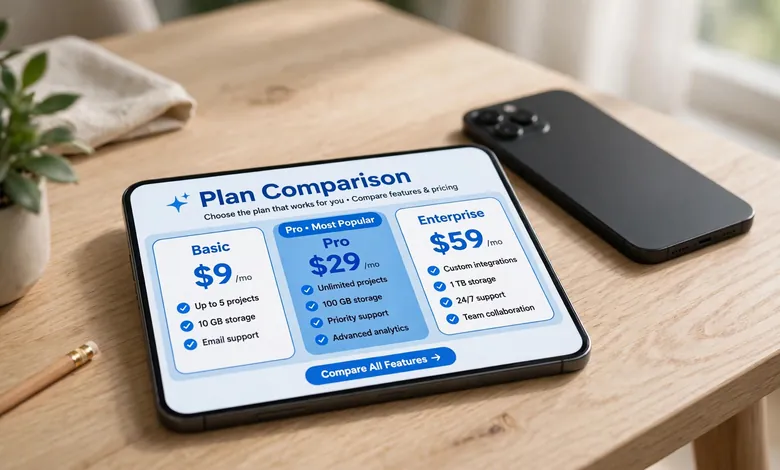
AT&T changed the rules in 2026. If you’re comparing AT and T cell phone plans and haven’t looked at the carrier’s wireless plans in a while, the lineup you remember — Unlimited Starter, Unlimited Extra, Unlimited Premium — is gone. On March 13, 2026, AT&T replaced its entire Unlimited Your Way lineup with three new plans — Value 2.0, Extra 2.0, and Premium 2.0 — and then added a fourth tier, Elite 2.0, on April 16. Prices dropped to clean round numbers, data allowances went up, and the naming finally makes sense.
This guide breaks down every current AT&T cell phone plan: what it costs for one line and for families, how much premium data and hotspot data you actually get, the fees AT&T leaves out of its advertising, and how to decide which plan fits the way you use your phone.
In this article
- The short answer: which AT&T plan should you get?
- AT and T cell phone plans: 2026 lineup at a glance
- Value 2.0: the budget pick
- Extra 2.0: the sweet spot
- Premium 2.0: for heavy users
- Elite 2.0: the top tier
- What happened to the old plans?
- The true cost: fees AT&T doesn’t advertise
- Family pricing and mixing tiers
- How to choose your plan
- Frequently asked questions
- Conclusion
The short answer: which AT&T plan should you get?
The bottom line: most people should start with Extra 2.0 at $70 per month for a single line. It has 100 GB of premium data, 50 GB of hotspot data, and costs just $20 more than the entry-level Value 2.0 — but gives you twenty times the priority data. If you’re a light user who’s on Wi-Fi most of the day, Value 2.0 at $50 a month is the cheapest way onto AT&T’s network. Constant travelers and hotspot-dependent workers should look at Premium 2.0 ($90) or Elite 2.0 ($110) for truly unlimited priority data, Latin America roaming, and bigger hotspot buckets.
AT and T cell phone plans: 2026 lineup at a glance
Here’s how the four current unlimited plans compare side by side. Prices shown are for a single line with AutoPay and paperless billing, before taxes and fees.
| Plan | Monthly price (1 line) | Premium data | Hotspot data | Streaming quality |
|---|---|---|---|---|
| Value 2.0 | $50 | 5 GB | 3 GB | SD |
| Extra 2.0 | $70 | 100 GB | 50 GB | SD |
| Premium 2.0 | $90 | Unlimited | 100 GB | Up to 4K UHD |
| Elite 2.0 | $110 | Unlimited | 250 GB | Up to 4K UHD |
Fun fact: every plan in the 2026 lineup includes unlimited talk and text across the US, Canada, and Mexico, 5G access, and AT&T’s ActiveArmor security features. The differences are almost entirely about data priority, hotspot allowances, and international perks.
Value 2.0: the budget pick
Value 2.0 is AT&T’s new entry-level plan, and it’s the cheapest way to get an AT&T postpaid line. At $50 per month for a single line (dropping to $30 per line on a four-line family plan), it undercuts the retired Starter plan by nearly $16 a month.
What you get:
- Unlimited talk, text, and data in the US, Canada, and Mexico
- 5 GB of premium data — after that, your speeds may slow during network congestion
- 3 GB of mobile hotspot data
- Standard-definition video streaming
- ActiveArmor mobile security
Who it’s for: the Wi-Fi-first user. If you spend your days at home or the office on Wi-Fi and use cellular data mostly for maps, messaging, and light browsing, 5 GB of priority data is genuinely enough. The average American uses roughly 10 GB of cellular data a month — but most of that is video streaming, which Value 2.0 caps at SD quality anyway.
The honest trade-off: Value 2.0 is a deprioritized plan by design. Once you’ve used your 5 GB of premium data, you drop to the back of the line whenever the network is congested. In a packed stadium or a busy downtown at lunch hour, you’ll feel it. If you need consistent speeds, step up to Extra 2.0.
Extra 2.0: the sweet spot
Extra 2.0 is where AT&T’s lineup starts making real sense for most people. At $70 per month for one line ($40 per line with four lines), it replaces the old Extra plan at a slightly lower price with a much bigger data allowance.
What you get:
- Everything in Value 2.0, plus
- 100 GB of premium data (up from 75 GB on the old Extra plan)
- 50 GB of high-speed hotspot (up from 30 GB)
- Eligibility for the AT&T Turbo priority-data add-on ($7/month)
Who it’s for: basically everyone who isn’t a light user or a power user. 100 GB of priority data covers streaming, video calls, gaming, and heavy social media use for the vast majority of people. The 50 GB hotspot bucket is enough to work from a laptop tethered to your phone for several days a month.
This is also the plan where AT&T’s pricing starts beating its old self clearly: the 2.0 version costs less than the retired Extra EL while offering a third more premium data and two-thirds more hotspot data. If you’re still on an old plan, this is the tier AT&T most wants you to move to — and it’s genuinely a good deal.
Premium 2.0: for heavy users
Premium 2.0 is the flagship for people who never want to think about data. At $90 per month for one line ($55 per line with four lines), it’s the only tier — along with Elite — with truly unlimited premium data: no deprioritization threshold at all.
What you get:
- Everything in Extra 2.0, plus
- Unlimited premium data — full priority, always
- 100 GB of high-speed hotspot
- 4K Ultra HD streaming quality
- Talk, text, and data in 20 Latin American countries
- AT&T Turbo add-on eligibility
Who it’s for: frequent travelers, people who use their phone as their primary internet connection, and households that stream a lot of 4K video on cellular. The Latin America roaming is a real differentiator — if you regularly travel to Mexico, Colombia, Brazil, or elsewhere in the region, this alone can justify the upgrade over Extra 2.0.
Practical tip: the jump from Extra to Premium is $20 a month for a single line. If you’re buying Premium mainly for the bigger hotspot bucket, do the math first — 50 GB of hotspot on Extra is already generous, and the unlimited priority data only matters if you routinely blow past 100 GB of phone data in a month.
Elite 2.0: the top tier
Elite 2.0 arrived on April 16, 2026, as the new ceiling of AT&T’s lineup. At $110 per month for a single line, it’s aimed squarely at people for whom connectivity is non-negotiable — mobile professionals, frequent international travelers, and heavy hotspot users.
What you get:
- Everything in Premium 2.0, plus
- 250 GB of high-speed hotspot — the largest allowance AT&T has ever offered on a consumer plan
- AT&T Turbo included (the $7/month priority add-on is built in)
- 50% off connected-device plans (watch/tablet)
Who it’s for: a narrow but real audience. 250 GB of hotspot is enough to run a laptop full-time off your phone. If you’re deciding between Elite 2.0 and a dedicated home internet plan plus a cheaper phone plan, the comparison is worth running — for some rural or frequently-moving users, Elite as a do-everything connection genuinely pencils out.
What happened to the old plans?
If you signed up before March 2026, you’re probably on one of the retired plans: Unlimited Starter SL, Unlimited Extra EL, or Unlimited Premium PL (the old prices ended in .99 — $65.99, $75.99, $85.99 for a single line).
Three things to know:
- AT&T will not move you automatically. Your old plan keeps working exactly as before, grandfathered in.
- Switching to a 2.0 plan can trigger a line activation fee of up to $50 per line — so do the arithmetic before you call.
- The 2.0 plans are generally cheaper with more data, so switching is usually worth it — but verify your specific situation, especially if you have device promotions tied to your old plan.
One more retired-plan note: the old Starter SL had 5 GB of hotspot; the new Value 2.0 has only 3 GB. If hotspot was the reason you were on Starter, the 2.0 switch isn’t strictly an upgrade for you — Extra 2.0 is where the hotspot improvement lives.
The true cost: fees AT&T doesn’t advertise
AT&T’s advertised prices are pre-tax and pre-fee. Here’s what gets added to the bill:
- Administrative fee: $3.99 per line per month. This is a company-imposed charge, not a government tax. On four lines it adds about $16 a month — roughly $192 a year.
- Taxes and regulatory fees, which vary by state and locality. Budget another $5–$10 per line per month.
- Activation or upgrade fees when you add a line or switch plans — up to $50 per line in some cases.
As a rule of thumb, expect your actual bill to land 25–40% above the advertised price. A four-line Extra 2.0 plan advertised at $160 a month ($40 × 4) will typically bill somewhere around $200–$225 once fees and taxes are included. This isn’t unique to AT&T — every major carrier does it — but it’s the single most common reason people feel misled by wireless advertising.
Family pricing and mixing tiers
AT&T’s per-line pricing drops sharply as you add lines, and the biggest savings kick in at four lines:
| Plan | 1 line | 2 lines (per line) | 4 lines (per line) |
|---|---|---|---|
| Value 2.0 | $50 | Lower | $30 |
| Extra 2.0 | $70 | Lower | $40 |
| Premium 2.0 | $90 | Lower | $55 |
| Elite 2.0 | $110 | Lower | Multi-line discount |
The genuinely useful feature: lines on the same account can be on different tiers. The teenager who streams video all day can sit on Premium 2.0 while a grandparent who’s always on Wi-Fi takes Value 2.0 — you don’t have to buy the same plan for everyone. This “mix and match” approach is where families save the most money, and it’s worth more than the headline multi-line discount.
The bottom line: a family of four doesn’t need four Premium plans. Put the heavy users on the higher tiers and everyone else on Value or Extra, and you’ll often cut $40–$60 a month off the uniform-plan price.
How to choose your plan
Run through these four questions in order:
1. How much data do you actually use? Check your phone’s settings — both iPhone and Android show cellular data usage by month. If you’re under 5 GB, Value 2.0 is fine. Between 5 and 100 GB, Extra 2.0. Over 100 GB regularly, look at Premium or Elite.
2. Do you need hotspot? Occasional tethering (a few GB a month) works on any plan. Regular laptop tethering needs Extra 2.0’s 50 GB or more. Full-time hotspot work is an Elite 2.0 conversation.
3. How many lines? The per-line math changes everything. A single line on Premium 2.0 is $90; on a four-line plan it’s $55. Always price the whole household before deciding.
4. Should you even buy AT&T directly? Budget carriers like Cricket, Boost Mobile, and Consumer Cellular run on AT&T’s network — same towers, same coverage — with plans advertised in the $10–$25 a month range. The trade-offs are deprioritized data and fewer perks. If you don’t need AT&T’s premium data priority or international roaming, an AT&T-network MVNO can cut your bill dramatically. And if someone on your account is 55 or older, ask about AT&T’s 55+ plan — around $40 a line for two lines with AutoPay.
Before you sign anything, price out your exact configuration — tiers, line count, and the first bill with fees — and compare it against what you’re paying now. Wireless plans reward shoppers and punish inertia.
Once you’ve picked a plan, managing the monthly side of it matters too — there’s a handy walkthrough of paying your AT&T bill online, with or without an account, which covers the myAT&T app, guest payments, and the AutoPay discount setup. And if you’re the type who likes to investigate unfamiliar numbers that show up on a new plan, this free reverse phone lookup guide explains how those directory tools work.
Frequently asked questions
What is the cheapest AT&T cell phone plan in 2026?
Value 2.0 at $50 per month for a single line with AutoPay ($30 per line on a four-line plan), before taxes and fees. It includes 5 GB of premium data and 3 GB of hotspot.
Which AT&T plan has truly unlimited data?
Premium 2.0 ($90/month) and Elite 2.0 ($110/month) both offer unlimited premium data with no deprioritization threshold. Extra 2.0 gives you 100 GB of priority data, which is effectively unlimited for most people.
Can different lines on my account have different plans?
Yes. AT&T lets you mix and match tiers on the same account, so each line can be on Value, Extra, Premium, or Elite 2.0 independently.
Do AT&T plans include taxes and fees?
No. AT&T quotes prices before taxes and fees. Expect a $3.99-per-line monthly administrative fee plus state and local taxes, typically adding 25–40% to the advertised price.
What happened to AT&T Unlimited Starter?
It was retired on March 13, 2026, when AT&T launched the 2.0 lineup. Existing Starter SL customers are grandfathered — AT&T won’t move them automatically — but switching to a 2.0 plan may trigger a line activation fee of up to $50.
Does AT&T still offer a senior plan?
Yes. AT&T offers a 55+ plan at around $40 per line for two lines with AutoPay (about $80 total). It’s limited to two lines, and availability can vary by market, so ask when you call.
How much hotspot data do AT&T plans include?
Value 2.0: 3 GB. Extra 2.0: 50 GB. Premium 2.0: 100 GB. Elite 2.0: 250 GB. All hotspot allowances are per line, per month.
Conclusion
AT&T’s 2026 reset is one of the better deal the carrier has offered in years: lower headline prices, bigger data buckets, and the freedom to mix tiers across lines on one account. For most people comparing AT and T cell phone plans, Extra 2.0 at $70 a month is the right answer — 100 GB of priority data and 50 GB of hotspot covers nearly every realistic use case. Light users save real money on Value 2.0, and only genuine power users need to climb to Premium or Elite.
Just remember the two rules that matter more than the plan you pick: always price the bill with fees and taxes before you commit, and check whether every line actually needs the tier it’s on. That’s where the real savings live.
Read Also: T Mobile Service Disruption Compensation (2026 Guide): How to Get a Credit