
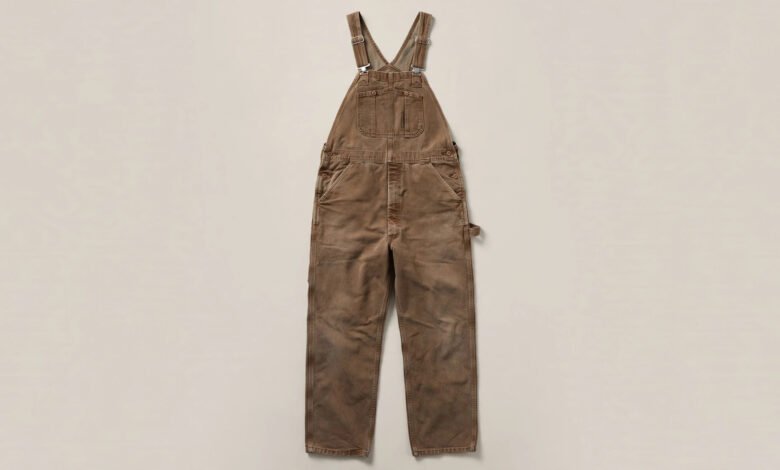
There are few garments with a longer working history than the dungaree, and few brands more closely associated with honest workwear than Carhartt. The Carhartt men’s washed twill relaxed fit dungaree brings those two things together: the classic bib-and-brace overall shape, made in a softer washed twill fabric, with a relaxed cut that gives you room to move. It is workwear, but it is workwear that has softened around the edges — broken in from the start, comfortable for a full day, and easy enough to wear well beyond the job site.
Whether you actually work with your hands, or you simply like the rugged, practical look of overalls, this is a piece worth understanding properly. The fabric, the fit, and the details all affect how it wears, and getting them right is the difference between a dungaree you live in and one that hangs in the wardrobe. This guide covers all of it: what washed twill is, how the relaxed fit feels, how to wear it for work and for everyday life, and what to check before you buy.
What Is a Dungaree, and What Makes This One Different?
A dungaree — often called a bib overall — is a one-piece garment with trousers, a bib front that covers the chest, and shoulder straps that hold it up, usually with a fastening at the front. It was designed for work: the bib protects your shirt and chest, the straps keep everything in place without a belt, and the roomy cut lets you bend, crouch, and reach without restriction. Farmers, builders, railway workers, and factory workers have worn versions of it for well over a century, because it simply works.
The Carhartt version keeps that practical shape but changes the feel in two important ways. The first is the fabric: washed twill. Twill is a woven fabric with a distinctive diagonal pattern in the weave, known for being sturdy and hard-wearing. “Washed” means the fabric has been washed during manufacturing, which softens it and gives it a slightly faded, lived-in look from the very first wear. Instead of the stiff, board-like feel of brand-new heavy workwear, you get something that feels broken in straight away.
The second is the fit: relaxed. A relaxed fit dungaree sits looser through the hip and thigh than a slim or tapered cut, with a straighter leg that gives you room to move. It is not baggy for the sake of it — it is cut to let you work. You can squat, kneel, climb a ladder, or sit for a long stretch without the fabric pulling tight across your knees or waist. For anyone who spends a day moving, that freedom matters far more than a slim silhouette.
Together, those two choices — washed twill and a relaxed fit — make this a dungaree that feels as comfortable as it is practical. It still looks like proper workwear, but it does not demand a breaking-in period before it starts feeling like yours.
Washed Twill: The Fabric Explained
Fabric is the heart of any workwear garment, and it is worth understanding what washed twill actually is, because it explains a lot about how this dungaree behaves.
Twill is woven in a way that creates a diagonal rib in the fabric. That weave is naturally strong and resistant to tearing, which is why twill has been used for work clothes, uniforms, and heavy-duty trousers for generations. It also drapes better than a very stiff plain weave, so it moves with you rather than standing away from your body.
The “washed” part of the process is what changes the character of the fabric. Washing softens the fibres, relaxes the weave slightly, and fades the colour a little, giving the garment a worn, comfortable feel from day one. It also means the colour has a bit more depth and variation than a flat, unwashed dye — the kind of look that only gets better as the garment ages and develops its own pattern of wear.
What this means in practice:
- Comfort from the first wear. No stiff, scratchy breaking-in period. The dungaree feels soft and easy against the skin, even over a t-shirt.
- A lived-in look. The washed finish gives a relaxed, slightly faded appearance that suits both work and casual wear, and it does not look out of place away from a job site.
- Breathability for physical work. Twill is a substantial fabric, but the washed finish and the relaxed cut allow air to move, which helps during active work in warmer conditions.
- Ageing gracefully. Like good denim, washed twill tends to look better with wear. Fading at the knees and pockets is part of the character, not a flaw.
One honest note: washed twill is not a lightweight summer fabric, and it is not waterproof. It is a sturdy, midweight work fabric, best suited to year-round work and outdoor use in normal conditions. In very hot weather it will feel warmer than a thin cotton trouser, and in heavy rain it will get wet like any cotton-based fabric. Layering underneath — a t-shirt in summer, a thermal or flannel in winter — is how you adapt it to the seasons.
The Relaxed Fit: How It Wears All Day
Fit can make or break a pair of overalls, because a dungaree covers so much of your body. If it is too tight, every movement reminds you of it. If it is too loose, it feels sloppy and gets in the way. The relaxed fit is designed to land in the comfortable middle.
Through the hip and thigh, the cut is generous without being baggy. You get room to bend your knees fully, to crouch down to pick something up, and to sit comfortably, all without the fabric pulling or digging in. The leg falls fairly straight, which means it sits neatly over work boots — an important detail, because a leg that is too narrow will bunch up over a boot, and one that is too wide will catch on things.
The bib is a key part of the fit too. It should sit flat against your chest without gaping at the sides, and the shoulder straps should be adjustable so you can set the length to suit your torso. Getting the strap length right is the single most important adjustment on a dungaree: too long, and the bib sags and the crotch hangs low; too short, and the whole garment pulls up uncomfortably when you bend. Take a minute to adjust the straps when you first put them on, and re-check after washing, as the fit can settle slightly.
Sizing tips worth knowing:
- Start with your usual waist size as a guide, but check the brand’s size chart for the dungaree specifically, since overall sizing can differ from regular trousers.
- Think about what you will wear underneath. If you plan to layer a thick hoodie or a flannel shirt under the bib in winter, allow a little extra room.
- Consider your height. Dungarees come in different leg lengths, and the right length matters more here than with regular trousers, because the bib fixes the top of the garment in place. A leg that is too long will pool around your boots; too short, and it will ride up when you sit.
- Try the movement test. When trying them on, squat down, kneel, reach overhead, and sit down. If anything pulls, binds, or digs in during those movements, the size or the strap adjustment needs changing.
Pockets, Straps, and Details: The Practical Bits
The details on a work dungaree are not decoration — they are tools, and they are what separate a good pair of overalls from a fashion imitation.
The bib pocket is the most useful of them all. It sits on the chest, within easy reach, and it is the natural home for a phone, a pen, a small notebook, or a tape measure. Many bib pockets also have smaller compartments or a pen slot, which keeps small items from rattling around or falling out when you bend over. It is a small thing, but once you have used a bib pocket for a day, you wonder how you managed without it.
Side and back pockets follow the pattern of a good work trouser: large enough to be genuinely useful, positioned where you can reach them without contorting yourself, and sturdy enough to hold tools or everyday items without tearing. Some dungarees also include a hammer loop or a utility pocket on the leg, which is handy if you actually carry tools, and harmless if you do not.
The fastenings deserve a mention too. Bib overalls traditionally use buckles or buttons on the straps, and a fastening at the waist or sides. These need to be solid and easy to operate with work-worn hands — fiddly, flimsy fastenings are a frustration you will notice every single day. Carhartt’s reputation in workwear rests in large part on getting these small hardware details right, with sturdy buckles and reinforced stitching at the stress points where straps meet the bib and where pockets attach to the body.
Reinforcement is the theme that runs through all of it. The areas that take the most strain — the knees, the pocket corners, the strap attachments — are the areas where a well-made dungaree is built more heavily. That is what gives a good pair of overalls its long life, and it is why a well-chosen dungaree can last through years of hard use while a cheaper imitation falls apart at the seams.
Comfort Through a Working Day
A dungaree is not a garment you wear for an hour. It is something you put on in the morning and live in until evening, so comfort over a full day is the real test.
The first thing you notice with a washed twill relaxed fit dungaree is the lack of restriction. There is no waistband digging in when you bend, because the straps carry the weight from your shoulders instead. That alone makes a long day more comfortable, particularly if you are bending, lifting, or climbing in and out of vehicles. The weight of the garment is spread across your shoulders rather than concentrated at your waist, which is a subtle difference that adds up over eight hours.
The relaxed cut helps in the same way. Because the fabric is not tight across your thighs or knees, you are not fighting the garment with every movement. Kneeling to work at ground level, stepping up onto a platform, or simply sitting in a vehicle cab all feel natural. And because the twill has been washed soft, there is no scratchy stiffness against your legs, even when worn over just a t-shirt.
Temperature is the other half of all-day comfort. Washed twill is a midweight fabric: substantial enough to protect your legs and to feel like proper workwear, but not so heavy that it becomes unbearable in mild weather. In summer, it pairs well with a light t-shirt and breathes reasonably for a work fabric. In winter, the roomy cut leaves space for a thermal layer underneath, and the bib adds an extra layer over your chest, which is exactly where you feel the cold when working outdoors. That adaptability across seasons is one of the strongest arguments for a relaxed fit dungaree as a year-round work garment.
Styling a Dungaree Beyond the Job Site
Dungarees long ago escaped the job site and became a casual fashion staple, and a washed twill pair in a relaxed fit is one of the easiest versions to wear off duty. The washed finish softens the workwear look, so it reads as relaxed and intentional rather than like you have just come off a building site — though, of course, it works perfectly well there too.
For work: keep it simple. A plain t-shirt or a long-sleeve work shirt underneath, sturdy boots, and you are done. The dungaree is the outfit. Add a high-visibility vest or a work jacket on top when the job or the weather demands it. Function comes first, and the dungaree is built for exactly that.
For casual everyday wear: a striped or plain t-shirt under the bib, with the straps worn normally, is the classic casual look. Roll the cuffs of the legs slightly above a pair of trainers or boots for a relaxed finish, and keep the rest of the outfit simple — the dungaree is already a statement piece, so it does not need competition.
For a smarter casual look: it is possible to dress a dungaree up a little, though it will always stay casual. A clean, well-fitting shirt underneath, a neat pair of boots, and a simple jacket over the top can make the outfit work for a relaxed evening out or a weekend gathering. The key is keeping everything else tidy: the contrast between the rugged dungaree and clean, simple layers is what makes the look work.
Layering through the seasons: in spring and autumn, a hoodie or a flannel shirt under the bib is comfortable and looks right. In winter, add a thermal base layer and a heavier jacket. In summer, a light t-shirt is all you need underneath, and the bib itself provides a bit of sun protection for your chest. The dungaree adapts to the weather better than most single garments, which is part of its enduring appeal.
A note on fit for casual wear: if you are buying mainly for everyday fashion rather than work, the same relaxed fit still works well, but pay attention to the leg length and the strap adjustment. A dungaree that is slightly too long in the leg will pool unattractively over shoes, while one that is adjusted well and cuffed neatly looks deliberate and stylish. Small adjustments make a big difference to the overall impression.
Washed Twill Dungaree vs Other Workwear Options
If you are choosing workwear, it helps to see how a washed twill dungaree compares with the alternatives you might be considering.
| Garment | Best for | Compared with the washed twill dungaree |
|---|---|---|
| Washed twill dungaree | All-day physical work, plus casual wear | The versatile all-rounder |
| Denim overalls | Heavy-duty work, classic workwear look | Tougher and stiffer at first, longer break-in |
| Work trousers with a belt | Jobs where a bib is unnecessary | Simpler to put on, but less chest protection and no bib pocket |
| Canvas bib overalls | The heaviest, roughest work | More rugged, but heavier and stiffer |
| Lightweight work trousers | Hot weather and lighter duties | Cooler, but less protective and less durable |
| Coveralls | Full-body protection, messy jobs | More coverage, but hotter and harder to get in and out of |
The dungaree’s advantage is coverage and convenience in one garment: chest protection, a useful bib pocket, no belt to adjust, and a fit that stays put all day. The washed twill version adds softness and a more relaxed look to that practical package, which is why it crosses over so well into everyday wear.
Caring for Washed Twill: Keeping Them in Good Shape
Workwear is meant to be used hard, but a little care will keep a washed twill dungaree looking and feeling good for much longer.
Washing: machine wash in cold or warm water with a mild detergent, and wash the dungaree with similar colours. Fasten the straps and buckles before washing so they do not snag on other items or get damaged in the drum. Avoid bleach, which can weaken the fabric and alter the washed colour unevenly.
Drying: air drying is the kindest option and helps the fabric last longer. If you use a tumble dryer, use a low heat setting and take the garment out slightly damp to finish drying naturally. High heat can shrink cotton-based twill and stress the stitching over time.
Stains and dirt: for everyday work dirt, a normal wash will handle most of it. For stubborn marks, treating the spot with a little mild soap before washing usually works. Remember that a washed twill dungaree is supposed to develop character with wear — a bit of fading and a few marks are part of the look, not something to fight against.
Repairs: one of the strengths of a well-made dungaree is that it is easy to repair. A loose button, a frayed pocket corner, or a worn knee can usually be fixed with basic sewing, and many people get years of extra life from a pair by making small repairs as they go. That repairability is part of the value: you are buying a garment designed to be kept, not thrown away at the first sign of wear.
Who Should Buy Them — and Who Might Prefer Something Else
You will probably love this dungaree if:
- You do physical work and want a comfortable, protective garment that stays in place all day.
- You like the classic workwear look and want a pair of overalls that also works as casual clothing.
- You prefer a softer, broken-in feel over stiff, brand-new heavy workwear.
- You value practical details: a bib pocket, sturdy straps, and room to move.
- You want a garment that lasts and ages well, developing character rather than just wearing out.
You might want something else if:
- You need full waterproof protection — a dungaree is not a rain garment, and you will need waterproof overalls or a jacket for wet work.
- You work in very hot conditions all day — a lighter work trouser may be cooler, though the relaxed fit helps.
- You need a slim, tailored silhouette — a relaxed fit dungaree is deliberately roomy, and it will never look slim.
- You want something for formal occasions — even the smartest dungaree is still casual workwear at heart.
Buying Tips: Getting the Right Pair
- Check the size chart carefully. Overall sizing is not identical to trouser sizing, and the bib means the torso length matters as well as the waist and leg. Measure yourself rather than guessing.
- Think about your boots. The leg needs to sit sensibly over the footwear you will actually wear. If you wear bulky work boots, make sure the leg opening accommodates them.
- Adjust the straps properly. Spend a few minutes getting the strap length right when you first try the dungaree on. It is the difference between a garment that feels made for you and one that feels awkward.
- Consider what you will layer underneath. If this is a year-round garment, make sure it fits comfortably over both a summer t-shirt and a winter thermal.
- Look at the hardware. Sturdy buckles and reinforced stitching at stress points are worth checking, because they are what determine whether the dungaree lasts or lets you down early.
Frequently Asked Questions
What is washed twill?
Washed twill is a sturdy woven fabric with a diagonal weave pattern, which has been washed during manufacturing to soften it and give it a slightly faded, lived-in look. It combines the durability of twill with the comfort of a pre-softened fabric.
How does the relaxed fit feel compared with a regular fit?
A relaxed fit is looser through the hip and thigh, with a straighter leg, giving you more room to bend, crouch, and move. It feels less restrictive than a regular or slim fit, which is particularly noticeable during physical work or long days on your feet.
Are dungarees comfortable for all-day wear?
Yes, for most people they are very comfortable all day. The shoulder straps carry the weight instead of a waistband, there is no belt digging in when you bend, and the relaxed cut gives freedom of movement. Getting the strap length right is the key to all-day comfort.
Can you wear a dungaree casually, not just for work?
Absolutely. A washed twill dungaree with a relaxed fit pairs easily with a t-shirt and trainers or boots for a casual everyday look. The washed finish softens the workwear appearance, making it well suited to weekend and leisure wear.
What should you wear under a bib dungaree?
In warm weather, a t-shirt is ideal. In cooler weather, a long-sleeve shirt, flannel, or hoodie works well under the bib, and a thermal layer can be added in winter. The relaxed fit leaves room for layering without feeling tight.
How do you wash a washed twill dungaree?
Machine wash with similar colours in cold or warm water using a mild detergent, fastening the straps first. Air dry when possible, or tumble dry on low heat. Avoid bleach and very high heat, which can damage the fabric and stitching over time.
Do dungarees suit all body types?
The relaxed fit is forgiving and suits many body types, because it does not cling to the waist or thighs. The adjustable straps help tailor the fit to different torso lengths. As with any garment, trying the size on and doing the movement test — squatting, sitting, and reaching — is the best way to be sure.
Conclusion
The Carhartt men’s washed twill relaxed fit dungaree is a reminder of why some garments never go out of style. It takes a shape that has worked for generations — the bib overall — and makes it more comfortable from the very first wear, with a soft washed twill fabric and a relaxed cut that lets you move freely all day. It protects, it carries your essentials in its pockets, and it stays comfortable from the morning until you take it off in the evening.
Whether you buy it for hard work, for weekend wear, or for both, the same advice applies: get the size right, adjust the straps properly, and let the fabric age naturally. Do that, and you will have a garment that does not just last, but gets better the more you wear it — which is exactly what good workwear is supposed to do.
Read Also: Athletic Works Women’s Mesh Jogger Sneakers (2026 Guide)



One Comment